
 beincrypto.com
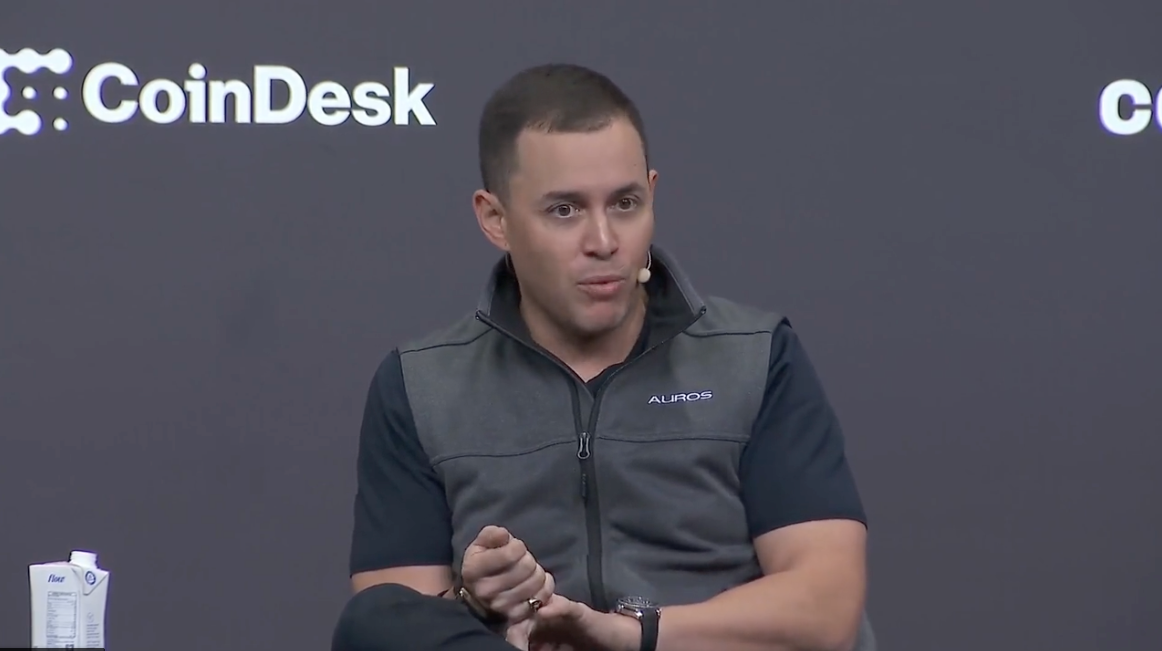
China’s February 6 joint notice — banning unauthorized yuan-pegged stablecoins, classifying most RWA tokenization as illegal, and reaffirming the blanket prohibition on crypto activity — drew little reaction from markets. Jason Atkins, Chief Commercial Officer at Hong Kong-based market-making firm Auros, says that a muted response is itself the most telling signal.
After years of bans and periodic restatements of the same prohibitions, the market has largely priced in Beijing’s hostility toward decentralized crypto — and the real story now lies in the details of what the notice actually signals.
RWA: Getting Ahead of the Curve
What was genuinely new in the February notice was the explicit mention of RWA tokenization — the first time Chinese regulators had addressed the sector by name. Some read this as an escalation. Atkins reads it as more of a regulatory housekeeping matter.
His reasoning: Beijing watched Bitcoin mining grow into a massive industry on Chinese soil before moving to ban it in 2021, leaving regulators scrambling to contain something that had already become systemically embedded. With RWAs now on a steep global adoption curve, China appears determined not to repeat that mistake. By naming tokenization explicitly, regulators are flagging it as a capital control risk before it becomes one — a faster, freer movement of assets that cuts against the very philosophy underpinning China’s financial architecture.
That doesn’t mean a regulated RWA framework is coming anytime soon. But it does suggest Beijing is watching the space far more closely than before.
“Bitcoin mining onshore in China probably sprang up without them even really considering it — and then it got too big,” Atkins said. “I think the inclusion of RWAs is a signal that they’re trying to stay abreast of the latest issues and regulate them ahead of time.”
Stablecoins, Hong Kong, and the Infrastructure Argument
One nuance that caught analysts’ attention: for the first time, the notice carved stablecoins out from the definition of virtual currencies, treating them instead as instruments that perform “some of the functions of fiat.” Some interpreted this as quietly opening a path for Chinese-affiliated banks in Hong Kong to eventually apply for stablecoin licenses under the city’s emerging regulatory framework.
Atkins thinks that reading is plausible, but the timeline is long. His framing is infrastructure, not innovation: if stablecoins demonstrably improve payment processing and settlement efficiency, they become an upgrade to the banking system rather than a threat to it. That’s a case regulators can work with. The early entrants in Hong Kong’s sandbox will be crypto-native startups, he said, but the banks will follow once the framework matures and the risk profile becomes manageable.
As for whether Chinese tech giants — several of which had explored Hong Kong stablecoin projects before being told to pause — will ever get a green light, Atkins was candid about the limits of outside visibility. Back-channel conversations between Beijing and Hong Kong almost certainly govern how far the city can go, he said. “We read what they want us to read.”
The Dollar’s Quiet Digital Takeover
The sharpest part of Atkins’ analysis had less to do with China’s ban and more to do with what it can’t stop. In his view, the US GENIUS Act has moved the world meaningfully closer to a paradigm where digital transactions — like real-world ones — default to US dollar-denominated rails. Every purchase of a dollar-pegged stablecoin effectively amounts to a purchase of US Treasuries.
China once understood this leverage well: at its peak in 2013, it was the single largest foreign holder of US Treasuries, with over $1.3 trillion — a position it has spent years unwinding, with holdings now fallen to around $680 billion, dropping it to third place behind Japan and the UK.
But selling Treasuries is a choice Beijing could make. In a world where stablecoin adoption is organic and borderless, that choice disappears — demand for dollar-backed debt becomes a byproduct of everyday digital transactions, beyond any single government’s control.
“You can ban it,” he said. “But how do you actually stop it?”
The Question No One Is Asking
Atkins closed with a point that applies beyond China: as regulators worldwide approve new stablecoin frameworks and tokenization pilots, the question of who provides liquidity for these products remains largely unaddressed.
Onramps, offramps, stable pricing, minimal slippage — none of it materializes without market makers operating under the right incentive structures. Regulation can open a door, he argued, but liquidity is what makes it worth walking through.
“Without liquidity, nothing works,” he said. “No matter how attractive you make it.”
It is worth noting that Atkins speaks as the CCO of a market-making firm with a direct commercial interest in that argument. But the underlying point holds regardless of who is making it. Without market makers continuously quoting both sides of a trade, price volatility increases, spreads widen, and the kind of stable, accessible market that regulators envision — whether in Hong Kong, Washington, or eventually Beijing — becomes structurally impossible to build.
China may choose to ignore that reality or assume it can engineer around it through state-controlled infrastructure. But the plumbing of any functional stablecoin ecosystem, imagined or otherwise, runs through firms like Auros whether Beijing wants it to or not.
Jason Atkins is Chief Commercial Officer at Auros, a crypto-native algorithmic trading and market-making firm with operations in Hong Kong and New York. This interview was conducted on March 5, 2026.
The post China’s Crypto Crackdown Signals Where the Market Is Heading appeared first on BeInCrypto.