[#highlighted-links#]
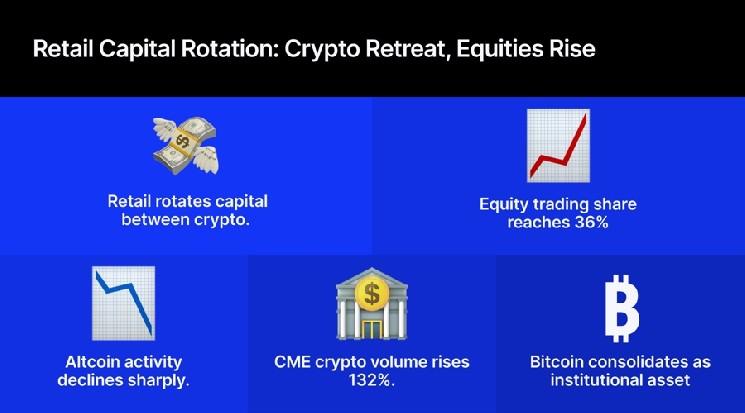
By late 2024 and early 2025, more sophisticated retail traders began rotating a fixed pool of funds between the two asset classes. This rotation created periods of strong growth and elevated volume in one market at the temporary expense of the other.
$BTC CME Futures Volume" wrapper-class="media-center__image">
Data on retail participation highlights this shift. In the U.S. stock market, retail trading surged in 2025, reaching up to 36 percent of total trading, compared with a 10-year average of roughly 12 percent, according to JPMorgan.
In contrast, retail volume in crypto markets declined. The drop came even as expectations for a favorable regulatory environment for digital assets under a Trump administration did not materialize as strongly as anticipated.
Institutional Crypto Dominates, Retail Moves Equities
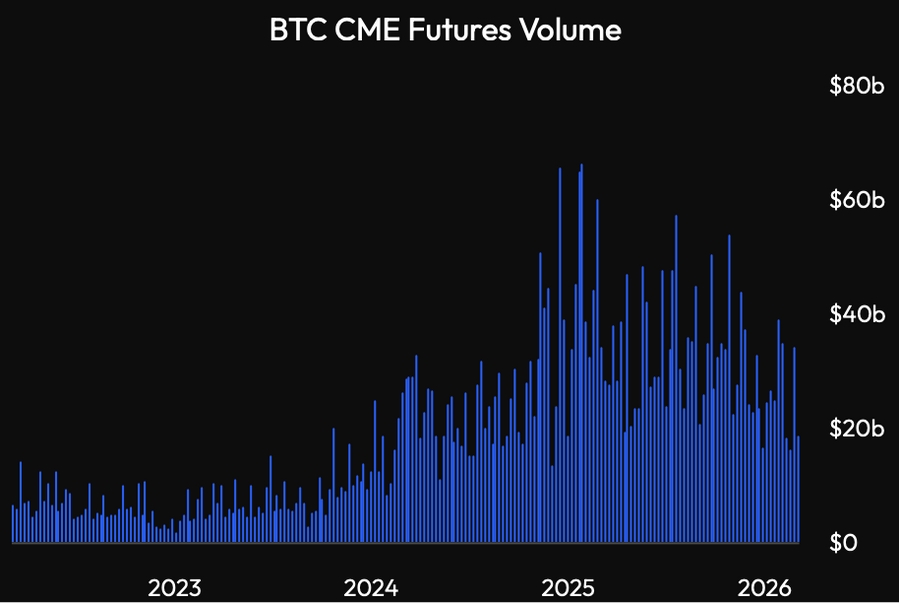
Institutional presence in crypto markets is growing. CME crypto derivatives volume rose 132 percent year-on-year in 2025, averaging around $12 billion in daily notional volume. The activity on regulated platforms points to a market increasingly dominated by professional and regulated participants. Meanwhile, retail engagement in altcoins has fallen, reflecting the changing composition of market activity.
Retail participation is most evident in altcoins rather than bitcoin. Comparisons between the total crypto market cap, excluding bitcoin and ether, and the S&P 500 show equity markets continuing to rise, particularly in AI-related stocks and broader indices. Altcoin performance, by contrast, has weakened, indicating a rotation of speculative interest among retail investors.

 financemagnates.com