
 cryptobriefing.com
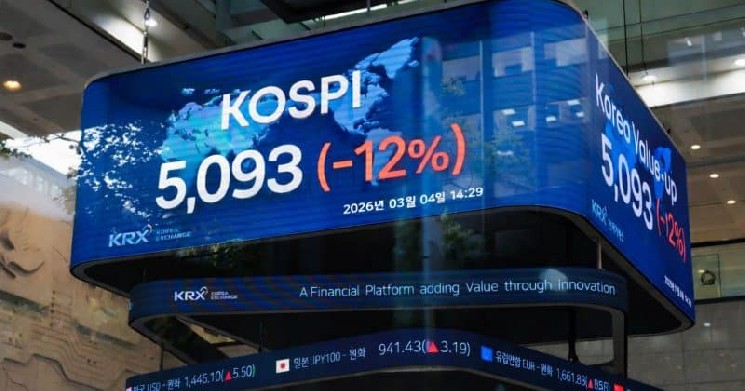
South Korea’s KOSPI plunged 12% on Wednesday in its largest single-day drop on record, wiping out roughly $625 billion in market value as geopolitical tensions and margin calls triggered a broad market selloff.
The benchmark index, which tracks major companies listed on the Korea Exchange, closed near 5,093.54 points after trading was halted for 20 minutes when circuit breakers were triggered at the 8% decline threshold.
Major technology companies led the losses. Samsung Electronics fell 11.7%, while memory chipmaker SK Hynix dropped 9.6% during the session.
The sharp decline capped a two-day drop, briefly pushing the KOSPI into bear market territory after the index fell more than 20% from its all-time high reached two days earlier.
The rout intensified as retail investors rushed to unwind leveraged positions accumulated during the market’s recent rally.
Outstanding margin debt climbed to 32.67 trillion won, about $22.4 billion, by late January 2026, up 25% from the previous year. As prices fell, brokerages began issuing margin calls that forced investors to liquidate positions, accelerating the downward spiral.
The immediate catalyst came from rising geopolitical tensions after military strikes by the United States and Israel against Iranian targets pushed crude oil prices sharply higher.
South Korea, which relies heavily on imported energy, is particularly sensitive to spikes in global oil and gas prices. Higher energy costs threaten to squeeze corporate margins and reduce consumer spending across the economy.
Foreign investors had already begun reducing exposure before the market collapse. International funds sold a record 21.14 trillion won worth of Korean equities during February 2026, marking the largest monthly outflow on record.
The selling left domestic retail investors holding much of the remaining exposure just as the market downturn accelerated.