coinpaper.com
Shiba Inu remains locked in a sustained downtrend, reflecting broader weakness across the memecoin sector. Bearish momentum has strengthened on multiple timeframes, and key technical indicators continue to favor sellers. A recovery toward local highs looks increasingly remote.
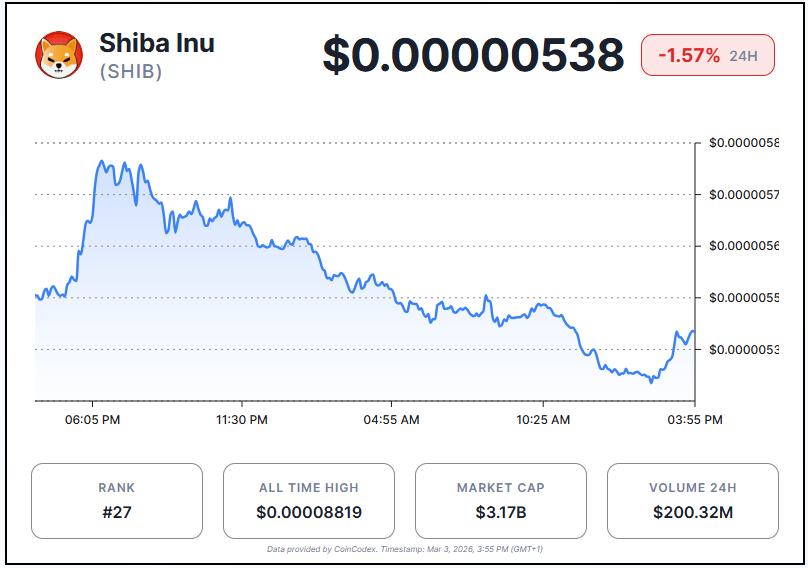
At the time of writing Shiba Inu trades at around $0.00000538, down 1.57% in the last 24 hours.
Bearish Structure Takes Hold Across Timeframes
The 1-day chart has turned decisively bearish. Earlier in February, price imbalances on the daily timeframe, aligned with Fibonacci retracement levels, suggested a potential sweep before the downtrend resumed. That move never materialized. Selling pressure was too aggressive to allow any meaningful bounce.
SHIB has since broken below local support, marked by the dotted cyan level. That break signals a probable move toward $0.000005. The Accumulation/Distribution indicator confirms the shift. It has been declining steadily, pointing to consistent seller dominance. The MACD reinforces this view with a bearish crossover forming below the zero line, a clear sign that downside momentum is building.
The 4-hour chart tells a similar story. The short-term bullish order block has flipped. What was previously a demand zone now acts as supply. Both the moving averages and the MACD on this timeframe reflect bearish conditions. The A/D indicator's two-week downtrend on the 4-hour chart leaves little room for bullish interpretation.
Liquidity Map Points to Key Overhead Targets
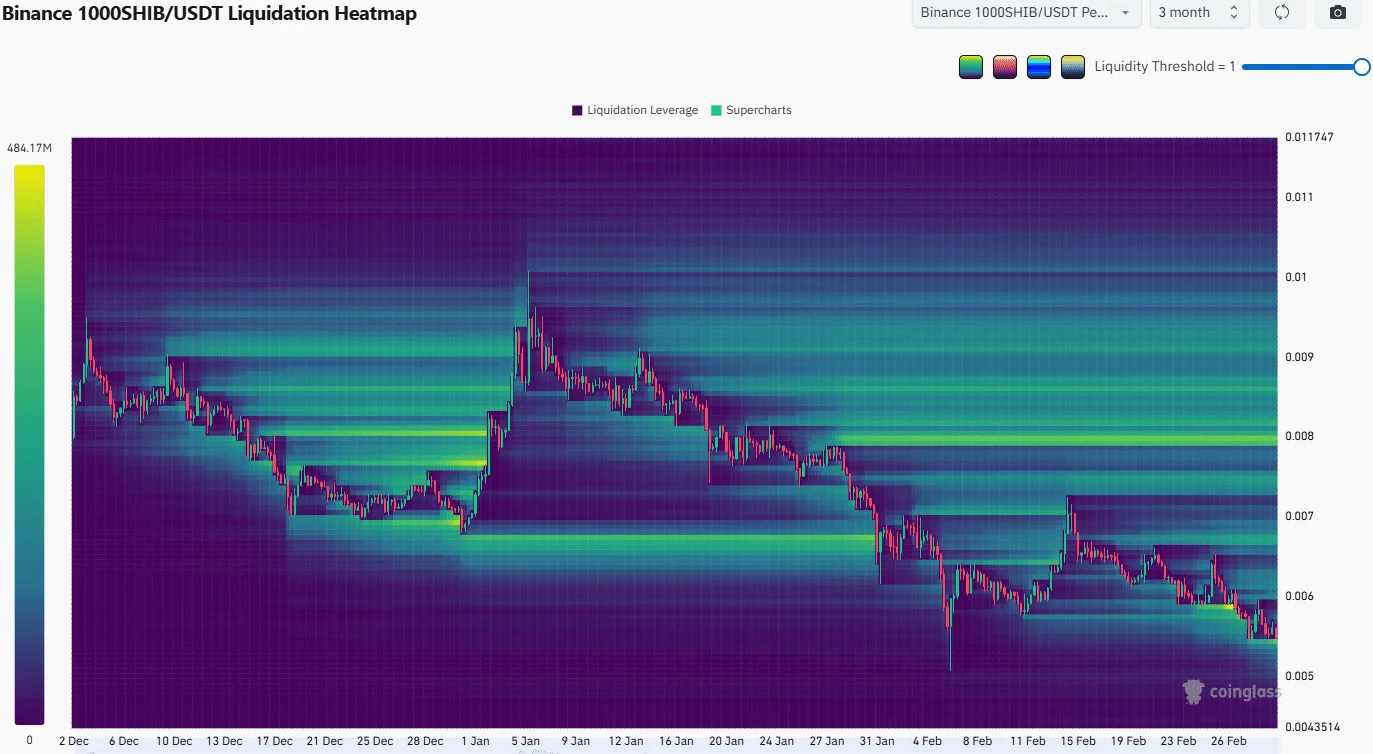
The 3-month liquidation heatmap identifies four significant overhead liquidity clusters: $0.000008, $0.0000075, $0.0000067, and $0.0000062. These levels represent areas where a temporary price bounce could trigger a liquidity sweep, followed by a sharp bearish reaction.
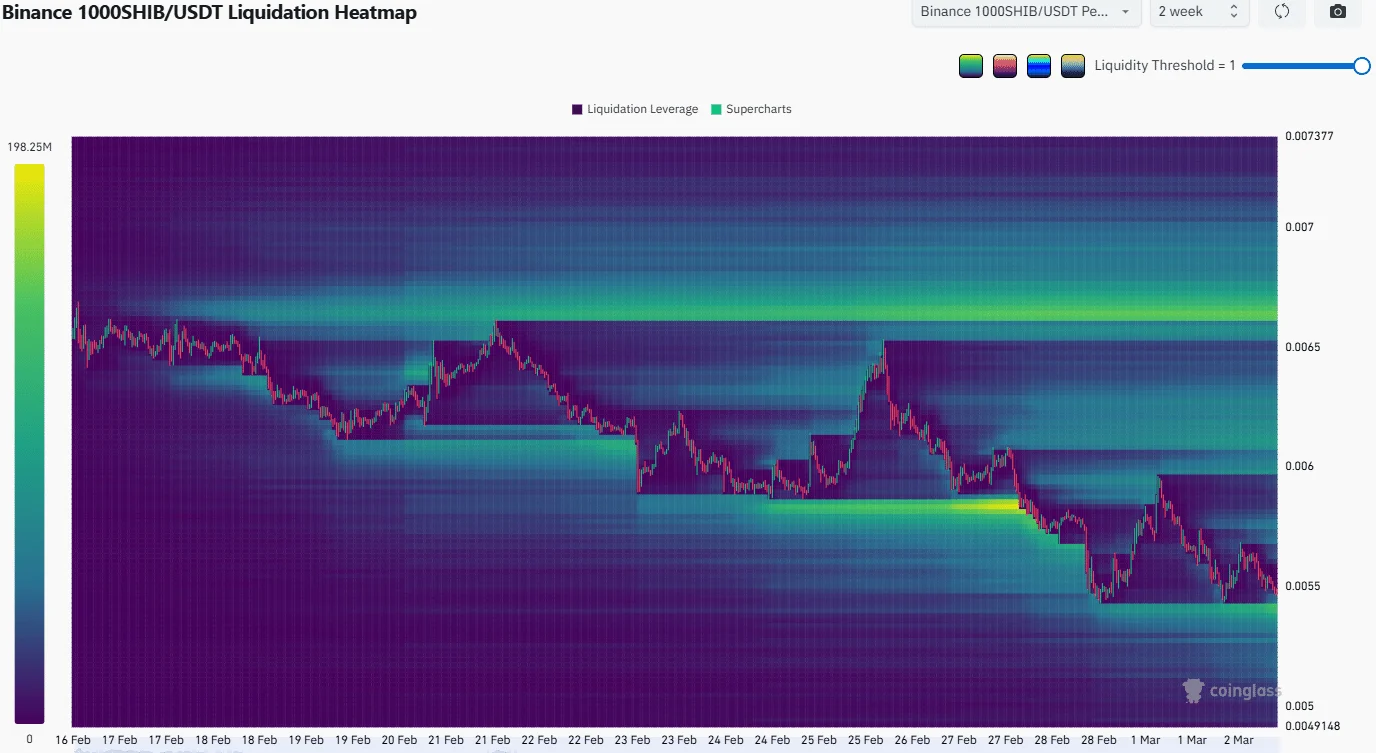
The 2-week heatmap supports the case for continued downside movement. Traders monitoring short-term price action may look to wait for a liquidity sweep before evaluating whether a brief bounce toward $0.0000062 is viable. That level, however, is expected to serve as a selling opportunity rather than a reversal point.