
 en.bitcoinsistemi.com
Global energy markets have reached a critical juncture with the latest tensions in the Middle East. According to Reuters, Iran has begun notifying ships that it has closed the Strait of Hormuz.
If an official shutdown is called, more than 20 million barrels of oil per day (approximately 20% of global supply) will be directly affected.
As tensions in the region rapidly escalate following the latest US airstrikes against Iran, ships transiting the Strait of Hormuz have begun receiving warning messages. The US administration has advised ships to avoid the strait.
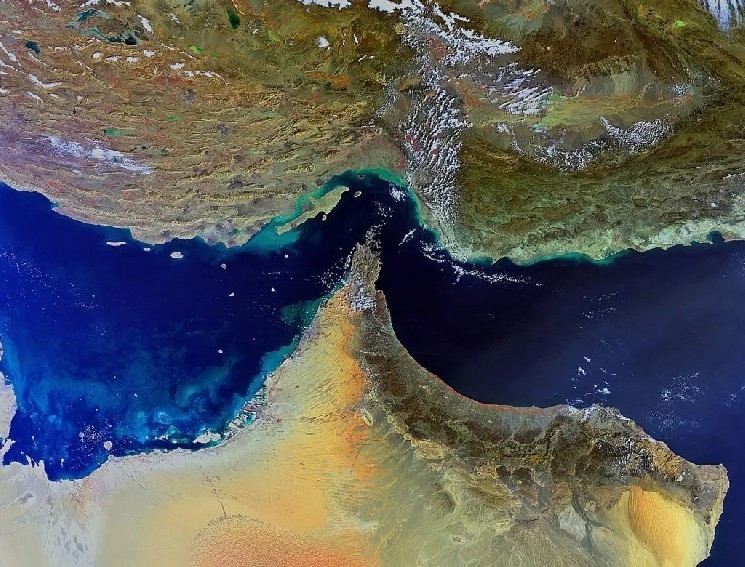
The Strait of Hormuz lies between Oman and Iran, connecting the Persian Gulf to the Gulf of Oman and the Arabian Sea. Approximately one-fifth of global oil consumption passes through this narrow strait every day.
According to 2024 data, crude oil and condensate flows from Saudi Arabia alone accounted for 38% of the total crude oil passing through the strait (approximately 5.5 million barrels per day). The US and European Union countries also obtain oil via this route.
Why Is There No Alternative Route?
The Strait of Hormuz is the only sea access point for production from Kuwait, Qatar, Bahrain, and much of Saudi Arabia. While pipelines are an alternative, experts believe only 6.5–7.5 million barrels per day could be diverted, representing a significant drop of approximately 13% of global supply.
JPMorgan Chase’s 2025 analysis described the closure of the Strait of Hormuz as the “worst-case scenario” in an Israel-Iran war. According to the bank’s prediction, in such a scenario, oil prices could rise to the $120–130/barrel range.
This scenario could also push up US inflation. Energy prices play a direct role in CPI calculations. According to Fed research, every $10 increase in oil prices can add approximately 20 basis points to inflation. Oil prices have already risen by about $15 since their recent lows; this theoretically translates to around 30 basis points of additional pressure on inflation.
In the US, inflation last approached 5% in March 2023, during the Federal Reserve’s period of aggressive interest rate hikes.
The daily cost of transporting 2 million barrels of crude oil from the Middle East to China has risen to approximately $200,000. This represents a 584% increase compared to the first week of January and marks the highest level since the pandemic.
According to radar data, oil and LNG tankers have already begun reducing their passage through the Strait of Hormuz. The US has also warned ships to stay at least 30 nautical miles away from American military assets in the region.
In modern history, the Strait of Hormuz has never been completely closed. However, markets are already beginning to price in the geopolitical risk premium. Sunday night, when oil futures open, will be decisive in determining the direction of prices.
All eyes are now on Washington. Whether US President Donald Trump will push for a new diplomatic deal or continue military pressure could determine the fate of energy markets.
*This is not investment advice.