Ripple's continuous drive for institutional adoption is closely correlated with this spike in activity. The business recently improved its custody platform, adding integrated staking capabilities and improved security architecture tailored to banks and other financial institutions.
How Ripple pushes infrastructural exposure
The objective is to facilitate the deployment of custody and staking services for institutions without requiring them to construct infrastructure from the ground up, or to manage their own validators. By lowering operational barriers, these upgrades enable traditional financial players to more quickly provide services and enter digital asset custody.
The current increase in transaction volumes seen across the $XRP Ledger seems to be consistent with the idea that increased institutional participation usually translates into higher ledger usage.
Growing conjecture regarding ETF-related developments in the larger cryptocurrency market may also be a factor in the activity spike. Despite continued pressure on price performance, institutional positioning ahead of prospective ETF expansions or related financial products frequently result in increased asset movement and network utilization.
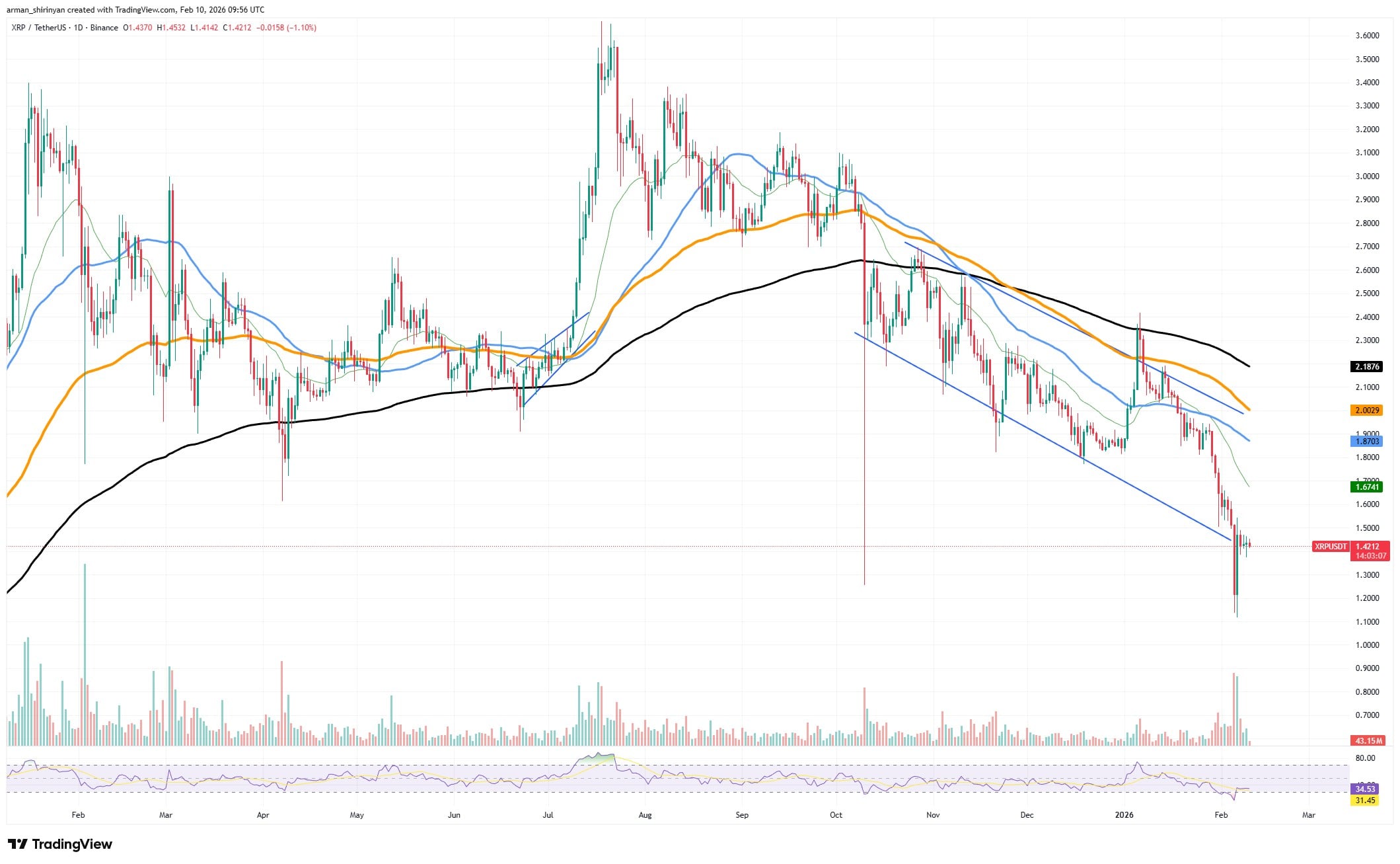
To put it briefly, the ledger itself is indicating increasing utility and adoption even though $XRP's chart still shows bearish conditions. Despite temporary market weakness, rising transaction counts indicate that infrastructure-level growth is continuing. Network usage may remain robust if institutional adoption and ETF-related flows keep up, which could pave the way for future price stabilization when overall market sentiment improves.

 u.today