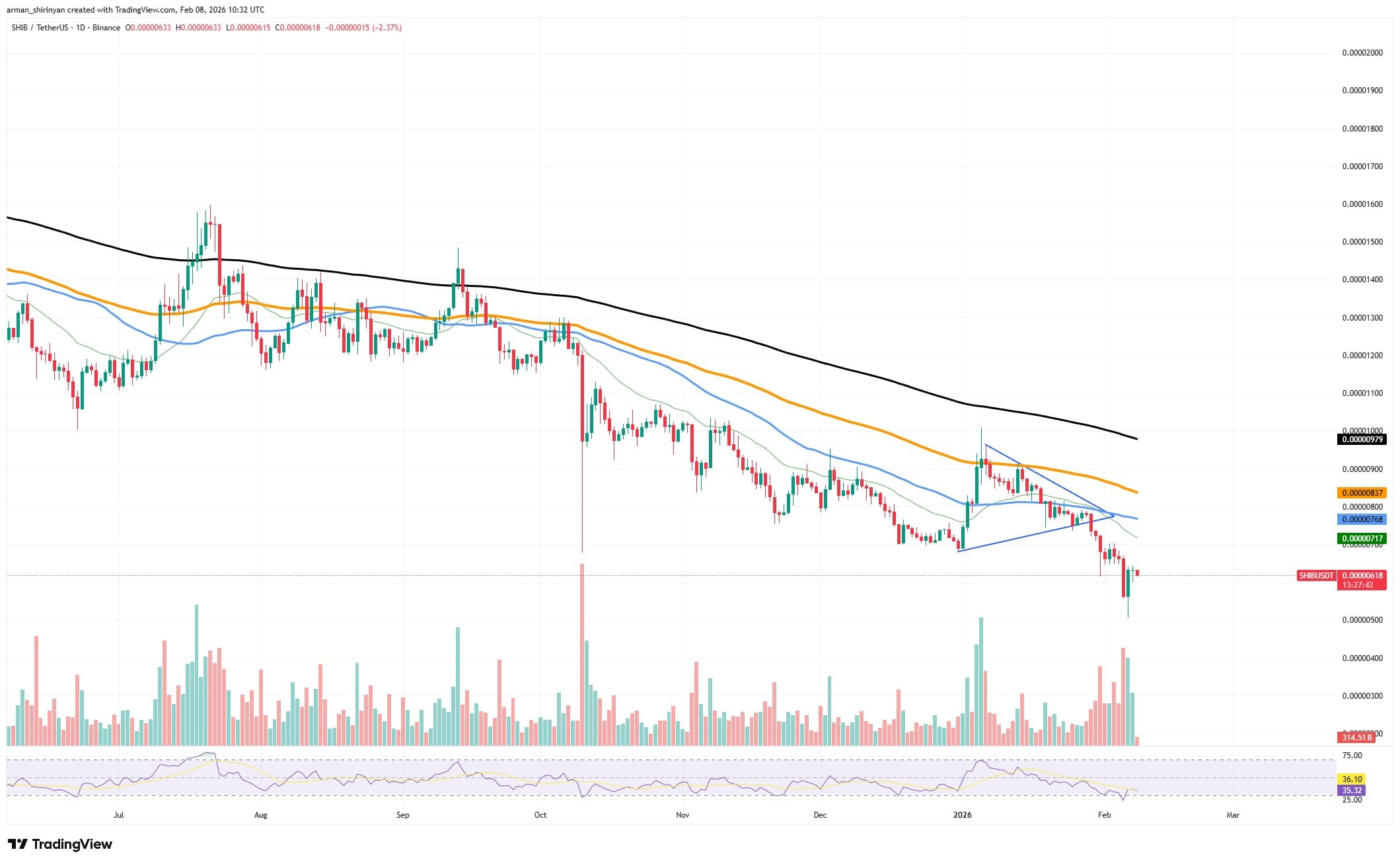
Volume trends and RSI readings indicated that sellers were depleting rather than increasing. The sharp bounce was ultimately caused by a slight infusion of buying pressure onto a market that had already priced in excessive pessimism rather than a surprise catalyst or abrupt change in fundamentals. Even slight demand can result in disproportionate price reactions when liquidity is limited, and positioning is strongly skewed to the downside.
Exchange flows
This interpretation is also supported by exchange flow data and on-chain metrics. Exchange reserves continue to be high, indicating that there is still supply available for sale, which suggests that the overall recovery will probably continue to be erratic. However, it appears that panic-selling may be slowing down, making space for technical rebounds given the lack of aggressive new inflows.
$SHIB still needs to regain key resistance areas and rise above its medium-term moving averages in order to have a sustainable recovery. However, when selling slowed, $SHIB reacted swiftly and held up better than many assets that experienced catastrophic breakdowns recently.
Shiba Inu might keep gaining ground if overall market sentiment levels off, and money starts to flow back to riskier assets. As of right now, recovery seems more a matter of timing than of possibility, though volatility is probably going to continue to be the defining characteristic in the near future.

 u.today