
 beincrypto.com

The Bank of Japan (BoJ) is expected to leave its benchmark interest rate unchanged at 0.75% after concluding its two-day monetary policy meeting on Friday.
The central bank raised rates to a three-decade high in December. A pause now would allow policymakers to assess the economic impact of that move before tightening further.
BoJ Governor Kazuo Ueda is expected to reaffirm the bank’s commitment to gradual policy normalization. Investors will closely scrutinize his press conference for clues on the timing and pace of future rate hikes.
A huge upswing in Gold prior to the Central Bank of Japan meeting.
— Michaël van de Poppe (@CryptoMichNL) January 22, 2026
The faster this one goes, the further we're into the commodity cycle and the faster it should end.
What to Expect From the BoJ Interest Rate Decision
Markets broadly expect the BoJ to hold rates steady in January while keeping the door open to further tightening if economic conditions evolve as projected.
In December, the policy committee approved a 25-basis-point hike to 0.75%. Meeting minutes showed some policymakers favor additional tightening, noting that real interest rates remain deeply negative after adjusting for inflation.
A back-to-back rate hike is widely ruled out. Political uncertainty has increased after Prime Minister Sanae Takaichi called snap elections and proposed a two-year suspension of food and beverage taxes to ease household inflation pressures.
TOKYO, Jan 23 : The Bank of Japan is set to keep interest rates steady on Friday and signal cautious optimism that the economy will maintain a moderate recovery that would justify raising still-low borrowing costs further.
— MartyParty (@martypartymusic) January 23, 2026
BOJ Governor Kazuo Ueda is likely to offer few clues on… pic.twitter.com/2Qkwvnvk5S
The impact of these measures on monetary policy remains unclear. For now, the BoJ appears inclined to proceed cautiously, normalizing policy without undermining economic growth.
The yen has weakened steadily since election speculation emerged. Markets will watch closely whether currency depreciation pushes the BoJ toward a firmer tightening stance.
How Could the BoJ’s Decision Affect USD/JPY?
Investors are fully pricing in a rate pause. Still, the BoJ may need to clearly signal further tightening to curb yen weakness.
The yen has stabilized slightly in recent sessions, helped by broad-based US dollar softness linked to EU–US trade tensions following President Donald Trump’s remarks on Greenland.
Even so, USD/JPY remains about 0.7% higher year-to-date and near last week’s 18-month high around 159.50.
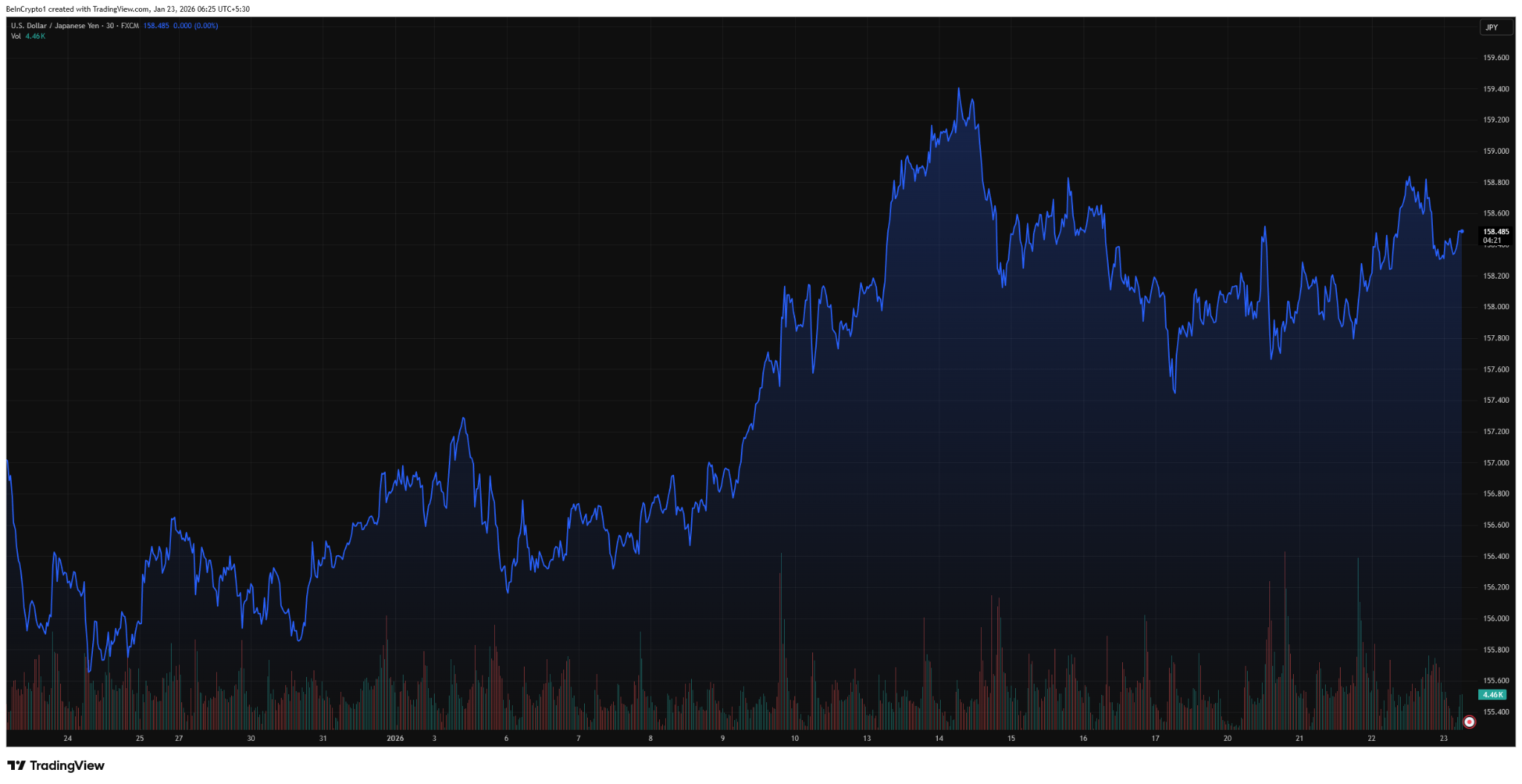
Concerns persist that Prime Minister Takaichi could strengthen her parliamentary position after the elections and expand fiscal spending.
That has raised fears over Japan’s public finances, pushing long-term yields to record highs and weighing further on the yen.
Governor Ueda has reiterated that Japan is moving toward a more durable inflation regime, supported by wage and price growth. Clear signals of additional rate hikes would be needed for the yen to extend any sustained recovery.
What This Decision Could Mean for Crypto Markets
Although the BoJ’s decision is primarily a rates and FX event, it has growing implications for crypto through global liquidity conditions.
In recent months, hawkish BoJ signals have coincided with increased Bitcoin volatility. Higher Japanese rates raise the risk of unwinding yen-funded carry trades, which have been used to finance exposure to higher-risk assets, including crypto.
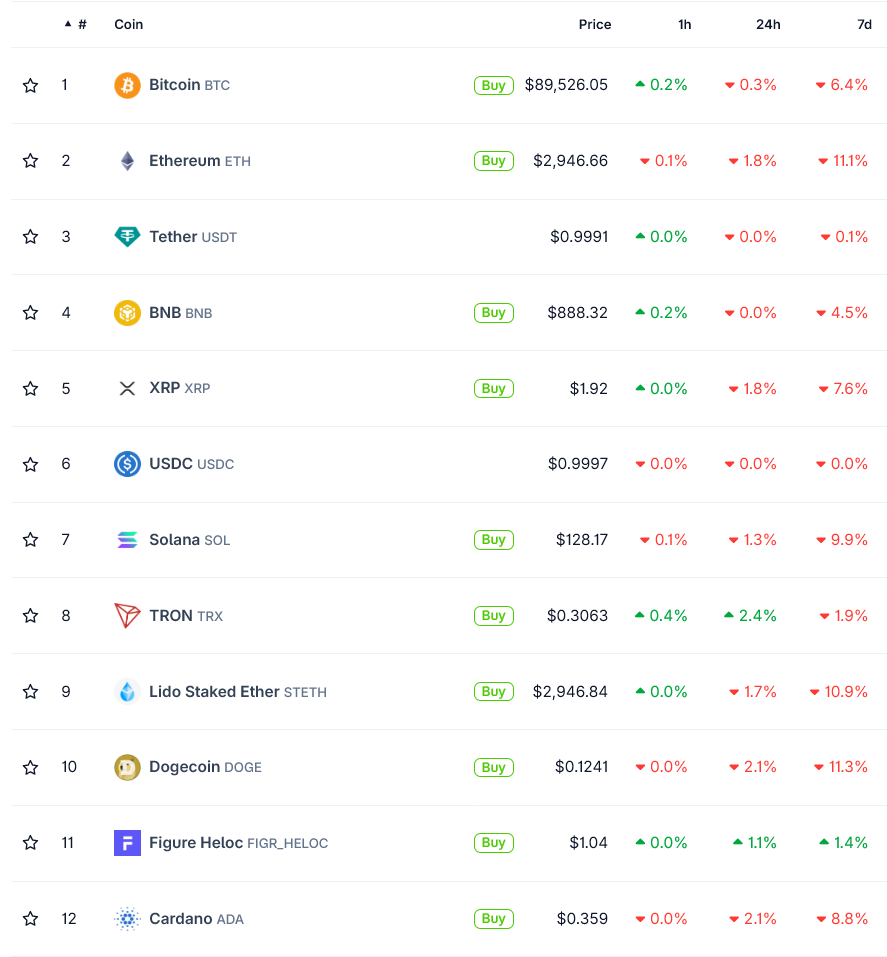
A firm commitment to further tightening could pressure Bitcoin and broader crypto markets in the short term, particularly if it strengthens the yen and triggers broader deleveraging.
A cautious tone, by contrast, could ease near-term risk sentiment, offering temporary relief as Bitcoin consolidates after recent volatility.
USD/JPY 4-Hour Technical Outlook
From a technical perspective, FXStreet analyst Guillermo Alcalá sees USD/JPY undergoing a corrective pullback, with key support above 157.40.
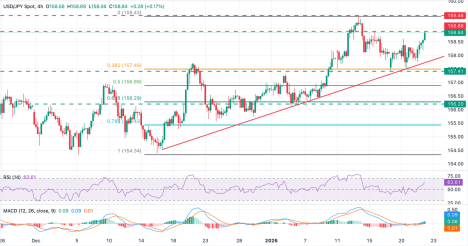
“The pair has retreated from highs, but yen bulls would need to break the 157.40–157.60 support zone to invalidate the near-term bullish structure and target early January lows around 156.20.”
A hesitant BoJ message could undermine the yen further. In that scenario, Alcalá sees scope for renewed upside.
“Technical indicators are turning positive. The 4-hour RSI has rebounded from the 50 level, signaling stronger bullish momentum. The pair is testing resistance at 158.70, the last barrier before the 18-month high near 159.50.”
The post Bank of Japan Expected To Hold Rates, But Markets Seek Clues appeared first on BeInCrypto.