
 beincrypto.com
Silver emerged as one of the strongest-performing major assets in 2025, sharply outperforming both gold and Bitcoin.
The rally was not driven by speculation alone. Instead, it reflected a rare convergence of macroeconomic shifts, industrial demand, and geopolitical pressure that could extend into 2026.
Silver’s 2025 Performance in Context
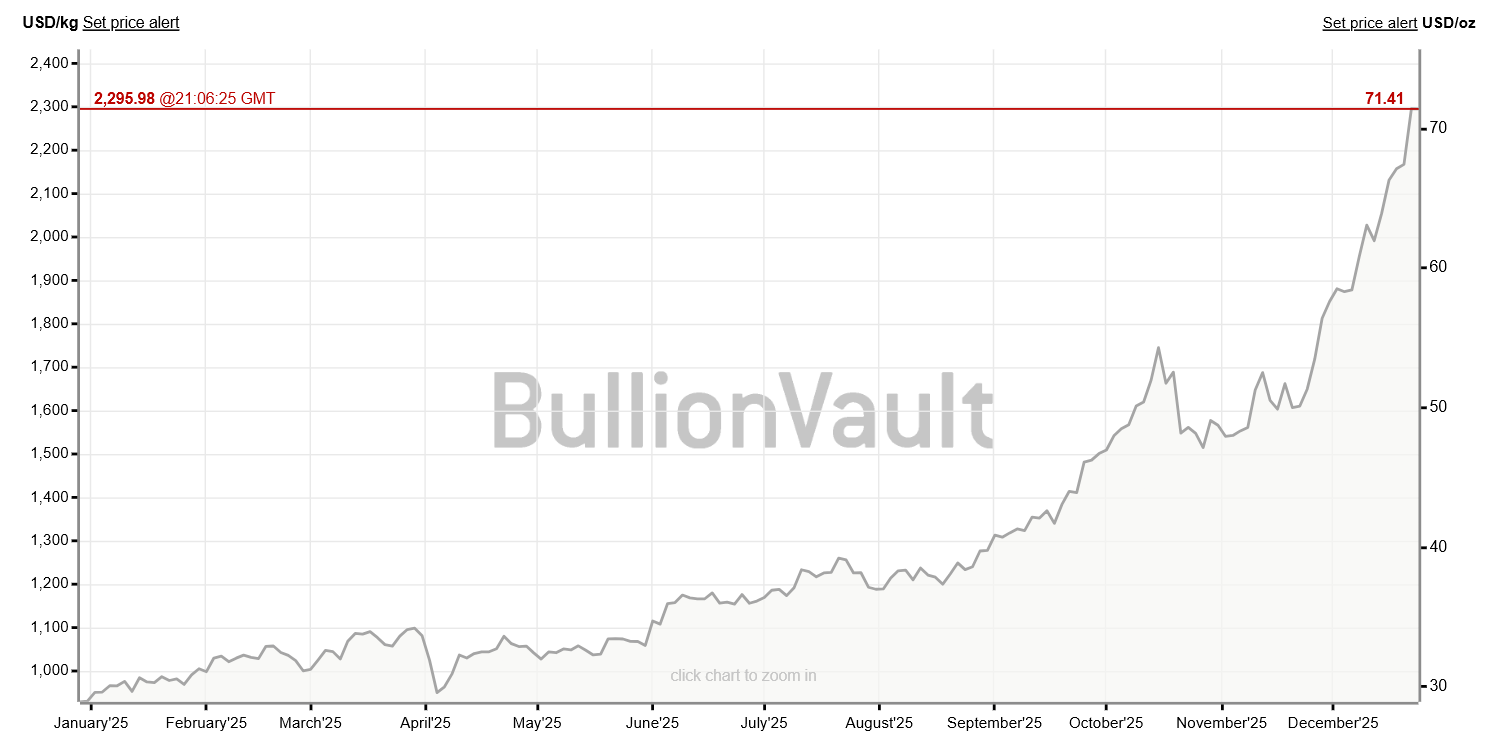
By late December 2025, silver traded near $71 per ounce, up more than 120% year-to-date. Gold rose roughly 60% over the same period, while Bitcoin ended the year slightly lower after a volatile run that peaked in October.
Silver price entered 2025 near $29 per ounce and climbed steadily through the year. Gains accelerated in the second half as supply deficits widened and industrial demand surprised to the upside.
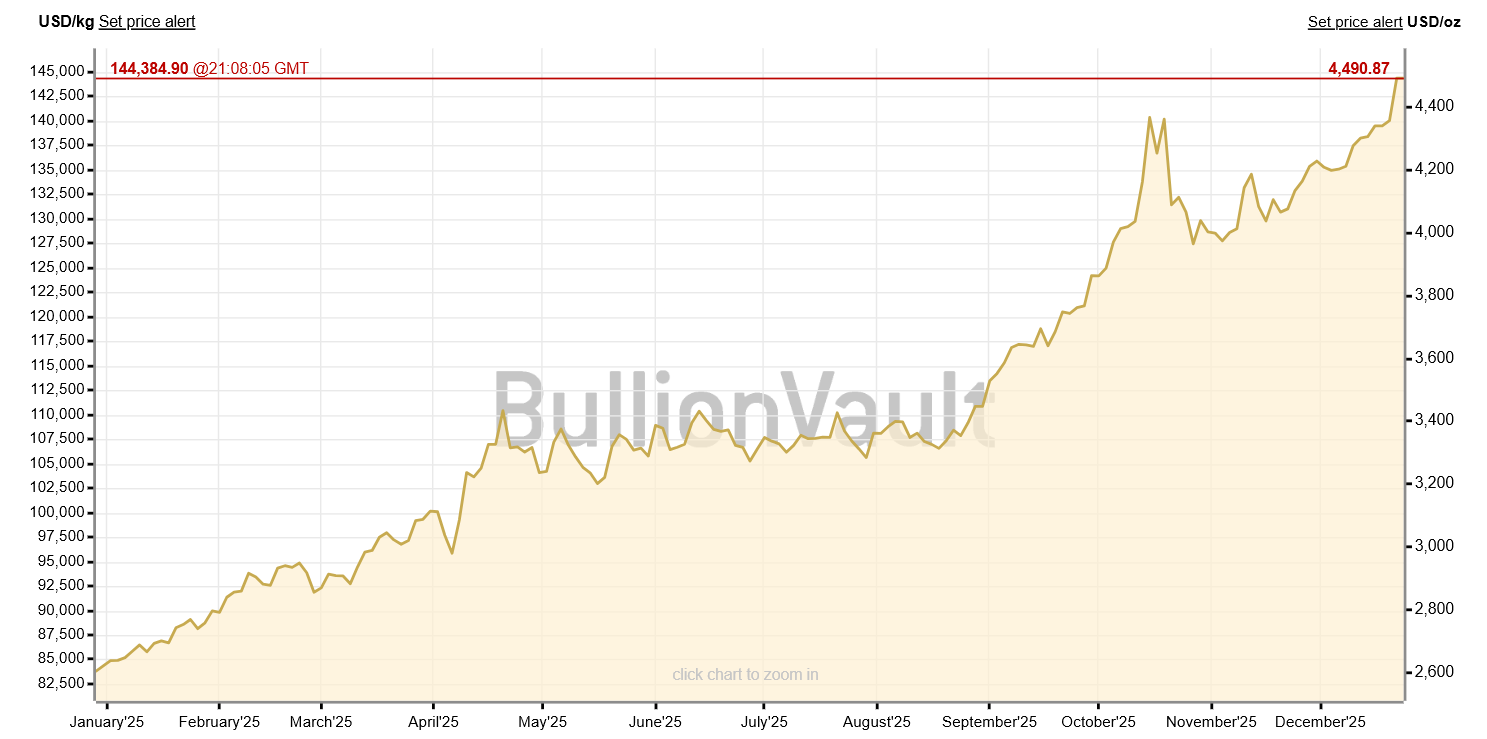
Gold also rallied strongly, moving from roughly $2,800 to above $4,400 per ounce, supported by falling real yields and central-bank demand.
However, silver outpaced gold by a wide margin, consistent with its historical tendency to amplify precious-metal cycles.
Bitcoin followed a different path. It surged to a record near $126,000 in early October before reversing sharply, ending December near $87,000.
Unlike metals, Bitcoin failed to hold safe-haven inflows during late-year risk-off moves.
Macro Conditions Favored Hard Assets
Several macroeconomic forces supported silver in 2025. Most importantly, global monetary policy shifted toward easing. The US Federal Reserve delivered multiple rate cuts by year-end, pushing real yields lower and weakening the dollar.
At the same time, inflation concerns remained unresolved. That combination historically favors tangible assets, particularly those with monetary and industrial value.
Unlike gold, silver benefits directly from economic expansion. In 2025, that dual role proved decisive.
This is a 50-Yr chart of Silver futures
— Peter Brandt (@PeterLBrandt) December 13, 2025
The red arrow marks my 1st trade in Silver
The $50 level rejected Silver in 1981 and 2011
The price has now sliced above $50
Corrections should find support in the low $50s
Upside targets exist at $87 and eventually $200-plus$SI_F pic.twitter.com/sz076mdeP1
Industrial Demand Became the Core Driver
Silver’s rally was increasingly anchored in physical demand rather than investment flows. Industrial usage accounts for roughly half of total silver consumption, and that share continues to grow.
The energy transition played a central role. Solar power remained the single largest source of new demand, while electrification across transport and infrastructure added further pressure to already tight supply.
Global silver markets recorded a fifth consecutive annual deficit in 2025. Supply struggled to respond, as most silver production comes as a byproduct of base-metal mining rather than primary silver projects.
Most of silver demand is industrial and those users don't care if the price is 5x, because silver is only a small part of their products.
— GoldSilver HQ (@GoldSilverHQ) December 23, 2025
Industrial demand (mainly solar) continues to rise.
Also retail demand in Asia is now INCREASING along with rising prices.
Electric Vehicles Added Structural Demand
Electric vehicles significantly increased silver consumption in 2025. Each EV uses 25 to 50 grams of silver, roughly 70% more than an internal-combustion vehicle.
With global EV sales rising at double-digit rates, automotive silver demand climbed into the tens of millions of ounces annually.
Charging infrastructure amplified the trend. High-power fast chargers use kilograms of silver in power electronics and connectors.
Unlike cyclical investment demand, EV-related silver consumption is structural. Production growth directly translates into sustained physical offtake.
Silver $71 today.
— HealthRanger (@HealthRanger) December 23, 2025
Just the beginning.
I completed a detailed analysis of Samsung's new battery technology. Production begins in 2027. (Confirmed by Samsung.) Approximately 1 kg of silver will be needed per EV. And Samsung's silver-carbon batteries will also be widely used across…
Defense Spending Quietly Tightened Supply
Military demand became a less visible but increasingly important factor. Modern weapons systems rely heavily on silver for guidance electronics, radar, secure communications, and drones.
A single cruise missile can contain hundreds of ounces of silver, all of which is destroyed upon use. That makes defense demand non-recyclable.
Global military spending reached record highs in 2024 and continued rising in 2025 amid wars in Ukraine and the Middle East.
Europe, the United States, and Asia all expanded procurement of advanced munitions, quietly absorbing physical silver.
Geopolitical Shocks Reinforced the Trend
Geopolitical tensions further strengthened silver’s case. Prolonged conflicts increased defense stockpiling, while trade fragmentation raised concerns about supply security for critical materials.
Unlike gold, silver sits at the intersection of national security and industrial policy. Several governments moved to classify silver as a strategic material, reflecting its role in both civilian and military technologies.
This dynamic created a rare feedback loop: geopolitical risk boosted both safe-haven investment demand and real industrial consumption.
The rise in the price of gold and silver from 2001 through 2008 was a sign of a major Fed policy error and a harbinger of the 2008 financial crisis. The current rally that began in 2024 is signaling a bigger policy error that will have even more profound consequences for the U.S.
— Peter Schiff (@PeterSchiff) December 22, 2025
Why 2026 Could Extend the Outperformance
Looking ahead, most of the drivers that powered silver price in 2025 remain in place. EV adoption continues to accelerate. Grid expansion and renewable investment remain policy priorities. Defense budgets show no signs of retreat.
At the same time, silver supply remains constrained. New mining projects face long lead times, and recycling cannot offset growing industrial losses from military use.
Gold may continue to perform well if real yields stay low. Bitcoin may recover if risk appetite improves. But neither combines monetary protection with direct exposure to global electrification and defense spending.
That combination explains why many analysts see silver as uniquely positioned for 2026.
Looks like silver is going to be a shocker for most. While a significant group of investors is still in denial and do not realize that we are in a new realities constantly waiting for a pullback, silver keeps pushing higher and higher. My immediate target is $75 – 80. Let's wait… pic.twitter.com/ni35W0lIwd
— Rashad Hajiyev (@hajiyev_rashad) December 22, 2025
Silver’s 2025 rally was not a one-off speculative spike. It reflected deep structural changes in how the global economy consumes the metal.
If current trends persist, silver’s dual role as a monetary hedge and industrial necessity could allow it to outperform both gold and Bitcoin again in 2026.
The post Why Silver Could Outperform Gold and Bitcoin in 2026 appeared first on BeInCrypto.