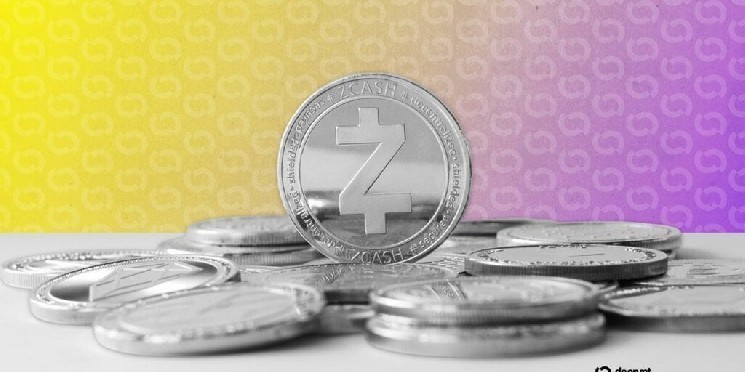
Over the same period, Tornado Cash is up 26%, and Dash up 33%. The leading privacy coin, Monero (XMR) is trading flat on the day and up 1.7% in the past week.
Privacy coins rise
Prominent angel investor and AngelList founder Naval Ravikant showed support for Zcash last week, tweeting that while "Bitcoin is insurance against fiat," Zcash serves as "insurance against Bitcoin."
Digital asset manager Grayscale also announced the launch of its Zcash trust, while Railgun's total value locked has more than doubled in recent days, signaling spiked user activity and helping price momentum.
The resurgence points to growing investor concerns over financial surveillance and censorship amid geopolitical uncertainty and delayed U.S. economic data, according to experts.
"In past cycles, interest in privacy coins often emerged when people worried about surveillance, censorship, or economic uncertainty. The current setup feels more or less similar," Illia Otychenko, Lead Analyst at CEX.IO, told Decrypt.
"The U.S. government shutdown is delaying key economic data, central banks are turning more dovish, and debates about financial censorship are back in focus," Otychenko said. "These factors arguably pushed investors toward assets that offer more privacy and control."
Bitcoin has pulled back 0.6% to $121,349 over the past day following its record high near $125,000 over the weekend, with the largest crypto consolidating as markets digest the U.S. government shutdown, according to CoinGecko.
Ray Youssef, CEO of crypto app NoOnes, described privacy coins as “a sound strategy” in a shifting geopolitical landscape, warning that, “fiat reserves and stablecoins are vulnerable to sanctions” and that another round of capital freezes is “inevitable.”
Youssef told Decrypt the surge is “a reflection of growing value and trading volumes” in privacy assets and said retail investors are now following institutional capital into anonymous coins, “making the trend more sustainable.”
When asked if the weekly gains signal a longer-term trend, Youssef said “all privacy coins are like twins to government-issued fiat currencies,” noting that, like cash, no one can see “how much you have or how you manage it.”
"I hope this fact will help ease the constant regulatory pressure on privacy cryptocurrencies—only then can we speak of a long-term trend," he added.

 decrypt.co