
 cryptonews.net

In the first three months of 2025, the cryptocurrency industry experienced severe obstacles as its main actors failed to satisfy their predicted performance targets. The initial digital asset market optimism at the New Year turned into underperformance across multiple metrics, including price movements, market capitalization growth, and regulatory clarity.
The cryptocurrency market experienced less-than-expected performance during Q1 2025 despite maintaining high optimism after significant increases in late 2024 because of rising inflation, regulatory barriers, and changed investor behaviour.
The Economic Landscape and Its Impact on Cryptocurrencies
The first quarter of 2025 started under optimistic expectations for a continued bullish run due to dominant cryptocurrency market trends within late 2024. The market performances of Bitcoin and Ethereum during the last months of 2024 increased because institutional buyers entered the market while positive DeFi news spread and blockchain Technology regained attention. Market analysts projected the price growth and increased participation would continue from the previous year into 2025.
The broader economic conditions turned out worse for the crypto market sector during the first quarter of this year. The worldwide economic improvement across traditional business domains failed to support cryptocurrency markets. The United States, along with the European Union and other key markets, experience elevated inflation, creating rising market instability. In Q1 2025, the U.S. Federal Reserve sustained elevated interest rates to tackle long-running inflation, negatively affecting investor market attitudes. Higher interest rates make riskier assets such as cryptocurrencies appear less desirable to investors because they raise capital costs and decrease spending power.
The cryptocurrency market lacks steady momentum due to worsening economic and financial conditions in the mainstream and unclear laws in major government territories. Many individuals initially expected crypto markets to keep rising but experienced unexpected volatility in their actual market performance.
Price Volatility and Market Capitalization Decline
The cryptocurrency market underwent significant price swings as the primary result of Q1 2025. The market started 2025 without the anticipated momentum that people had forecasted at the beginning of the year. In March 2025, Bitcoin registered a value decrease of over 10% from its starting price of $35,000 to reach a new level. Ethereum, which currently holds the second position in market capitalization, also suffered a decrease of about 13% in value between January and March 2025.
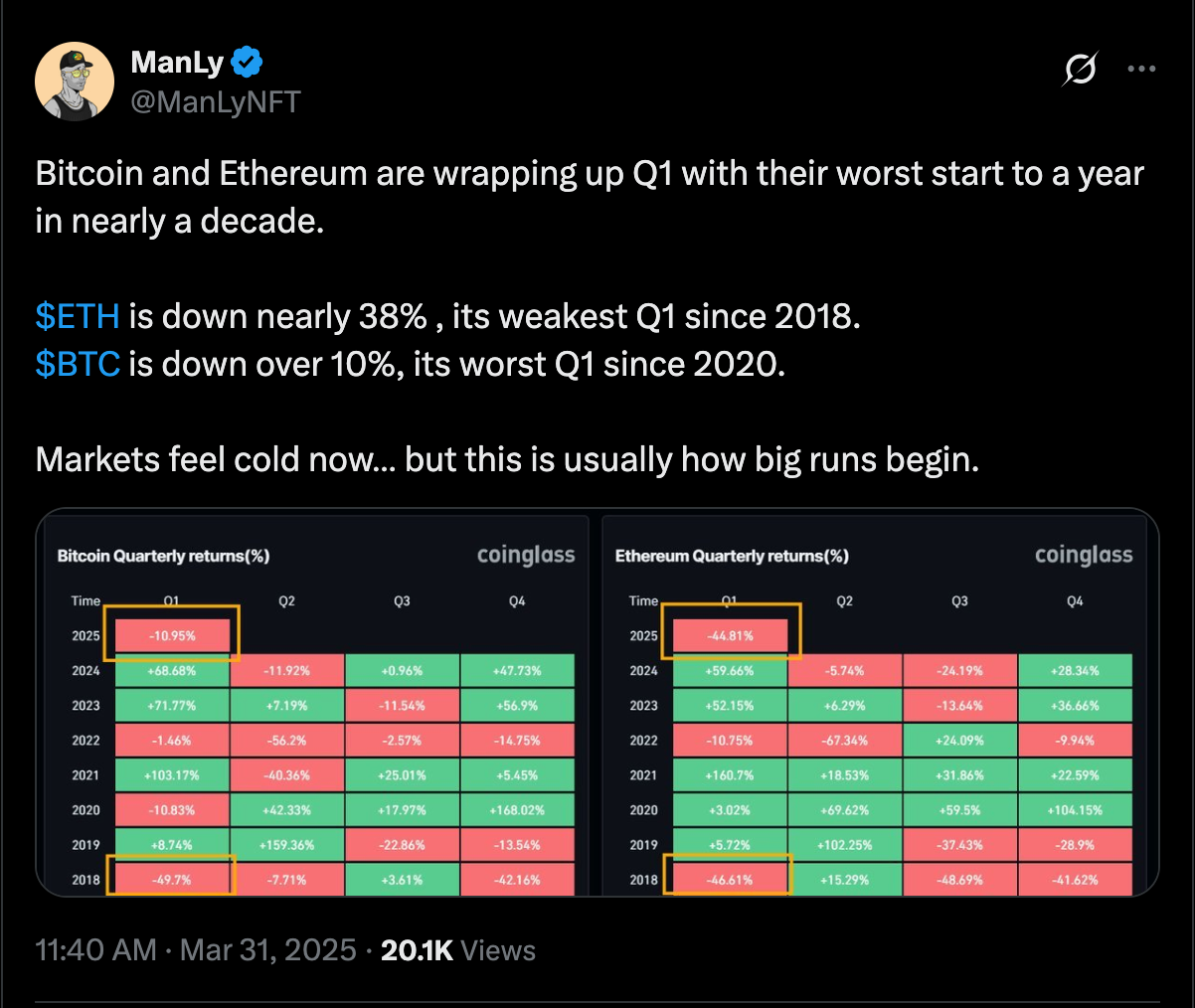
The widespread market decline has intensified the price swings of these two influential market assets. By the end of March, all cryptocurrency valuations decreased by 12%, resulting in a loss of more than $200 billion from the market. Smaller altcoins received conditions worse than their main counterparts because their value reduced by more than 20%. Many investors lost hope for sustained bullish trends because of the 2024 market performance, but this turned out to be a major disadvantage for them.
Various elements caused this market reduction. The primary influence for this decline originates from macroeconomic conditions involving rising inflation rates and interest levels, causing investors to modify their portfolio preferences. Traditional investment options that offer higher returns due to rising interest rates cause institutional investors to withdraw funds from high-risk assets such as cryptocurrency. The United States and other regulators express concern regarding the sustained viability of specific tokens through their ongoing oversight.
Regulatory Uncertainty and Its Impact on Crypto Markets
The cryptocurrency market faced major regulatory confusion as its primary challenge during Q1 2025. The worldwide lack of regulatory clarity about digital assets has produced market instability, which negatively affects cryptocurrency investors and business operations in this field.
The Securities and Exchange Commission (SEC) of the United States maintains its strong approach to govern cryptocurrency trading activities throughout 2025. During Q1 2025, the Securities and Exchange Commission launched legal proceedings against important crypto companies based on their alleged breaking of securities laws. The increased regulatory pressure has multiplied market uncertainty, which causes investors to doubt the future role of cryptocurrency innovation in the United States. The prolonged regulatory confusion has driven away institutional investors because these entities prefer established rules when investing.
The European Union continues its efforts to develop regulatory standards for cryptocurrencies by advancing the proposed Markets in Crypto Assets (MiCA) regulation. The crypto space faces business challenges because EU regulations now include an interim period alongside potential future additions to these rules. The tighter regulatory policies prompt investors to be apprehensive about potential negative influence on their digital asset values.
The nervousness of regulatory authorities has significantly affected the Q1 decline of cryptocurrency markets. The long-term prospects of digital assets remain unclear because governments worldwide maintain their regulatory caution toward the market.
Institutional Adoption Slows
Institutional adoption of cryptocurrencies was projected to keep expanding during Q1 2025. The investment decisions of MicroStrategy and Tesla during previous years led analysts to believe many institutional investors would enter Bitcoin before early 2025. The expected surge of institutional cryptocurrency adoption has not happened according to predictions.
Some institutional investors keep their digital asset positions, but the broader adoption movement from institutions has decreased momentum. Major institutions in the crypto space have faced elevated regulatory obligations ,which inhibited their market entry due to heightened regulatory scrutiny. Digital assets performed poorly in Q1 2025, thus causing institutional investors to demonstrate restraint when expanding their cryptocurrency positions.
The crypto industry now targets retail investors after initially focusing on attracting institutional capital, which caused instability in the business environment. The transition of institutions to retail investor targeting has made retail investors more exposed to market shifts, which thereby increased volatility during the first quarter of 2025.
DeFi and $NFT Markets Struggle
Another challenge emerged for Bitcoin and Ethereum alongside their anticipated growth and the diminished performance of decentralized finance (DeFi) alongside non-fungible token ($NFT) markets in Q1 2025. During the first part of 2025, the DeFi sector underwent a major reduction in its rapid expansion that occurred throughout 2024. During the first quarter of 2025, the total value locked (TVL) within DeFi protocols experienced a 15% decrease because investors became due to regulatory ambiguities and market price fluctuations.
$NFT sales and market interest declined substantially just as the $NFT market reached its peak popularity in 2024. According to NonFungible.com data, $NFT sales volume during Q1 2025 declined by almost 30% compared to Q1 2024. The market shows declining figures because of various factors, including regulatory uncertainties and fatigue within the market alongside general crypto market stagnation.
The Road Ahead: Will the Crypto Market Recover?
As the second quarter of 2025 approaches, the cryptocurrency market faces obstacles that will define the industry’s direction. Digital assets have encountered temporary difficulty but can achieve lasting market growth. The market requires solutions that tackle regulatory unclearness, price shifts, and institutional unwillingness to adopt digital assets before it can start regaining upward movement.