Buterin highlights staking protocol Lido (LDO) as an example with a DAO that whitelists node operators. Nevertheless, he underscores that, even though it has put safeguards in place to mitigate the risk of monopolization.
“To the credit of protocols like Lido, they have implemented safeguards against this, but one layer of defense may not be enough,” he noted.
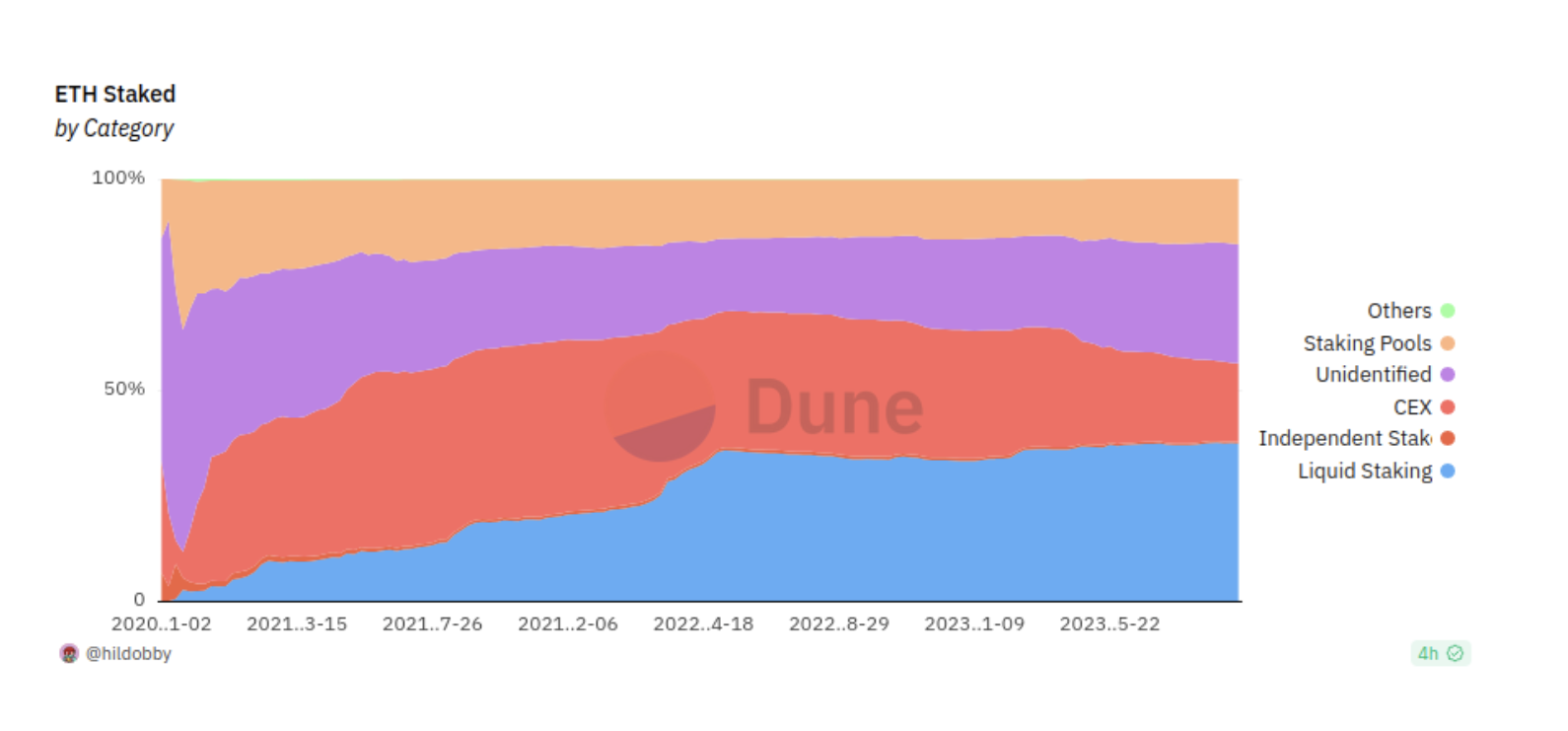
$ETH staked by category chart. Source: Vitalik Buterin
In the meantime, he explains that Rocket Pool offers the opportunity for anyone to become a node operator by placing an 8 Ether ($ETH) deposit, which, at the time of this publication, translates to approximately $13,406.
However, he notes this comes with its own risks. "The Rocket Pool approach allows attackers to 51% attack the network, and force users to pay most of the costs," he stated.
Related: Ethereum is about to get crushed by liquid staking tokens
Buterin highlights that a possible approach to address this issue involves promoting and encouraging ecosystem participants to utilize a variety of liquid staking providers. He clarifies this would decrease the likelihood of any one provider becoming excessively large and posing a systemic risk.
“In the longer term, however, this is an unstable equilibrium, and there is peril in relying too much on moralistic pressure to solve problems.”
Magazine: Are DAOs overhyped and unworkable? Lessons from the front lines

 cointelegraph.com