
 news.bitcoin.com
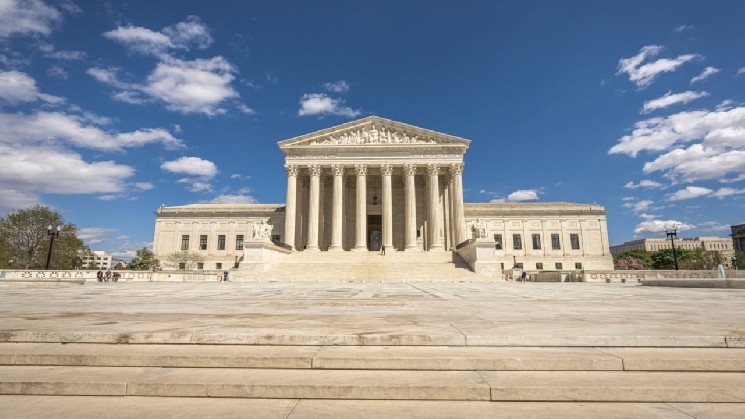
Three Executives, One Argument, No Brief Yet
At the time of writing, Kalshi has not filed anything at the Supreme Court, and its opposition brief is not due for a month – but the company has spent the past week making a clear argument in public through three people, giving legal watchers an idea of their upcoming strategy.
Chief executive Tarek Mansour said in an interview with RotoWire that the Ninth Circuit ruling, which sided with New Jersey, “added more legal uncertainty than there was before.” Per his framing, the courts largely agree on preemption, with “a more narrow disagreement as to whether swaps can be sports,” and much of the reaction “centered on Rule 40.11. The Key: There is likely a new rule coming in the next few weeks or the next few months that is going to clarify matters.
Kalshi’s head of litigation, Jovy Dedaj, writing on X, said the Ninth Circuit agreed with the Third on a fundamental point – with the latter’s decision in favor of Kalshi – but that its decision “rests, in large part, on an incorrect interpretation of the CEA’s Special Rule.” The prediction market’s spokeswoman, Dani Lever, echoed this argument to Bloomberg Law and CNBC: that the Ninth Circuit “agreed with that key principle,” and “where it differed, it did so based on a regulation that’s in the process of being rewritten.”
The new rule Kalshi gestures at is real: the CFTC proposed in June to replace the flat prohibition with a case-by-case public interest review, under which sports would count as gaming, but most game-outcome and prop contracts would survive. The commission has actively filed amicus briefs on the prediction markets’ side in state legal action, asserting exclusive jurisdiction, suing states over their enforcement actions directly. CFTC spokesman Zach Fulton told The Block in a statement that the Ninth Circuit misread the statute and regulations.
In a concurrence to the Aug. 28 opinion, Ninth Circuit Judge Kenneth K. Lee wrote that he did not think the court needed to reach the statutory question at all, because 17 C.F.R. § 40.11 bars gaming contracts, and while the commission has proposed revising it, “it remains in the books and controls the outcome of this appeal.” Third Circuit Judge Ryan D. Nelson’s majority took the harder route, holding the contracts are not swaps because they are bets, and that reading the statute otherwise would assume Congress “hid an elephant in a mousehole.”
Nelson opened his opinion by quoting the company’s own advertising back at it: “the first app for legal sports betting in all 50 states.” Mansour’s attempt to defuse this was to make the following argument to RotoWire: “If you’re using the word ‘bet’ colloquially, you can bet on stocks. When you buy Tesla stock… you say, ‘I’ll just bet on Tesla.'”
The prediction market also has to reckon with its own past legal strategy here. Before the company entered sports, fighting the CFTC in the D.C. Circuit over election contracts, it conceded that gaming includes sports and that an illegal instrument cannot be saved by a public-interest review – which is the precise mechanism the proposed rule would install. The Ninth Circuit quoted the concession back at the company.
New Jersey’s petition is narrower than most coverage suggests. In Flaherty v. KalshiEX LLC, Attorney General Jennifer Davenport framed the question as whether Dodd-Frank “preempted States from regulating sports bets that occur within their jurisdictions if those bets are offered on markets registered with the Commodity Futures Trading Commission” – meaning sports specifically, not event contracts generally. The filing describes a “direct, acknowledged, and irreconcilable split” and says the companies have “already dragged at least 20 States into litigation.”
Because Dodd-Frank also bars companies from offering swaps off CFTC-registered markets, the petition argues that if Kalshi is right, “then state-licensed sportsbooks that everyone has understood to be legal since Murphy – including at brick-and-mortar casinos – have apparently been violating Dodd-Frank all along.” It calls implied displacement of state gambling law an “astonishing” conclusion with grave “economic and political consequences.”
John Holden of Indiana University’s Kelley School of Business, speaking to SBC Americas, set out the upcoming sequence of legal moves: Kalshi’s opposition within 30 days, New Jersey’s reply within 10 days of that, and a conference typically within a month afterward. The justices can then grant, deny, relist, or ask the Solicitor General for analysis – an option Holden said could add months, and one this case may warrant, given that the administration’s own commission is already a party in interest on Kalshi’s side. Bank of America told clients that the Court may still wait for cases pending in other circuits.