
 cryptobriefing.com
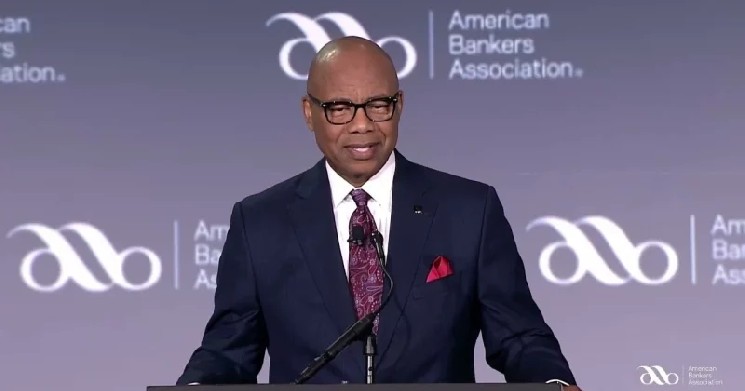
Three days before the Senate Banking Committee sits down to mark up the Digital Asset Market Clarity Act, the American Bankers Association fired off what amounts to a distress flare to every bank CEO in the country: lobby your senators, or watch trillions in deposits walk out the door.
The ABA’s letter, sent on May 11, targets a specific provision in the bill that critics have dubbed the “stablecoin yield loophole.” In plain terms, this is a carve-out that would allow stablecoin issuers to pay interest-like returns to holders, something traditional banks view as an existential competitive threat. The markup is scheduled for May 14, giving the banking lobby roughly 72 hours to mount a defense.
What the banks are actually afraid of
The numbers the banking industry is citing are not small. Treasury projections suggest that if stablecoin issuers are permitted to offer yield, up to $6.6 trillion in deposits could migrate away from traditional banks. A coalition of banking groups has rallied around a more specific claim: that yield-bearing stablecoins could reduce lending to consumers and businesses by more than 20%.
The ABA, led by CEO Rob Nichols, is framing this as a consumer protection issue, not a turf war. The argument goes that non-bank stablecoin issuers operating outside the traditional regulatory perimeter shouldn’t be allowed to offer what are effectively savings-account-like returns without the corresponding oversight, capital requirements, and FDIC insurance that banks must maintain.
The other side of the coin
Coinbase CEO Brian Armstrong has argued that banks’ fears are overstated. His position: the banking industry successfully pushed to ban passive yield on stablecoins in earlier legislative drafts, and the sky didn’t fall. Now they’re back, arguing that any yield provision will be catastrophic.
There’s also a competing economic analysis muddying the waters. While Treasury projects massive deposit outflows, the Council of Economic Advisers has reportedly claimed the impact of a yield ban would be minimal. Two branches of the executive branch can’t agree on whether this provision matters a lot or barely at all.
The lobbying history
Banks have been actively opposing stablecoin yield provisions since late 2025, when early drafts of comprehensive digital asset legislation first circulated in Congress. The Digital Asset Market Clarity Act is designed to create a comprehensive regulatory framework for digital assets, defining which tokens are securities, which are commodities, and how various crypto activities should be supervised.
The May 14 markup in the Senate Banking Committee is where amendments get proposed, debated, and voted on. If the banking lobby can convince enough committee members to strip or modify the yield provision before the bill advances to the full Senate, they win this round without ever needing a floor vote.
What this means for investors
For crypto investors and stablecoin holders, the stakes are tangible. If yield-bearing stablecoins become legally sanctioned, it could transform stablecoins from a simple medium of exchange into something closer to a savings product, boosting issuers like Circle, Tether, and any protocol that builds yield infrastructure. If the banking lobby succeeds in killing the provision, stablecoins remain useful for trading and payments but can’t compete directly with bank deposits on yield.