
 coindesk.com
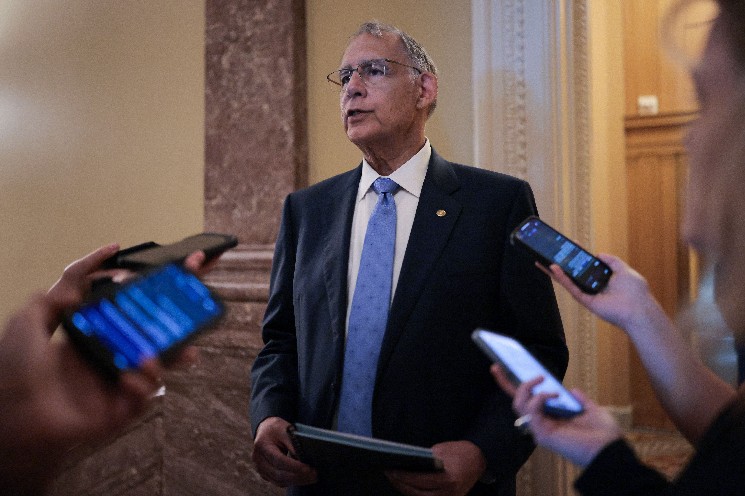
Crypto lobbyists are bracing for the latest U.S. crypto markets legislation to be a partisan effort authored by Republicans, according to insiders familiar with the latest talks over next week's planned Senate Agriculture Committee hearing that's set to give the effort its first significant vote.
Conversations are still ongoing between lawmakers, one of these insiders said.
A partisan effort comes with major plusses and significant minuses. The industry's government-affairs crowd is still waiting on legislative text set to emerge on Wednesday, but they've been told to expect it to stick closely with the sector-friendly language that, for instance, wouldn't subject crypto developers to treatment as regulated financial firms.
However, if the bill advances from the committee without bipartisan support, it may be more difficult to eventually execute the policy effort that crypto advocates devoted years of lobbying and hundreds of millions of dollars in campaign funds trying to deliver. Republican-only backing could jeopardize the eventual vote tally in the overall Senate, where at least seven Democrats would typically be needed to advance legislation under that chamber's rules.
The Agriculture Committee remains on track for a Tuesday markup hearing — a session in which lawmakers hash out amendments to a bill then vote on whether to forward the matter for the entire Senate's consideration. It's a major step in the life of a bill, potentially putting it on a final track to passage. And President Donald Trump added to the pressure in his remarks in Switzerland on Wednesday that he intends to sign the bill into law soon.
The White House's crypto adviser, Patrick Witt, posted on social media site X late Tuesday that there will be a bill approved.
"It’s a question of when, not if," he wrote. "Assuming a multi-trillion-dollar industry will continue to operate indefinitely without a comprehensive regulatory framework is pure fantasy."
Whether or not this new version pleases the industry, this bill needs two committees — at least — to sign off before it can advance. The Senate Banking Committee took a first shot at it last week, and the effort disintegrated under a confluence of pressures, from unsatisfied Democrats, resistant Republicans, a defiant White House, bank lobbyists and, in the end, a withdrawal of support from top U.S. crypto exchange Coinbase.
Because of the different jurisdictions of the two committees, the banking version is focused more on securities and the agriculture version governs commodities. Since cryptocurrencies straddle those worlds, both panels need to approve the bill.
Though the negotiators returned to the table to keep working on the banking draft after that committee's markup had to be indefinitely delayed last week, the Agriculture Committee is currently in the driver's seat. It's a group of lawmakers historically more noted for its bipartisan track record, and Chairman John Boozman provided a schedule for the bill's progress this month as he praised his "great partner" in the negotiation, Democratic Senator Cory Booker. The draft was due by Wednesday, and the markup and voting are set for next Tuesday, January 27.
"This schedule ensures transparency and allows for thorough review as the committee moves forward with legislation to provide clarity and certainty for crypto markets," Boozman said.
But if the crypto lobbyists' concerns are borne out that Democrats won't back this version, it means the negotiation will have to keep going between the parties. So far, Democrats have pursued several demands over illicit finance protections and government-ethics safeguards that haven't been fully resolved.
Crypto insiders are also well aware that — much like in the talks on the banking side — they haven't had a full slate of comfortable Republicans on Boozman's committee. One of his members, Senator Chuck Grassley, had expressed a demand that the panel Grassley leads as chairman, the Senate Judiciary Committee, needs to have a say in the bill's liability protections for crypto developers.
Also last week, Senate Banking Committee Chairman Tim Scott told CoinDesk that one of the Democrats' top asks — anti-corruption language that would ban senior officials from personally profiting off of the industry — should be in yet another committee's hands: the chamber's ethics panel. Scott said that lawmakers from his committee are working on a standalone version of that effort that may get its own consideration.
Apart from that, the Digital Asset Market Clarity Act (an earlier and very different version of which already passed last year in the House of Representatives) has dozens of other hoops to clear. Each issue — such as the question of stablecoin yield, the prevention of illicit finance and the existential defense of the decentralized finance (DeFi) corner — all have sets of battling interests.
The release of the draft legislation will let them get started on arguing the changes they feel the need for, and if the banking side's effort is precursor, then this bill will be said to contain dozens of red lines and deal-breakers for the various negotiators. But Boozman's committee has given itself a bit more time to work out those details before its scheduled hearing.