
 coindesk.com
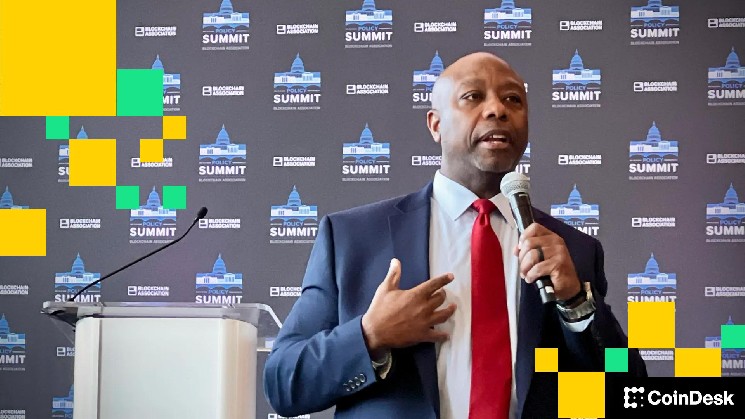
The legislative sticking point about Democrats wanting to legally kick President Donald Trump out of crypto doesn't belong in the current market structure bill, Senator Tim Scott said as the Senate Banking Committee he leads is poised to vote on the long-awaited crypto bill on Thursday.
The ethics debate has been determined to be outside of his committee's jurisdiction, the South Carolina Republican told CoinDesk in an exclusive interview on Wednesday, and lawmakers are now pursuing it as a standalone effort that may belong in the Senate's ethics panel — a separate committee with its own leadership and members.
"The ethics language has got to go through the jurisdictional areas in our body, and that would be the ethics committee," Scott said. "We can talk about it; we can even work on language, but dropping it into the bill is far more difficult than we had anticipated."
On the eve of the markup, Scott also said that the running debate over stablecoin rewards — a matter that's said to have members from both parties balking at the compromise measure included in the current draft of the bill — hasn't yet been resolved. Scott said the staff and lawmakers have been working day and night, and some language is now being reviewed by people on both sides of the aisle.
To answer critics who expressed fear that stablecoins would threaten traditional bank deposits, the draft bill released this week had taken a step back from last year's GENIUS Act to restrict stablecoin rewards for holding tokens in a way that resembled a savings account. Instead, it maintained rewards for active use and transactions of the tokens. But there were still members uncomfortable with that section, according to people familiar with the talks.
With new text circulating, Scott said the other lawmakers are "checking with their stakeholders back at home, so we're hopeful that they will all say yes to the language that we've given them."
Market structure end game
The crypto industry has devoted years of effort and hundreds of millions of dollars in political spending and lobbying to get this far on the legislation, which represents the single most important policy aim for the sector. And now it's close to its first significant Senate vote.
A good outcome in Scott's committee, with some Democratic support, could lead to an eventual approval by the overall Senate, which would likely see the Digital Asset Market Clarity Act become law shortly thereafter. Scott said he'd like to see that before the end of the year.
"This has been all-hands-on-deck," he said, quipping that "colorful language and strong opinions have been part of the process."
"People are very passionate about this issue."
For the crypto sector, being established irrevocably as a fully-regulated piece of the U.S. financial system is widely believed to be the last step toward a legitimacy that will bring a wave of investment and activity from those who awaited that extra legal assurance.
Ethics debate
In the months of intense negotiation on the Clarity Act, a number of points still went unresolved as 2026 kicked off. The Democratic lawmakers had pressed for several items, including the restrictions on senior government officials profiting from crypto businesses — a provision aimed squarely at Trump.
Scott said the question will have to be "part of the broader package at a later date," because of the jurisdictional situation.
"I think it will happen before, of course, the bill leaves the floor," he said. Scott added that there's a separate legislative effort now being worked on by Republican Senator Cynthia Lummis, who leads the panel's crypto subcommittee, and Democratic Senator Ruben Gallego, who previously said incorporating an ethics provision was a "red line."
What's happening in Scott's committee on Thursday is known as a markup hearing in which the committee will weigh amendments — of which at least 75 came in from members of both parties on Tuesday — and try to vote on a revised version of the bill. If approved, the process will then wait for the other necessary committee approval from the Senate Agriculture Committee, which is scheduled for later in the month. If both panels advance their bills, the two products will be combined into one for an eventual Senate vote.
When asked why he was so set on getting quickly to a markup, Scott said the talks have stretched over many months since last year.
"Truth of the matter is, at some point you got to vote," he said. "I think some people are afraid of the consequences of voting no, and they've been trying to hold it up so they wouldn't have to face those consequences."