
 coindesk.com
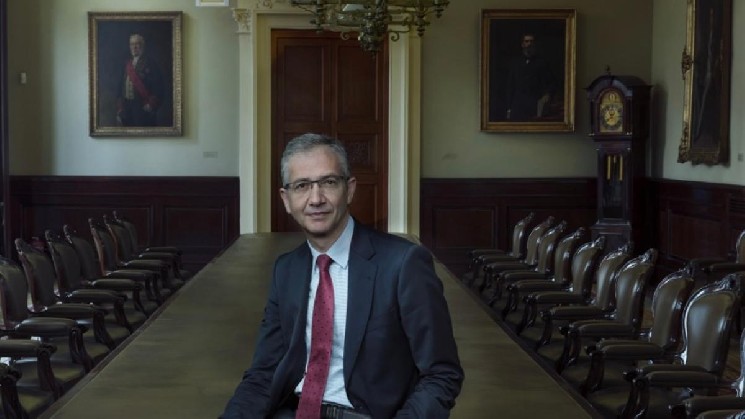
Pablo Hernandez de Cos, the former Bank of Spain governor chosen Thursday to become the first Spaniard to lead the European Central Bank (ECB, is unlikely to bring much change to the institution’s stance on bitcoin $BTC$61,637.53, stablecoins or the digital euro.
The European Council announced the nomination on Nov. 26. The 55-year-old is expected to succeed Christine Lagarde when she leaves office on Feb. 7. The appointment still requires consultation with the European Parliament and the ECB’s Governing Council before formal confirmation next month.
For the European Union’s crypto industry, his appointment offers little prospect of a change in approach. While supporting the use of blockchain by regulated banks, Hernandez de Cos has questioned whether stablecoins, crypto tokens whose value is pegged to a traditional asset such as the dollar or euro, can function as money on a large scale. His stance risks driving crypto companies to friendlier jurisdictions such as the UAE, said Irina Heaver, founder of Dubai-based crypto law firm NeosLegal.
“If his philosophy translates into ECB policy, it will create further opportunities for the UAE to attract European founders, capital and talent looking for a jurisdiction where they can innovate, build and scale within a clear regulatory framework,” Heaver said in an interview. “Sometimes I feel that other governments and their policymakers are doing a better job of promoting the UAE as a global hub for digital assets than we could ever do ourselves.”
At the Jackson Hole symposium in August, Hernandez de Cos argued that stablecoins are not a credible means of payment on a large scale. Echoing Lagarde, he also warned that widespread use of dollar-backed stablecoins outside the U.S. could weaken countries’ control over monetary policy while drawing deposits away from banks and raising their funding costs.
Instead, he favors tokenized commercial bank deposits, which allow banks to transfer funds onchain while settling payments through central bank reserves.
"Tokenization offers real gains: programmability, atomic settlements and around-the-clock operations," Hernandez de Cos said. "But the path to the future monetary system lies in improving the old while enabling the new."
His record also offers little encouragement to banks seeing greater exposure to bitcoin $BTC$61,637.53, the largest cryptocurrency.



