coindesk.com
Kraken spent most of its 15 years building a crypto exchange. Over the past two years, its parent company has been buying and building the pieces of something much bigger.
Payward, its Wyoming-based parent company, spent billions on acquisitions that expanded its reach into futures and derivatives, pushed into tokenized stocks, and pursued additional banking capabilities in the U.S. and Europe.
The moves are part of a bigger goal to turn Payward into a unified financial platform where trading, banking, asset management and services for other businesses can operate under the same infrastructure.
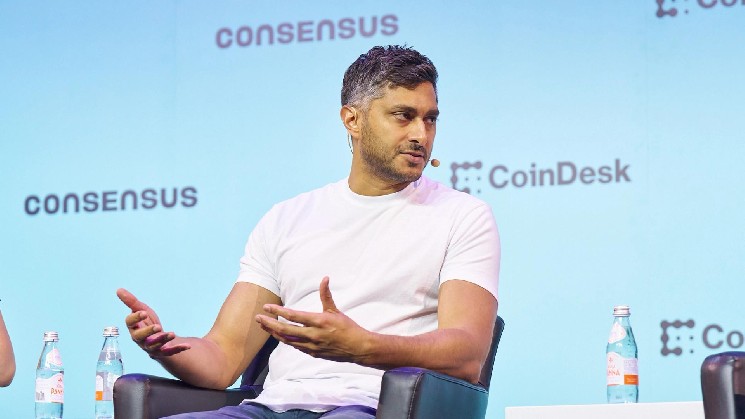
“We’re not a holding company,” he said. “It’s one platform, one balance sheet, one regulatory stack,” its co-CEO Arjun Sethi told CoinDesk in an interview.
At the center of the strategy is what Sethi calls “one ledger,” which allows money and assets to move between products without the patchwork of intermediaries that sits behind most of traditional finance.
Payward is not alone in pursuing a broader financial platform. Coinbase is building an “Everything Exchange” spanning crypto, stocks, derivatives and prediction markets, while Binance is combining trading, payments, investing and yield products into a single platform.
But Payward is pursuing a different model than Coinbase, according to Architect Partners, a digital-assets investment bank. Rather than concentrating all of its products inside a single Kraken-branded platform, the company is building infrastructure that can support multiple brands and be used by outside financial companies.
“Payward appears to be choosing a different aggregation layer: the regulated infrastructure stack that can power financial products across multiple brands, customer segments, and partner channels,” Architect Partners said.
“In our view, Payward is helping define the next evolution beyond the ‘Everything Exchange’: an ‘Everything Financial Infrastructure’ model.”
Kraken remains smaller by exchange volume: CoinGecko data show it averaged about $1.1 billion in daily spot trading during the first four months of 2026, while Binance controlled 38.7% of top-10 centralized-exchange spot volume in the second quarter and Coinbase reported an 8.6% share of overall crypto trading volume in the first quarter.
One ledger, four businesses
Payward’s thesis is that much of the legacy financial system remains constrained by decades-old technology and market conventions. Securities take time to settle, markets close overnight and on weekends and banks, brokers, custodians and clearing houses maintain separate records that must be reconciled.
Each boundary creates another intermediary, delay and fee, Sethi said. Blockchain systems, in his view, offer an alternative by allowing assets to function as investments, collateral and programmable instruments on shared infrastructure.