
 coindesk.com
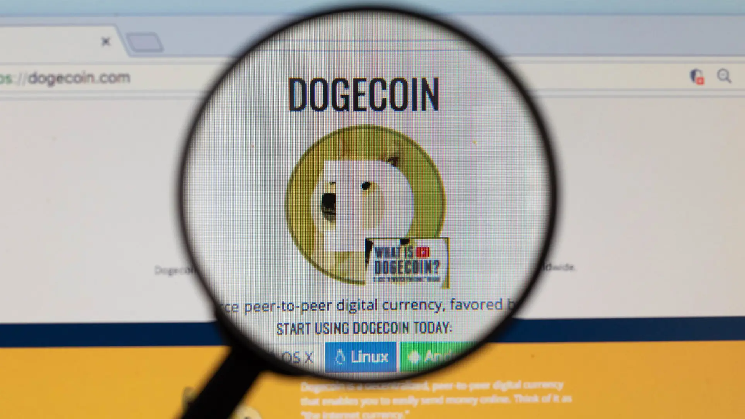
Dogecoin spent years becoming one of crypto's easiest tokens to buy. But putting it in exchange-traded funds (ETFs) has done little to attract a new class of investors.
Data analyzed by CoinDesk shows that ETFs for another popular token, $XRP, took in more money on Wednesday than three U.S. dogecoin funds have collected in nearly 10 months.
The $XRP products added $12.29 million on Sept. 9, while cumulative net inflows into the tracked $DOGE funds stood at just over $12 million through Sept. 10.
These funds let investors follow a cryptocurrency’s price through an ordinary brokerage account, without buying and storing the tokens themselves. Net inflows measure money entering the funds after withdrawals, offering a read on fresh demand.
The tracked $XRP and $DOGE funds began rolling out within weeks of each other last November. Both tokens have large retail followings among investors looking for crypto bets beyond bitcoin and ether.

Dogecoin’s results sit far behind those of other major tokens that have made the trip to Wall Street.
The tracked $XRP funds have accumulated $1.7 billion in net inflows since going live in November 2025, while products following Solana’s SOL token have collected $1.36 billion since their launch in October 2025. Each tracked category has drawn more than 100 times the $DOGE group’s total.
The weak demand is already thinning the field. Crypto asset manager Bitwise said Thursday it will shut its Dogecoin ETF, BWOW, less than a year after its November launch. The fund reported just $687,713 in assets as of Sept. 9, with trading expected to end Oct. 14 and remaining shareholders receiving cash on Oct. 22.
“Bitwise has determined to liquidate the fund as it continues to optimize its product range to meet evolving investor needs,” the firm’s spokesperson told CoinDesk.
Long stretches without fresh money
The analyzed data covers 199 trading days for the three Dogecoin funds. They recorded positive net inflows on just 28 of those days and net outflows on five.
On the other 166 days — more than 83% of the sample — combined net flows were zero.
The other 166 days recorded zero net flows. That means either no money entered or left the funds, or new investments were canceled out by withdrawals. For example, if investors put in $100,000 but others withdrew $100,000, the net flow would be zero.
Newsletters

-
1Trump agrees to stricter ethics rules to save Clarity Act crypto bill: AP
-
2FCA considers exempting tokenized gold from fund rules to defend London market
-
3Live updates: Bitcoin manages small gains as stocks drop on AI concern, oil surges
-
4Crypto market outperforms as call for slower AI development weighs on tech stocks
-
5Bitcoin climbs to $78,000 as crypto sits out the AI selloff
-
6TikTok developer ByteDance arranges $29.6 billion loan as it builds AI ambitions
-
7Fed, BOE, BOJ interest-rate decisions: Crypto Week Ahead
-
8Bitcoin bucks tech selloff as AI safety concerns weigh on stocks
-
9Is Clarity dead? A vibes-based analysis: State of Crypto
-
10Quantum-proof blockchain: why math, not machines, holds the key

Tokenized Equities Lead RWA Inflows as bStocks Sets the Pace

Tokenized Equities Lead RWA Inflows as bStocks Sets the Pace
Tokenized equities lead RWA inflows as the market recovers; Binance's bStocks hit ~$118.5M in two months, now #2 issuer and ~90% of on-chain equity DEX volume.
Tokenized equities lead RWA inflows as the market recovers; Binance's bStocks hit ~$118.5M in two months, now #2 issuer and ~90% of on-chain equity DEX volume.
Why it matters:
Tokenized equities lead RWA inflows as the market recovers; Binance's bStocks hit ~$118.5M in two months, now #2 issuer and ~90% of on-chain equity DEX volume.
Live updates: Bitcoin manages small gains as stocks drop on AI concern, oil surges

Bitcoin climbs to $78,000 as crypto sits out the AI selloff
