
 cryptopolitan.com

Crypto traders’ concerns about Strategy center on how aggressively the company has borrowed money to buy Bitcoin weekly. Over the years, Strategy issued large amounts of convertible debt and other loans to stack more BTC.
Strategy performed well during bull markets; however, it makes people nervous during price drops. Crypto investors worry that the company could face pressure from debt obligations, higher interest costs, or refinancing risks.
Data shows that since Bitcoin’s all-time high in July, Strategy (MSTR) stock has plummeted approximately 65% from $456 to $158 per share.
Saylor’s BTC publicity puts Strategy in trouble
Over time, Strategy’s identity has become more and more tied to Bitcoin itself. Under Michael Saylor, the company has evolved into a more Bitcoin-centric entity, rather than a traditional software business. Traders are concerned about whether the core software revenue is strong enough to support the company if Bitcoin enters a long bear market.
When Bitcoin’s price swings more, investors on X and Reddit often speculate about the worst-case situations, such as having to sell Bitcoin or having shareholders lose money, even though these things don’t always happen.
The company also appears to be having cold feet. As reported by Cryptopolitan, this week Strategy achieved a weekly raise, but this time dedicated the funds to its USD reserve instead of Bitcoin. Strategy added 748M to its reserve, bringing the total to $2.19B.
The decision to stop buying BTC and raise the USD reserve was aimed to ease refinancing and dividend stress in the short term. It also to directly address worries about forced Bitcoin sales.
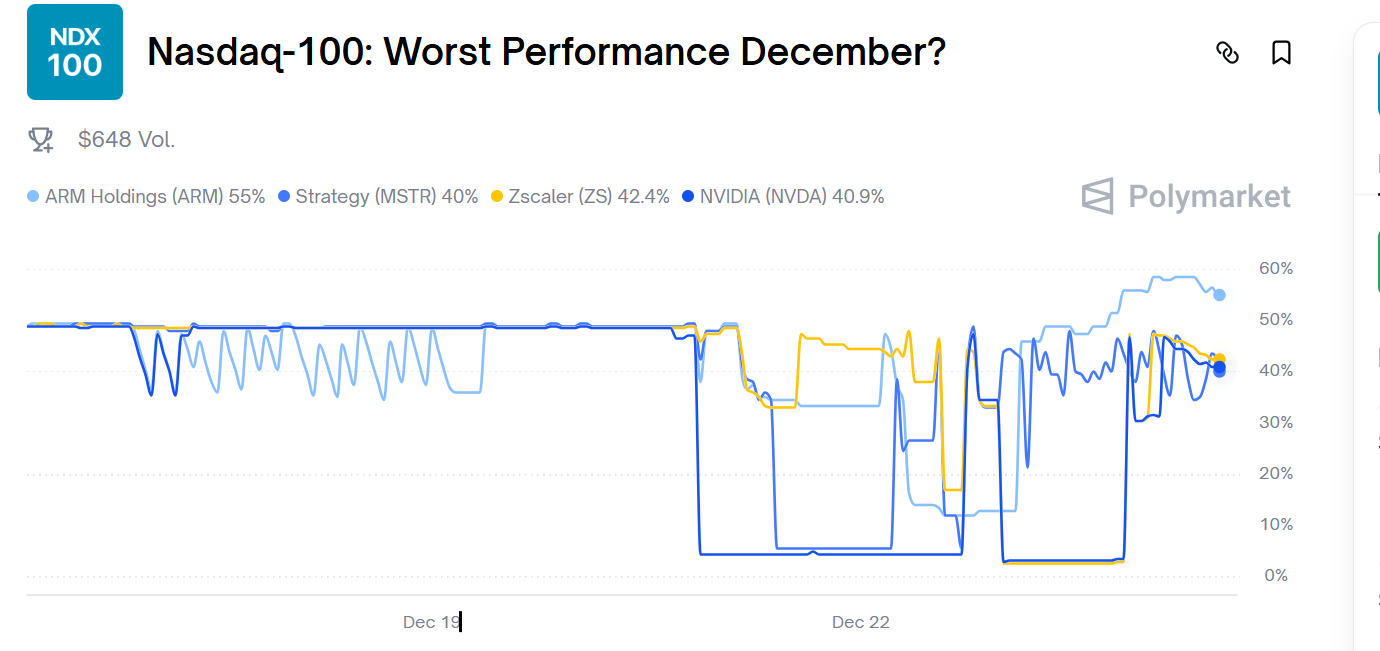
The looming MSCI index decision has added to the anxiety. Recently, Polymarket showed that 61% of traders believed that Strategy would be delisted by March 31 from the MSCI index. The company is also ranked second as the worst performer among the Nasdaq 100.
Saylor claims that Bitcoin is a living network that can adapt when needed. If quantum computing ever becomes powerful enough to threaten current security methods, Bitcoin developers and users would respond by upgrading the network.
There is also a growing distrust of powerful figures in crypto and finance, particularly during this two-and-a-half-month downturn. Saylor’s influence is also decreasing. Some people worry that Saylor’s influence encourages others to take risks they don’t fully understand.
Bitcoin investors increase long positions
Bitcoin is still stable today, with a small drop of almost 1% after a time of tumultuous trading. The dip comes after $952 million was taken out of crypto funds by institutions. This includes $460 million from Bitcoin alone, which is due to worries about regulatory delays and the possibility of whales selling more.
At the start of the week, Bitcoin ETFs saw $142 million in outflows. The Bitcoin ETF market cap, on the other hand, is still strong at $114.99 billion. Then, the $111 million surge in Solana and XRP inflows shows that institutional investors are moving into other assets as Bitcoin’s price dips.
Meanwhile, perpetual futures are showing increasing long positions. The open interest rose by 2% to 310,000 BTC, which is approximately $27 billion. The funding rate has hit 0.09%, the highest in two weeks.