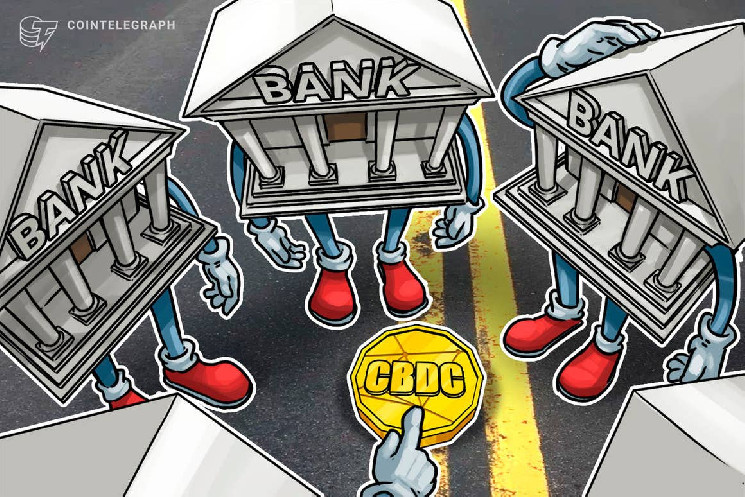
The CEO went on to say that stablecoins and cryptocurrencies will require regulation that is equivalent to the extent of associated risks as the industry adoption grows further. “Even then, only designs that are sufficiently well anchored to achieve price stability, and correspond with current approaches to financial crime prevention, are likely to be useful as a reliable and safe means of payment,” he added.
While expressing skepticism over crypto, Quinn emphasized that HSBC will continue deepening the experience of cross-border payments and the global CBDC development. He noted that the bank had been actively working with many central banks including those in the United Kingdom, France, Canada, Singapore, mainland China, Hong Kong, Thailand and the United Arab Emirates, to contribute to their CBDC projects.
HSBC is one of the world’s largest banking institutions, reportedly being one of the largest debt buyers of troubled Chinese real estate developer Evergrande alongside investment giant BlackRock. In contrast to BlackRock, which has been actively moving into crypto recently, HSBC has emerged as one of the biggest skeptics of Bitcoin (BTC) and the crypto industry in general.
Related: Stablecoins are assets — not currencies, says ECB president
In August, HSBC was among British banks that opted to cut payment channels Binance over “concerns about possible risks” to its customers. HSBC previously blocklisted the stock of business intelligence firm MicroStrategy as part of its user policy prohibiting customers from interacting with crypto.
Quinn’s remarks come amid the growing scrutiny over private stablecoins by global financial regulators. On Tuesday, the United States Securities and Exchange Commission’s chair Gary Gensler once again called for tougher crypto regulation, calling stablecoins “poker chips” at the “Wild West” crypto casino.

 cointelegraph.com