
 ambcrypto.com

Bitcoin [$BTC] miners are under increasing financial pressure as restructuring is forcing operators to cut both reserves and mining capacity.
Furthermore, Miner Net Positions have quickly changed to negative, and miners are now selling at rates that were last seen during the 2022 market lows.
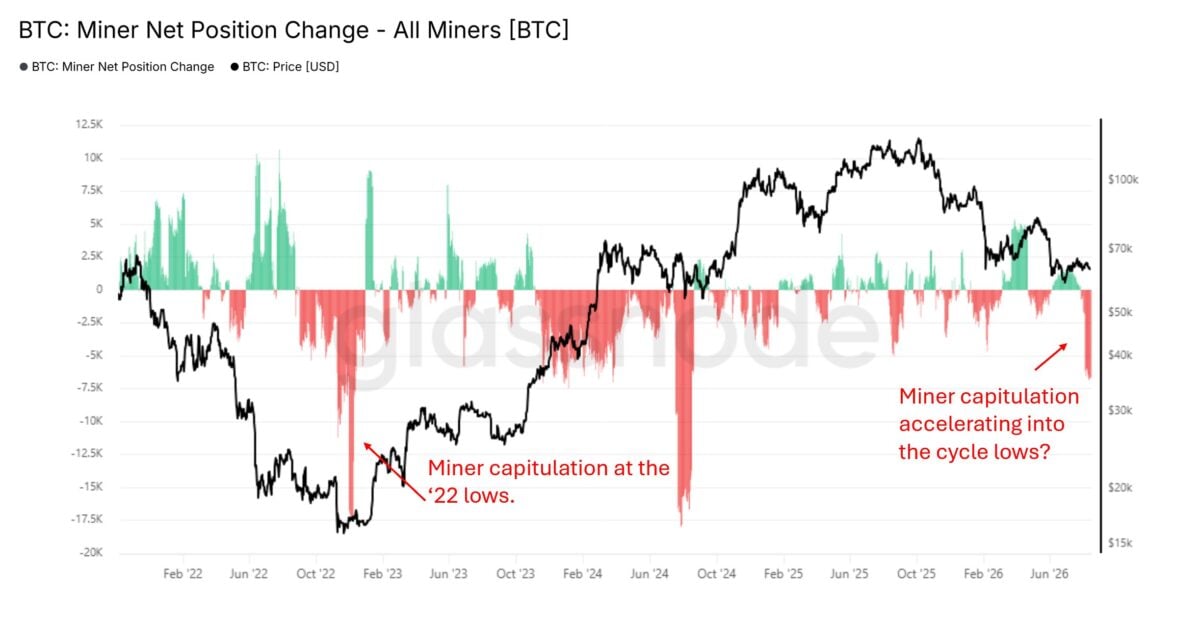
This returns previously held $BTC to circulation, adding supply while Bitcoin trades near the lower end of its 2026 range. Simultaneously, the 30-day Mean Hash Rate has declined by roughly 21% as of writing, from its peak as miners redirect infrastructure toward AI.
Unlike China’s 2021 ban, which caused a 41% decline, this contraction reflects an economic restructuring rather than forced shutdowns.
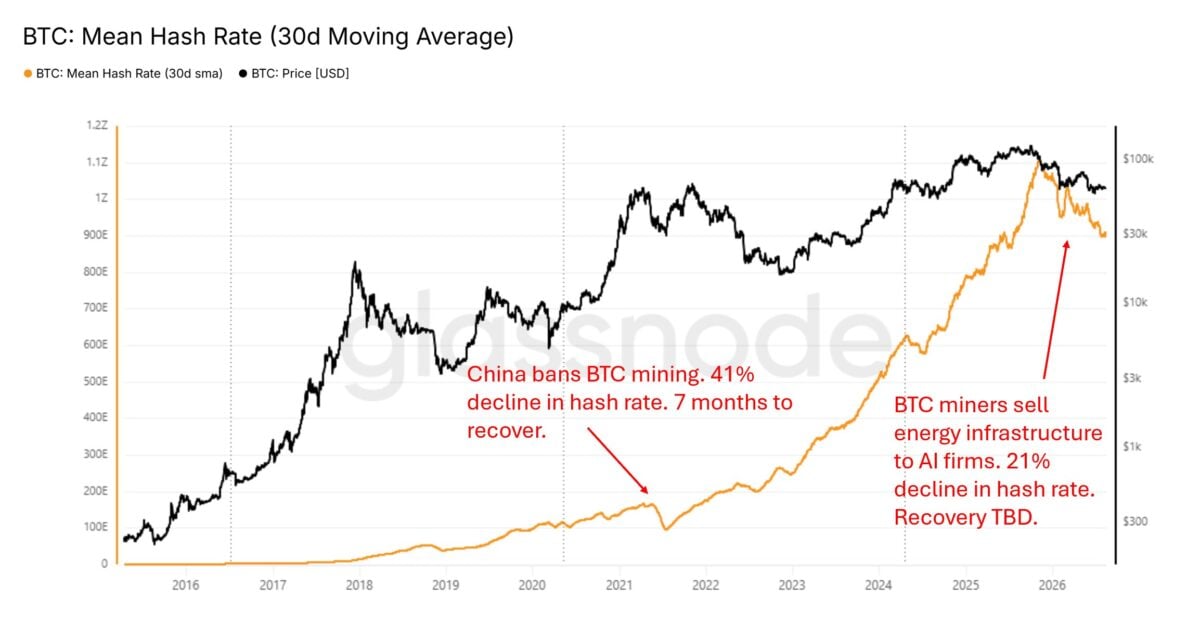
Together, the reduction in both reserves and the hash rate indicates weak support among miners for maintaining commitments to operationalizing Bitcoin. As a result, this creates near-term supply pressures on top of weakening network computational capability.
Dormant Bitcoin returns to circulation
Notably, while miners return treasury coins to circulation, older holders are also moving their coins, which have sat idle through several market cycles. In fact, one wallet with approximately 8.54 $BTC worth $539,000 moved its balance of funds for the first time in fifteen years.
These coins were originally received by the holder in 2011, at a time when the price of Bitcoin was averaging around $14. Thus, the transfer of these coins to an exchange portrays a different context than the transfers made by the miners.
Unlike miner restructuring, this movement simply represents dormant supply becoming immediately available on an exchange.
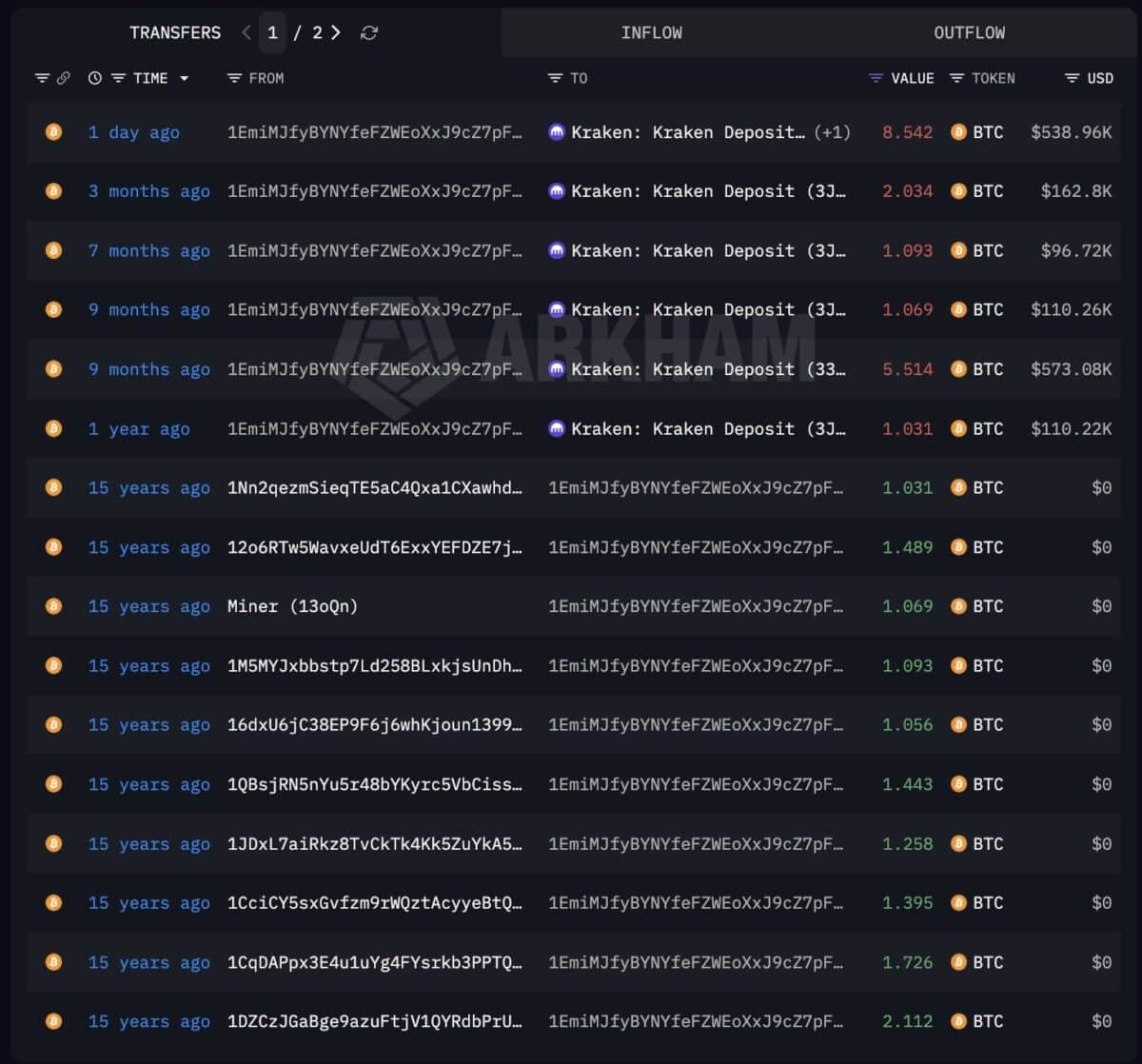
Although the 8.54 $BTC remains too small to spark meaningful market-wide selling pressure alone. Its significance lies in holder behavior, as a fifteen-year-old position has shifted from long-term storage to liquidity.
Dormant Bitcoin supply keeps growing
The broader dormant supply puts the 8.54 $BTC transfer into perspective, as older holders largely continue keeping coins inactive.
As of writing, there are over 3.5 million $BTC remaining idle for over ten years. This represents only a small fraction of the supply, accounting for 17.7% of the total supply.
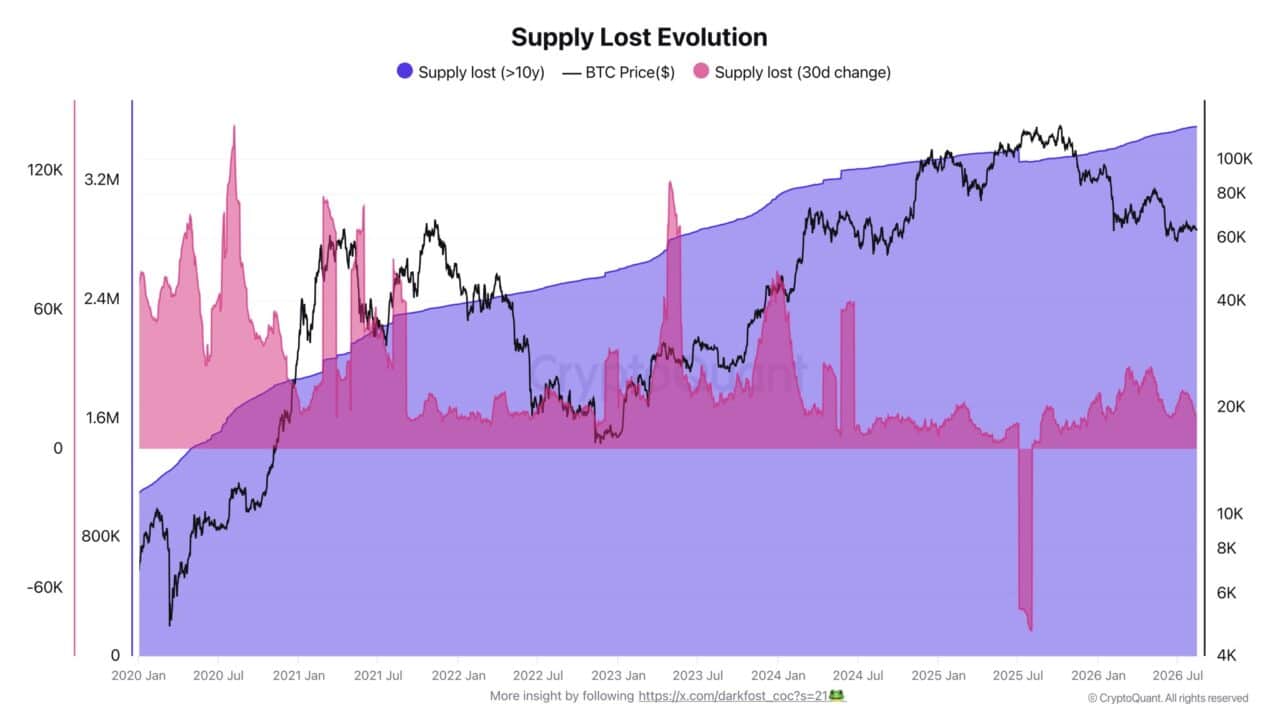
Another 14,000 $BTC joined this cohort within the last 30 days, further reducing coins readily available for trading. This matters because shrinking liquid supply can strengthen scarcity when demand increases, rather than automatically creating selling pressure.
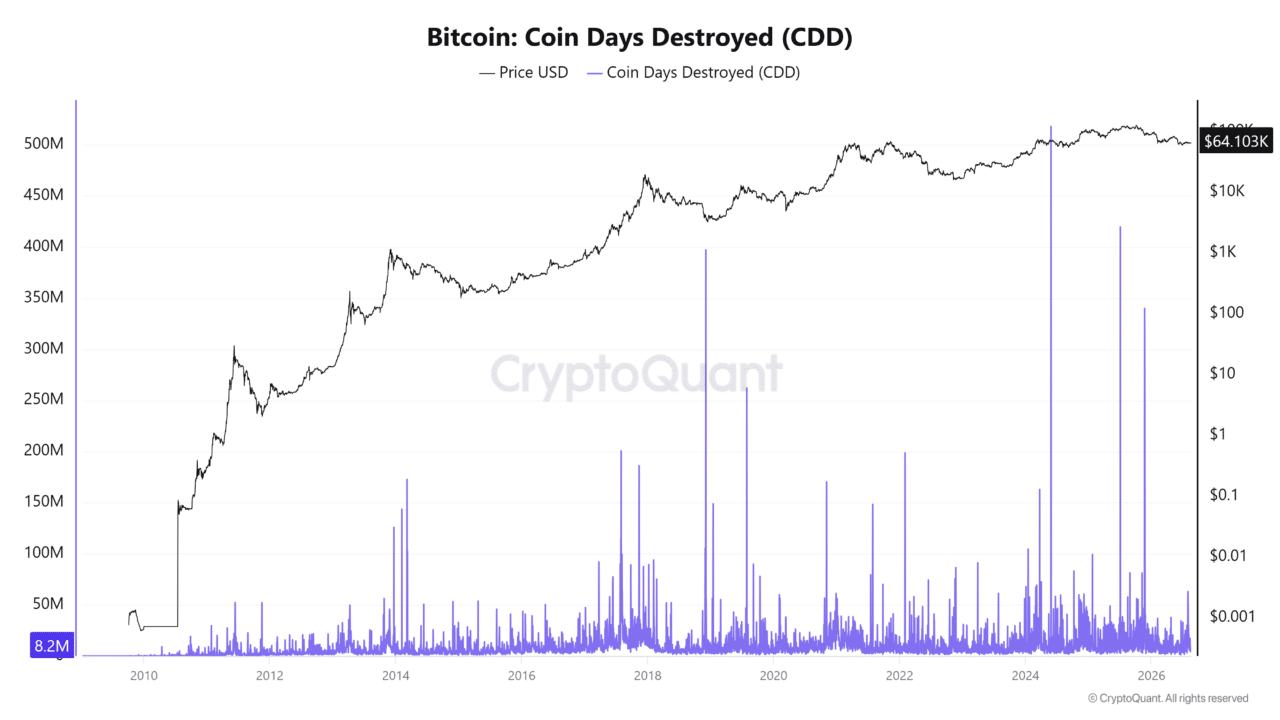
Coin Days Destroyed reinforces that restraint. Coin Days Destroyed is currently reading approximately 8.2 million compared to the historical spikes above 500 million.
Therefore, one dormant wallet being “awakened” does not influence the market much. However, sustained higher readings from CDD would provide evidence that older holders are adding supply back into marketplaces.
Final Summary
- Bitcoin faces added miner supply, but growing dormant holdings keep broader long-term selling pressure limited.
- $BTC’s 8.54-coin awakening remains isolated as 3.5 million $BTC stays dormant and CDD remains subdued.