
 coindesk.com
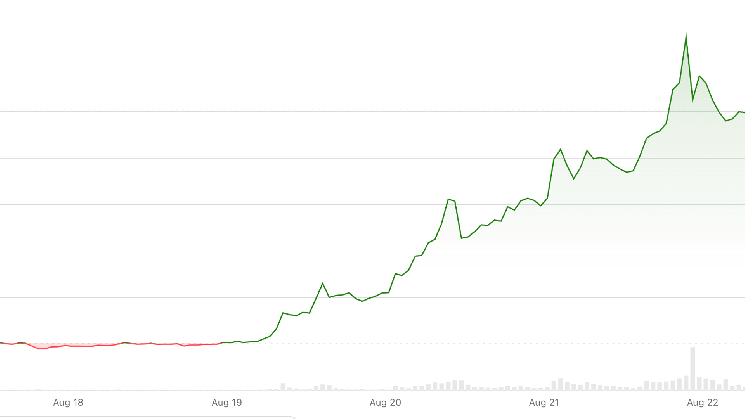
Payments-focused cryptocurrency $XRP is on track for its best weekly performance since November 2024 after a U.S. Treasury announcement fueled market speculation that policymakers could ultimately resort to yield curve control (YCC), an aggressive monetary-easing tool.
$XRP has surged 51% to $1.50 since Monday, beating its peers, bitcoin $BTC$77,176.83, ether $ETH$2,446.46, and Solana ($SOL), by a big margin, according to data from CoinDesk. $BTC and $ETH have gained 22% and 30%, respectively, while $SOL has rallied 28%.
$XRP's outperformance follows a period of lackluster price action, during which the cryptocurrency consistently lagged the broader market's bounce. It has been characterized by a massive unwinding of short, or bearish, bets in futures. According to the data source Coinglass, shorts worth nearly $2 billion have been liquidated this week.
The surge in $XRP and other tokens began early this week after the U.S. Treasury said that, from Sept. 9 to Nov. 4, it will buy back $4 billion or more of its own long-duration (10- to 30-year) bonds on multiple occasions, double the previous $2 billion cap.
While this is more of a liquidity-management operation in the world's largest bond market, which underpins global finance, the timing of the announcement suggests that it is aimed at capping the rise in yields, as CoinDesk explained on Friday.
Yields on longer-duration bonds hit their highest levels since 2007 early this week, posing a problem for burgeoning fiscal debt and disincentivizing risk-taking in financial markets.
As such, the announcement triggered hopes of yield curve control and sent risk assets higher. Yield curve control is a full-blown stimulus measure whereby a central bank establishes a ceiling for longer-duration bond yields – say, the 10-year – and commits to buying as many bonds as needed to keep the ceiling intact.
Both the Bank of Japan and the U.S. have pursued it in the past, supporting risk-taking in financial markets.
Still, $XRP's latest price rise marks just a 20% recovery of the brutal bear-market slide from the record high of $3.65 in July last year to just under $1 a week ago. In other words, there is still plenty of ground to cover before a proper bullish trend appears to be established.