
 crypto-economy.com
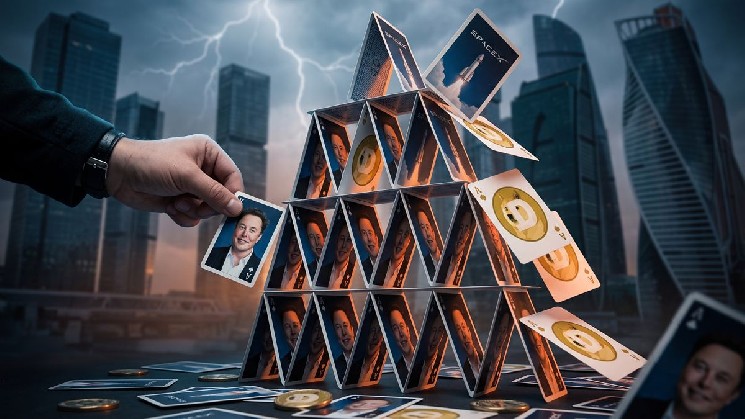
- Mark Yusko claims that Elon Musk and Mark Cuban hold most of the cryptocurrency’s circulating supply.
- The analysis compares the memecoin’s financial structure with the recent initial public offering (IPO) of the aerospace company SpaceX.
- The report points to a risk of total capitulation in the digital asset’s price if major holders decide to liquidate their positions.
The popular dog-themed memecoin, Dogecoin, could face a scenario of absolute devaluation if its main commercial driver decides to liquidate his assets in the open market.
Recently, venture capital investor Mark Yusko stated that the asset’s current valuation is not grounded in traditional financial fundamentals. The expert argues that the token’s price is sustained solely by the implicit commitment of its largest holders to retain their positions over the long term.
Supply Concentration and Parallels with SpaceX
The distribution of tokens across the network represents one of the most significant vulnerabilities for the ecosystem. Yusko suggests that Mark Cuban and Elon Musk hold the vast majority of the dog-themed coin’s available supply, complemented by a retail investor base holding the value purely out of speculation. The analyst warns that if Musk were to sell even a single token, the price could immediately plunge to zero.

The dynamic of retaining value in assets with highly concentrated ownership is not unique to cryptocurrencies. According to Yusko’s analysis, the structure of SpaceX’s IPO shares similar characteristics with the behavior of the meme asset, defining both as financial instruments driven by enthusiasm surrounding a public figure. Although the aerospace company operates a real business model through its satellite division, the economist projects that its initial $2 trillion valuation presents complex mathematical inconsistencies.
SpaceX’s offering keeps 96% of its shares locked up between founders and venture funds, releasing only 4% to the secondary market. According to the current trend analyzed by Yusko, this type of low float replicates the historical volatility of Tesla, whose shares experienced a stagnation of over four years after recording negative free cash flows and revenue contractions.
SpaceX’s current operating model indicates that its infrastructure plans for artificial intelligence data centers in outer space lack near-term technical feasibility. From this technical perspective, financial projections place the firm’s cash flows in negative territory for the upcoming fiscal periods. Institutional investors anticipate that the expiration of lockup periods for company insiders will trigger a severe correction in the company’s stock prices.