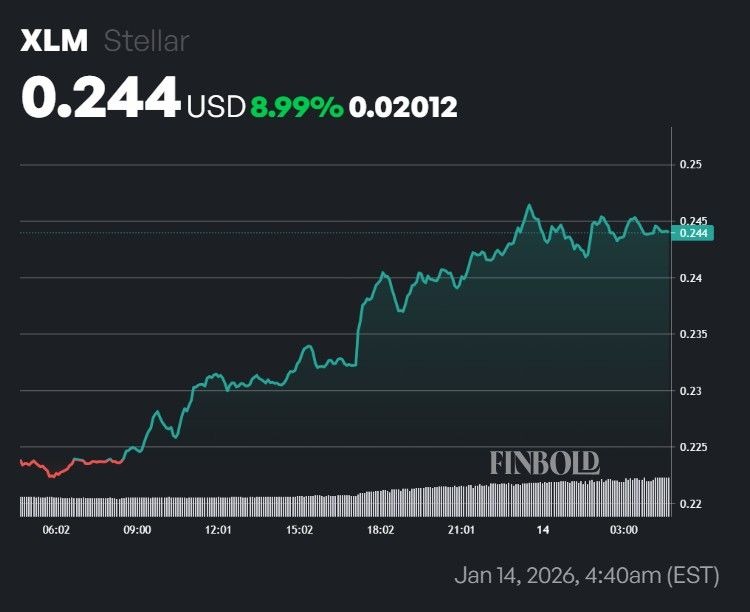
The rally appears to have come as part of a broader altcoin surge following Bitcoin’s (BTC) late Tuesday rise above $95,000, though it had been bolstered by $XLM-specific developments such as Visa’s (NYSE: V) integration of Stellar earlier in January.
Still, despite its latest upsurge, Stellar is below the $0.28 2026 high it achieved on January 6 and remains in the red in longer timeframes. For example, $XLM is down 48.33% from where it was six months ago, 41.86% below its value one year ago. It is, however, up 20.56% in 2026.
What is next for $XLM price in 2026?
Elsewhere, Stellar’s technicals show there is substantial uncertainty about where the token might go next. At press time, $XLM is trading approximately 5% above its 50-day simple moving average (SMA) but nearly 24% below the 200-day SMA.
Stellar’s relative strength index (RSI) of 55.58 shows that the cryptocurrency is neither particularly overbought nor oversold.
Ultimately, $XLM’s next target price is likely to depend on the broader crypto market, with at least a moderate correction appearing likely given $XRP’s recent performance, and Bitcoin’s latest surge toward $96,000 and subsequent retracement to $95,000.
In stark contrast to short-term uncertainty – yet, arguably, in line with early 2026 optimism – Stellar is in an exceptionally strong position long-term.
The cryptocurrency has successfully carved a niche for itself in cross-border payments with partnerships with firms such as MoneyGram, IBM (NYSE: IBM), and Mastercard (NYSE: MA). Stellar also received long-term tailwinds from the fund manager WisdomTree, as it had decided to use the digital asset’s network for its digital fund listings back in September 2025.
Featured image via Shutterstock

 finbold.com