
How Blockchain Technology Is Assisting Casino Transparency
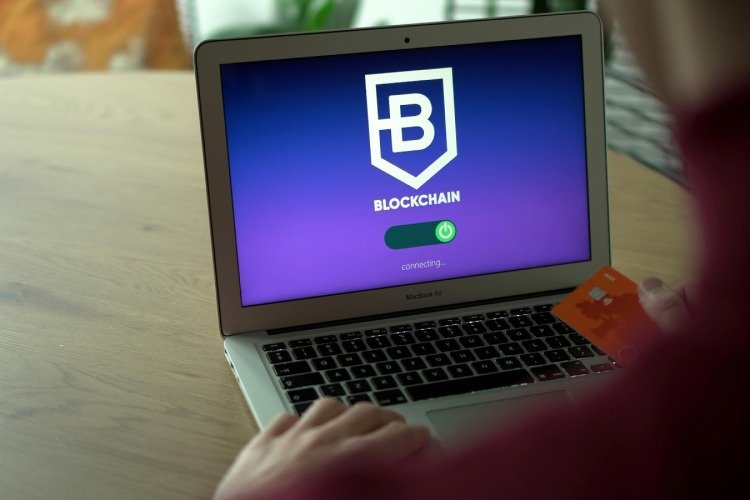
For decades, online casino players have faced a particular dilemma, forced to trust operators who essentially said “trust us, we’re honest” while keeping their systems locked away like state secrets.
The traditional approach relied heavily on promotional incentives to build player confidence—offers like the Bassbet No Deposit Bonus became standard ways for operators to attract new players while sidestepping questions about actual game fairness. These bonuses, while valuable, couldn’t address the fundamental transparency gap that left players wondering about the integrity of the games themselves.
That era of blind faith is ending. Blockchain technology has introduced something the gambling world has never seen before: provably fair gaming. This isn’t just another marketing buzzword—it’s a fundamental shift that puts verification power directly into your hands. We’re about to explore how cryptographic algorithms are replacing trust with mathematical certainty, why smart contracts are becoming the new dealers, and what this means for the $100 billion gambling industry projected by 2025.
The technical foundation might sound complex, but the principle is beautifully simple: instead of asking you to trust, these systems let you verify. Every spin, every deal, every outcome becomes mathematically transparent.
The SHA-256 Impact in Gaming
Here’s where things get interesting. The same SHA-256 encryption that secures Bitcoin transactions now powers the most transparent casino games you’ve ever encountered. Think of it as creating an unbreakable digital fingerprint for every single game outcome—one that’s generated before you even place your bet.
The system works through four essential components that work together like a perfectly choreographed dance. Your casino generates a server seed—a random number that gets encrypted using SHA-256 before you see it. You contribute your own client seed, either by choosing it yourself or letting the system generate one for you. There’s also something called a nonce, which is just a fancy term for a unique number that changes with each bet, ensuring every game round is completely distinct.
The fourth component? The SHA-256 hash function itself—the mathematical process that transforms all this data into your game’s outcome.
What makes this genuinely revolutionary is the verification process. Within about 10 seconds of any game ending, you can check the entire process yourself. The casino reveals the original server seed, you already know your client seed, and you can run the exact same calculation that determined your outcome. Most platforms even provide built-in tools that make this verification as simple as clicking a button.
BGaming, one of the industry’s leading providers, has implemented these cryptographic methods to ensure that outcomes remain completely unaffected by your betting patterns—and here’s the clever part—while simultaneously preventing you from predicting future results. It’s a delicate balance that traditional systems simply can’t achieve.
The beauty lies in the impossibility of manipulation. Since the server seed is encrypted and shared before you bet, and you control the client seed, neither party can manipulate the outcome without the other knowing. It’s like playing poker where everyone can see the deck was shuffled fairly, but no one knows what cards are coming next.
From Black Box to Glass House
Traditional casino systems have always operated like sealed vaults. You’d see the results, sure, but the actual mechanics remained hidden behind proprietary algorithms and third-party certificates that, frankly, could always be fabricated or paid for. Players had no choice but to trust that somewhere, someone was watching the watchers.
Provably fair systems flip this equation entirely. Instead of relying on external audits or regulatory promises, you can test the game fairness yourself. The algorithm isn’t hidden—it’s openly visible, sitting right there for anyone to examine. This shift from certificate-based assurance to cryptographic impossibility represents something unprecedented in gambling history.
The performance difference is telling. Provably fair games consistently offer higher RTP rates, giving you more bang for your buck compared to traditional systems. When operators can’t manipulate outcomes, they compete on fairness and player value instead of house edge manipulation.
Major platforms like Stake.com have built their entire reputation around extensive provably fair game libraries, and the results speak for themselves—enhanced player trust translates directly into increased engagement. Players stick around longer when they know the game is genuinely fair, rather than hoping it might be.
What’s particularly striking is how this technology makes tampering not just difficult, but practically impossible. The dual seed contribution system turns any attempt at manipulation into what industry experts call “a herculean task.” When both parties contribute to the randomness, and the process is cryptographically secured, the traditional vulnerabilities simply don’t exist.
The shift represents more than technical advancement—it’s a fundamental change in the relationship between player and operator. We’re moving from a trust-based model to a verification-based one, where mathematical certainty replaces institutional promises.
Digital Dealers That Never Sleep
Smart contracts take this transparency revolution even further. These self-executing digital agreements automatically carry out their obligations when specific conditions are met, eliminating the need for intermediaries entirely. Think of them as digital dealers who never take breaks, never make mistakes, and operate according to rules that everyone can see.
The technical implementation covers everything from automated game logic to instant transaction processing. When you deposit funds, the contract automatically credits your account. When you win, the payout happens immediately—no human verification required, no waiting periods, no “processing delays.”
But here’s where it gets really interesting: since blockchains are deterministic systems, smart contracts use provably fair systems combined with external randomness oracles like Chainlink VRF to generate truly random outcomes. The randomness is verifiable, the payouts are automatic, and the entire process is transparent.
Real-world applications are already emerging across the industry. Indian casino platforms are using smart contracts for poker games, ensuring rule compliance and rapid payouts while letting players monitor the entire process from betting to payout. Some operators have even implemented automated loyalty programs that track your activity and distribute rewards based on predetermined criteria—no human intervention required.
The transparency features are comprehensive:
-
Complete transparency with all game rules permanently recorded on the blockchain
-
Immutable transaction records that remain accessible indefinitely
-
Multi-source verification before any payout processing
-
Reduced disputes through pre-defined, unchangeable rules
What strikes me most about this technology is how it eliminates the traditional friction points in online gambling. No more waiting for withdrawals, no more questioning whether the rules changed mid-game, no more wondering if your loyalty points were calculated correctly.
Industry Adoption and What’s Next
The numbers tell a compelling story. The global iGaming industry is projected to surpass $100 billion by 2025, with transparency innovations like provably fair gaming serving as critical differentiators for platforms. This isn’t just about player preference—it’s becoming a competitive necessity.
Current challenges do exist, though they’re rapidly being addressed. Player education remains the biggest hurdle since cryptographic verification can feel overwhelming for average users. The 10-second verification process adds some computational overhead compared to traditional systems, and implementation is currently easier for certain game types like dice and crash games compared to complex table games or slots.
But the trajectory is clear. As blockchain gaming experiences rapid growth, we’re seeing increasing player demand for transparency alongside technology that’s becoming more accessible and user-friendly. The companies that embrace this shift early are positioning themselves as industry leaders, while those clinging to traditional “trust us” models risk becoming obsolete.
The transformation extends beyond individual platforms. We’re witnessing the emergence of an entirely new standard for digital transparency—one that could influence industries far beyond gambling.
The Verification Revolution
The shift from trust to verification represents more than technological advancement—it’s a fundamental reimagining of how digital transactions should work. When players hold the power to verify fairness independently, the entire dynamic changes. Operators compete on transparency rather than marketing claims, and players make informed decisions based on mathematical certainty rather than brand promises.
Perhaps most intriguingly, this technology raises questions about where else verification could replace trust. If gambling—an industry built on probability and uncertainty—can achieve this level of transparency, what other sectors might follow? The implications extend far beyond casino floors into any digital interaction where fairness matters.
The future of online gambling isn’t just provably fair—it’s verifiably transparent. And that changes everything.