
Bitcoin and Ethereum Hold Tight as Markets Brace for US CPI Data
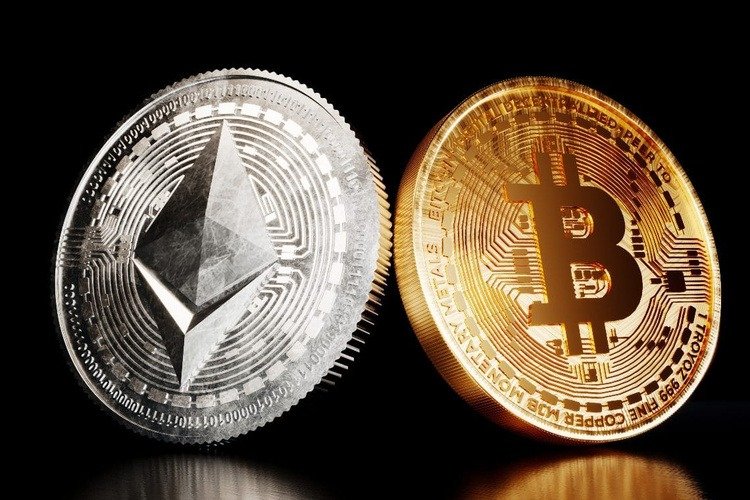
Bitcoin and Ethereum are trading in unusually narrow ranges as crypto investors wait for one of the week's most important macroeconomic events: the release of the latest US inflation data.
The July Consumer Price Index is due on Wednesday, August 12, and traders are watching closely for signs that inflation is continuing to cool or beginning to accelerate again.
Bitcoin has remained around the $63,500 to $64,000 area ahead of the report, while Ethereum has traded close to $1,900. The lack of decisive movement reflects a market that appears unwilling to take large directional positions before the inflation numbers arrive.

Know when your
coins move
Alerts, real-time prices, and market news — all in one app
 Point your phone camera to install
 4.8 based on 40K reviews in the App Store and Google Play


Markets expect inflation to ease slightly
Economists expect headline CPI to rise by around 0.1% from June and by 3.4% from a year earlier.
That would represent a slight slowdown from the 3.5% annual inflation rate recorded in June. Core CPI, which excludes food and energy, is expected to increase by approximately 0.2% month over month and 2.5% annually.
Those numbers could have significant implications for expectations surrounding the Federal Reserve's September meeting.
A weaker-than-expected inflation reading could reduce pressure on the Fed to tighten monetary policy further, potentially supporting risk assets including cryptocurrencies. A hotter reading, however, could strengthen expectations that interest rates will remain higher for longer.
Bitcoin waits for a catalyst
Bitcoin's recent price action has been characterized by limited conviction. The cryptocurrency has struggled to establish a clear direction despite renewed inflows into crypto investment products and continued institutional interest in the asset class.
At the same time, broader uncertainty has prevented traders from becoming significantly more aggressive.
The delayed progress of the US Digital Asset Market Structure Clarity Act has added another source of uncertainty. The Senate pushed further consideration of the legislation into September, leaving one of the industry's most closely watched regulatory initiatives unresolved.
Against that backdrop, the CPI report could provide the catalyst traders have been waiting for.
Ethereum shows signs of accumulation
Ethereum has also remained relatively stable ahead of the inflation release, but blockchain data suggests that some investors are using the quieter market to accumulate ETH.
According to data cited by Nansen, Ethereum recorded approximately $49.7 million in net exchange outflows over a single day and $164.6 million over the previous week.
Coins moving away from exchanges are often interpreted as a sign that holders are less inclined to sell immediately, although exchange flows alone cannot determine future price direction.
The positioning creates an interesting contrast.
Spot investors appear willing to accumulate, while derivatives traders remain cautious ahead of the macroeconomic event.
Altcoins move while Bitcoin stays quiet
Not every major cryptocurrency has followed Bitcoin's subdued performance.
Dogecoin and BNB were among the stronger large-cap assets during Wednesday's early trading, with DOGE gaining close to 3% and BNB also moving higher. Bitcoin, by comparison, was one of the few major cryptocurrencies trading lower across both the daily and weekly periods.
The divergence suggests traders have not abandoned risk entirely.
Instead, capital appears to be moving selectively through the market while investors wait for greater clarity on inflation and monetary policy.
Why CPI still matters for crypto
Bitcoin was once frequently discussed as an asset operating independently from traditional financial markets.
In practice, macroeconomic data has become increasingly important to crypto pricing as institutional participation has grown.
Interest rates influence the attractiveness of risk assets, the strength of the US dollar and the availability of liquidity throughout financial markets. All three can have significant consequences for cryptocurrency valuations.
Recent academic research has also found evidence that changes in expectations surrounding monetary policy and inflation can help explain changes in cryptocurrency volatility, particularly across Bitcoin and major altcoins.
That makes Wednesday's CPI release more than another economic statistic.
For a crypto market that has spent several days searching for direction, it could determine whether the current consolidation continues or finally breaks.
Payments at casinos remain part of the wider crypto story
The relationship between crypto markets and digital payments is becoming increasingly difficult to separate. Investors may focus on Bitcoin and Ethereum prices, but many of the same users also interact with fast bank transfer systems, e-wallets, and other payment platforms across the wider online economy. This can be seen in sectors such as online gaming, where services marketed around terms like Brite casino use instant bank payment technology as part of the deposit and withdrawal experience.
The broader trend reflects growing demand for faster settlement, simpler onboarding, and fewer steps between traditional banking and digital platforms.
For the crypto industry, that same expectation is likely to remain important. As users become accustomed to near-instant payments elsewhere online, exchanges, wallets, and other digital asset services face increasing pressure to offer a similarly frictionless experience.
What traders will watch next
The first reaction will likely center on whether headline and core inflation come in above or below expectations. A softer reading could weaken expectations for additional monetary tightening and improve sentiment toward Bitcoin, Ethereum and other risk assets.
A stronger-than-expected number could produce the opposite reaction, particularly if bond yields and the US dollar move higher.
With Bitcoin sitting close to a technically and psychologically important area around $64,000, even a relatively small surprise in the inflation figures could be enough to bring volatility back into the market.
For now, however, crypto traders appear content to wait.
The next major move may depend less on developments inside the blockchain industry than on a single number coming out of Washington.