
What is Bitcoin Hashrate? An In-Depth Guide to Mining Mastery
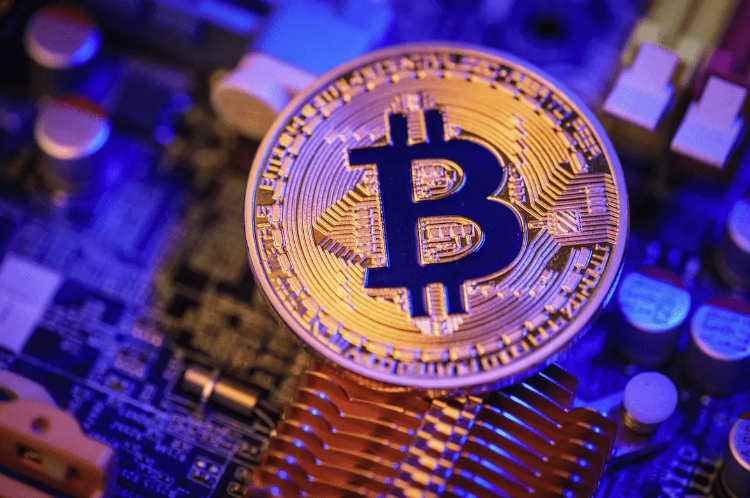
The road to profitable mining begins with understanding what Bitcoin hashrate is, why it’s the most important specification of mining hardware, and why more computational power doesn’t directly translate to higher rewards.
This metric is more than a statistic monitored via downloadable mining management software; it’s also an indicator of Bitcoin network’s health and resilience.
We’ll cover everything about Bitcoin mining hashrate to help you become more knowledgeable and create an ultimate mining setup.
What is Crypto Mining Hashrate and Why It’s Important
To get a full grasp of what a good hashrate for Bitcoin mining is, you need to learn the following terms:
-
Hash.
-
Mining difficulty.
-
Nonces.
What we call mining is actually the process where ASICs work tirelessly to add new blocks to the chain of data. For a new block to be accepted, miners must find a unique code for that block made of letters and numbers called the hash.
This hash must meet a specific network difficulty target set by the Bitcoin network. This target is a number so small that the hash of the block must start with a certain number of zeros. Finding such a specific hash is the “puzzle” that ASICs are trying to solve.
The computers don’t have to figure out an exact hash value; instead, they are looking for any hash that is smaller than or equal to the target number set by the network, which is so small that the hash of the block must start with a certain number of zeros.
Miners use a nonce to find the correct hash. Short for “number used once,” a nonce is a random number that forms a small, changeable part within the block’s data. It’s adjusted with each new try. ASICs repeat this process billions of times per second until one of their attempts generates a hash that meets the network’s difficulty target.
Therefore, crypto mining hashrate is the speed per second at which a mining rig makes attempts to solve the puzzle of finding a new block. A higher hashpower means your equipment is faster and has a greater chance of being the first to earn new bitcoins.
Explaining SHA-256
You won’t get the true meaning of Bitcoin hashrate without understanding SHA-256. The Secure Hash Algorithm 256-bit is the specific hash function used by Bitcoin, which can be compared to a digital blender. You put any digital information into this blender: transactions in a block, the previous block’s hash, maybe some personal data, and the nonce. What always comes out is a unique, fixed-size string of 64 letters and numbers.
The continuous process of putting this block data through the SHA-256 blender is called hashing, and it makes up the core mechanism behind Bitcoin’s Proof-of-Work consensus. ASICs constantly perform this action by changing the nonce over and over. Each time the SHA-256 hash function tries a new nonce, it generates a different hash. This constant calculation of hashes is exactly what miners do to solve a block and get a reward in BTC.
Why Hashrate Matters
Hashrate greatly impacts several key aspects of the network and mining:
-
Network security: A higher hashrate makes it near impossible for anyone to attack or compromise the system.
-
Decentralization: In mining, power is distributed globally, preventing centralization.
-
Mining complexity & block Time: The network automatically adjusts mining difficulty so that new blocks are found approximately every 10 minutes.
-
Miner profitability: For individual miners, a higher hashrate directly increases their chances of solving a block and earning BTC, which is vital for their revenue. This is where hashprice comes in. It helps you see how much you can expect to earn each day for your mining power, based on Bitcoin’s price.
Therefore, hashrate isn’t only about how capable an ASIC is, it’s what makes Bitcoin a unique kind of electronic money.
What is a Good Hashrate for Bitcoin Mining?
Finding an optimal hashing speed isn’t about one fixed number. It constantly changes based on several key factors. Years ago, you could mine Bitcoin using regular computer processors, but today, you need specialized devices like Antminer ASICs.
To figure out if a hashrate is “good” for your mining operation scale, you’d need to consider the following:
-
Current block difficulty.
-
Energy price.
-
Hardware efficiency.
How Hashrate is Measured
Modern ASICs are incredibly powerful so that counting in single H/s would result in super long numbers.That’s why today mining capacity is measured in larger units:
-
Terahashes per second (TH/s), which is one trillion hashes per second. Most individual miners are measured in TH/s.
-
Petahashes per second (PH/s) or one quadrillion hashes per second, achievable by large mining farms.
-
Exahashes per second (EH/s) or one quintillion hashes per second are relevant for the entire Bitcoin network.
Using these bigger units makes it easier to understand the huge amount of mining energy required to generate cryptocurrencies. You can easily follow the changes in global hashrate using trackers such as:
These are highly reliable measurement tools that tell you through charts exactly what’s going on in the Bitcoin network.
The Performance of Different ASIC Models
Let’s compare the Antminer hashrate for different models.
-
The S19 models with air cooling provide up to 120 Terahashes per second (TH/s) of hashing speed.
-
Models of this series with hydro cooling are more powerful and can ramp up to 279 TH/s.
-
Newer machines, like the S21 series with air cooling can easily generate 200 TH/s, often with much better efficiency.
-
ASIC of this generation with hydro cooling are significantly more powerful, boasting close to 500 TH/s.
-
The latest generation of miners: S23, equipped with hydro cooling, are real monsters producing close to 600 TH/s.
You can use a hashrate calculator to estimate your potential earnings.
When choosing a mining unit, consider the fact that it’s not just about getting the most hash output. You also need to look at efficiency. This measures how much mining energy the rig uses for each hash it performs, measured in Joules per Terahash (J/TH).
An ultra powerful mining rig might seem good, but if it uses too much costly electricity, it will quickly reduce your operational gains . Newer Antminer models are much more efficient in that regard. Remember that balancing the upfront cost with the long-term efficiency and raw power is essential for successful mining.
Risks and Misconceptions
Even though a lot of computational effort usually makes Bitcoin very secure, one big risk is called a “51% attack.” This happens if one mining pool or group gets more than half of all the network’s hashpower. With so much power, they could try to stop new transactions or even undo old ones. This might let them create duplicates of coins, known as ’double-spending.’ But for a huge network like Bitcoin, doing this would be extremely hard and cost a massive amount of money.
People who don’t fully understand hashrate in crypto mistakenly think that having more processing power always means more profitability. But this isn’t true. How much real financial gains a miner makes depends on several things: the mining difficulty keeps going up, the halving effect cuts payouts in half over time, and the price correlation of Bitcoin itself (how its price changes). Even if you join a big mining pool to share rewards, it doesn’t promise steady money. You need to keep a close eye on all these factors through data monitoring.
Conclusion: Why You Should Monitor the Hashrate
Understanding the role of computational power within the Bitcoin network is a must for anyone interested in this electronic money. It’s not just a small technical point; it directly shows the Bitcoin network’s health and overall security. When hashrate is high and growing, it makes the network very hard to attack, keeping it safe for all participants.
For miners, keeping this metric, along with network difficulty and electricity bills, in check helps them manage their earnings and predict returns, especially with the halving effect in mind. Investors should also pay attention since the hash power reflects confidence in Bitcoin’s future. All in all, monitoring hashrate gives you probably the best insight into the heart of Bitcoin’s decentralized system.
FAQ
What hashrate makes Bitcoin mining worth it in 2025?
The reality of mining in 2025 dictates that to stay profitable, you should aim for a hashrate of approximately 300 TH/s.
How does hashrate affect mining rewards?
A greater hashing power gives a much better chance of getting higher mining rewards, but other factors like electricity cost may affect the bottom line.
Is higher hashrate always better?
A higher hashing speed is always good for the ASIC itself. However, to actually earn a profit, you also need to think aboututility expenses and how efficient your ASIC is.
How to calculate mining hashrate?
Your mining power is measured by your hardware or software, or estimated by a mining pool based on the number of hashes your equipment submits per second.