
Crypto Cards vs Traditional Cards: What’s Changing in 2026
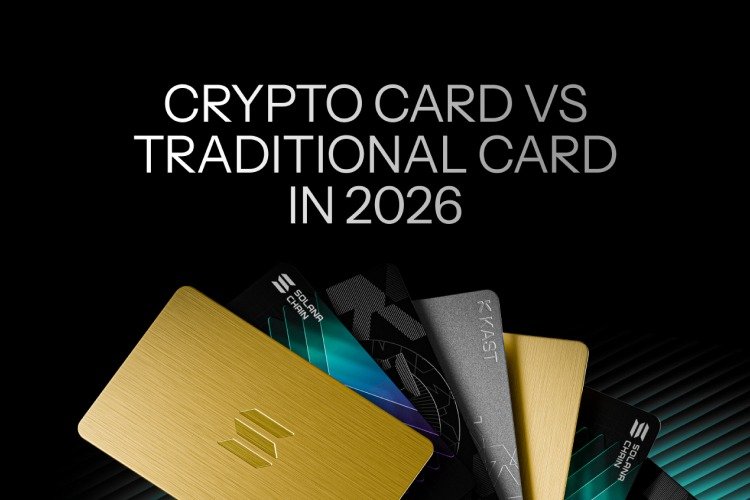
Crypto cards used to feel like a niche tool for people who lived on exchanges. In 2026, they’re just... cards. You can tap your phone, pay for subscriptions, book travel, and earn rewards — with stablecoins powering the balance behind the scenes.
So what’s actually changing in 2026? It’s not that traditional cards are “dead.” It’s that the gap is finally getting smaller — and in a few categories, crypto cards are starting to win.
What’s changing in 2026
1) Crypto cards are getting boring — in a good way
The biggest shift is usability. In 2026, the best crypto cards don’t feel like crypto products at checkout. They feel like a traditional card, but more refined — fast approvals, clean UX, and fewer unexpected issues.
That matters because most people don’t want a “Web3 experience” when they’re paying for groceries. They want tap → approved → done.
2) Stablecoins became the default spending balance
In practice, everyday crypto spending in 2026 is mostly stablecoin spending (USDC/USDT-style). That’s what makes crypto usable as money:
-
Your balance stays predictable.
-
You can budget in “dollars.”
-
You don’t have to think about volatility while you’re checking out.
3) Funding got faster and more flexible than bank accounts
Traditional cards are tied to a bank account or a credit line. Crypto cards are increasingly tied to a platform balance that can be funded multiple ways:
-
USD transfers
-
Stablecoin deposits
-
Crypto deposits (with conversion happening inside the platform)
That flexibility is why crypto cards are showing up in the wallets of remote workers, travelers, and anyone who moves between currencies.
4) Rewards stopped being “1-3% forever.”
Traditional cashback still works — it’s stable, predictable, and easy. But it hasn’t evolved much.
Crypto rewards in 2026 are becoming more dynamic:
-
rotating boosts
-
tier-based earning
-
seasonal multipliers
-
faster reward availability (often near-instant)
The result: higher upside, and reward programs that feel like they match real behavior — not legacy category tables.
Where traditional cards still win (for now)
Crypto cards have come a long way, but there are still areas where traditional cards have structural advantages:
Credit building
Most crypto cards (especially prepaid-style) don’t build credit history. If your credit score is central to your life goals, a traditional credit card still matters.
Mature protections + familiarity
Traditional credit cards have decades of established dispute processes and consumer protections. Crypto cards are improving quickly, but legacy issuers still have the longest track record here.
Crypto cards vs traditional cards: the real comparison in 2026
|
Category |
Crypto cards (2026) |
Traditional cards |
|
Spending experience |
Increasingly seamless; crypto stays invisible at checkout |
Reliable and universally familiar |
|
Funding |
Flexible: USD + stablecoins + crypto funding paths |
Typically, one bank account or one credit line |
|
Global usage |
Strong for cross-border life; stablecoin rails reduce friction |
Works globally, but FX + banking friction is still common |
|
Rewards |
Higher upside + dynamic boosts (varies by card + tier) |
Stable, predictable rates (often capped / category-based) |
|
Credit impact |
Usually no credit-building |
Strong credit-building + history |
|
Protections |
Improving fast; depends on the provider |
Most established dispute + fraud frameworks |
The KAST take: the future is a “two-card” setup
In 2026, the most realistic outcome isn’t total replacement. It’s a split:
-
A traditional card for credit-building and specific high-protection use cases.
-
A crypto card for everyday spending where flexibility, global access, and rewards matter.
Crypto cards are becoming a second primary card — the one you reach for first when you want your money to move like the internet.
KAST is built for the way people actually live in 2026:
-
Stablecoin-first spending so your day-to-day stays predictable.
-
Account-based simplicity: one balance you can fund multiple ways.
-
Card usability that feels normal: pay online, in-store, and in the real world — without turning every purchase into a crypto project.
-
Rewards that keep up: stronger earning potential and promos that evolve over time.
Traditional cards aren’t going away. But the definition of a “good card” is changing. In 2026, it’s no longer just about plastic — it’s about speed, flexibility, and whether your money works globally by default. If you want to explore crypto rewards without complex setups, KAST offers a simple way to bring them into your everyday spending.