
Card or Crypto: Which Casino Deposit Route Fits Your Starting Balance?
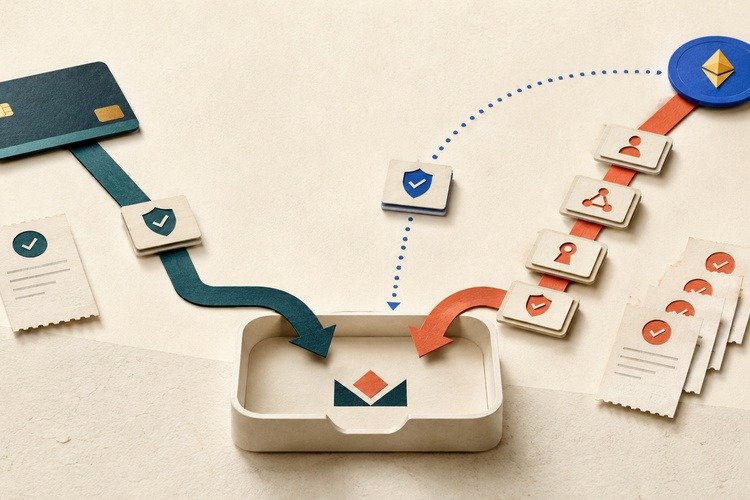
A lot of people these days are trying to determine what the best deposit route would be for them when they want to play casino games. The answer depends on quite a few different factors. The shorter deposit route usually begins with money or cryptocurrency already available before a casino session. Buying an asset solely to make one payment adds an acquisition and possibly a wallet transfer. Sending cryptocurrency already held may require fewer actions than entering a card and waiting for issuer approval. The comparison changes with the starting balance, available payment records, and associated fees.
A 2026 comparison of stablecoins and card networks separates card authorization from settlement. An issuer can approve a card request within seconds, although clearing and interbank settlement commonly follow later. A stablecoin transfer follows another sequence: a wallet signs the instruction, the network validates and orders it, and the ledger changes after confirmation. The casino must still recognize the payment and update its own account balance. A quick message on screen can therefore describe approval, network confirmation, or internal crediting, rather than the completion of every stage.
Start With What You Already Hold
The starting position is the balance available before any deposit begins. Money in a bank account can travel through a card network, while cryptocurrency in a wallet moves on the blockchain selected by the sender and receiver. Authorization means a card issuer has accepted the payment request; confirmation means a blockchain has recorded the transfer. Crediting occurs when the casino matches that payment to the correct account and updates its balance. A route that looks short on the deposit screen may still contain earlier acquisition, conversion, or wallet-transfer steps.

Know when your
coins move
Alerts, real-time prices, and market news — all in one app
 Point your phone camera to install
 4.8 based on 40K reviews in the App Store and Google Play


Before funding an online casino session, identify the balance available, the route needed to move it, and the record that will remain afterward. A card deposit starts with card details and an authorization request sent through the payment chain. A crypto deposit starts in a wallet, where the receiving address, selected network, and amount must match the destination instructions. At Cafe Casino, both card and cryptocurrency options place that decision inside the same casino-deposit process, but they produce different evidence. A card user receives an approval or decline, while a crypto user can retain the transaction hash and monitor confirmations.
Neither record alone proves that the casino balance has been credited. The receiving system may still need to identify the payment, associate it with the correct account, and complete its internal checks. Someone acquiring crypto only for this deposit must also preserve the purchase or conversion record. Someone paying by card should check the final charged amount and any issuer-side cost.
A short payment method Reel places Bitcoin, Ethereum, Bitcoin Cash, Litecoin, and Tether beside Mastercard and Visa. The shared frame does not make those methods interchangeable. Card authorization travels through institutions that can approve or decline the request. A cryptocurrency transfer leaves the sender’s wallet and moves across the chosen blockchain. Tether also differs from the more volatile assets in the group because it is designed to track a reference value, although sending it still requires the correct supported network.
Compare the Work Before Sending Funds
The payment button shows the next action, while the full workload starts earlier. As we mentioned earlier, someone without cryptocurrency may need an exchange account, an asset purchase, and a withdrawal to a compatible wallet before reaching the deposit stage. Someone who already holds a supported asset can begin closer to the transfer itself. A cardholder may avoid wallet handling, but authorization, card-side charges, and a possible currency conversion remain separate checks.
| Starting Position | Work Before Payment | Evidence to Keep | Cost to Identify |
|---|---|---|---|
| No crypto held | Enter card details and request authorization | Approval and card record | Card or conversion charges |
| Stablecoin held | Send from a compatible wallet | Hash and confirmations | Network fee |
| Volatile crypto held | Send directly or convert first | Conversion record and hash | Spread and network fee |
The third position can produce two cost trails. A direct transfer creates a network fee and a blockchain record. A conversion adds the quoted rate, any trading charge or spread, and another timestamp before the transfer begins. The same distinction applies when a stablecoin exists on more than one blockchain. Holding the right asset is insufficient if it sits on a network the receiving address does not support. The asset name, network, and destination instructions must agree before anything is sent.
Read Each Payment Record Correctly
A card approval indicates that the issuer accepted the authorization request. It does not mean that clearing and settlement between the institutions have finished. A transaction hash identifies a blockchain transfer and allows its status to be checked on the relevant network. It does not prove that the casino has matched that transfer to an account. The account balance is a third record controlled by the receiving system, so a confirmed transaction may appear on-chain before the internal balance changes.
Keep the payment evidence from each stage rather than relying on one success message. For cards, keep the requested amount, approval or decline, and final card entry. For cryptocurrency, retain the asset, network, receiving address, amount, hash, and confirmation status. If a conversion occurred first, keep its rate and fee separately. These details identify where a delay or unexpected total appeared without treating authorization, confirmation, and crediting as the same event.
Count Costs on the Player’s Side
Axios reported in 2025 that major retailers were examining stablecoins partly because card fees and settlement delays affect merchants. Those incentives do not automatically determine the shorter route for a casino player. A merchant may prefer another rail while a card remains simpler for someone without cryptocurrency. A person who already has a suitable stablecoin may avoid an acquisition and price conversion, yet still needs to identify the network fee and verify the receiving network.
Choose your funding type after counting every action required from the current starting point. If you don’t hold any crypto, you might prefer to opt for a card. If you already have a supported asset, you might prefer a wallet transfer, but remember to check the network and fee. A volatile asset adds a conversion decision whenever it cannot be sent directly. The comparison should consider four different elements: the amount that was left, the fee or conversion applied, the payment record, and the amount credited to the casino balance.
Image source: Graphic by the author