Gilbert Verdian, Founder and CEO of Quant
"There is now widespread recognition that the unregulated crypto experiment has failed," said Gilbert Verdian, Founder and CEO of Quant. "But digital assets and tokenization improve many areas within financial services, the issue is that the UK lacks a body which can drive forward responsible and innovative regulation to govern all of this."
The findings come as the new Labour government has pledged to "streamline the regulatory rulebook" under its Plan for Financial Services. This commitment puts pressure on the government to provide clearer regulatory guidance for the crypto sector or risk losing firms to other jurisdictions.
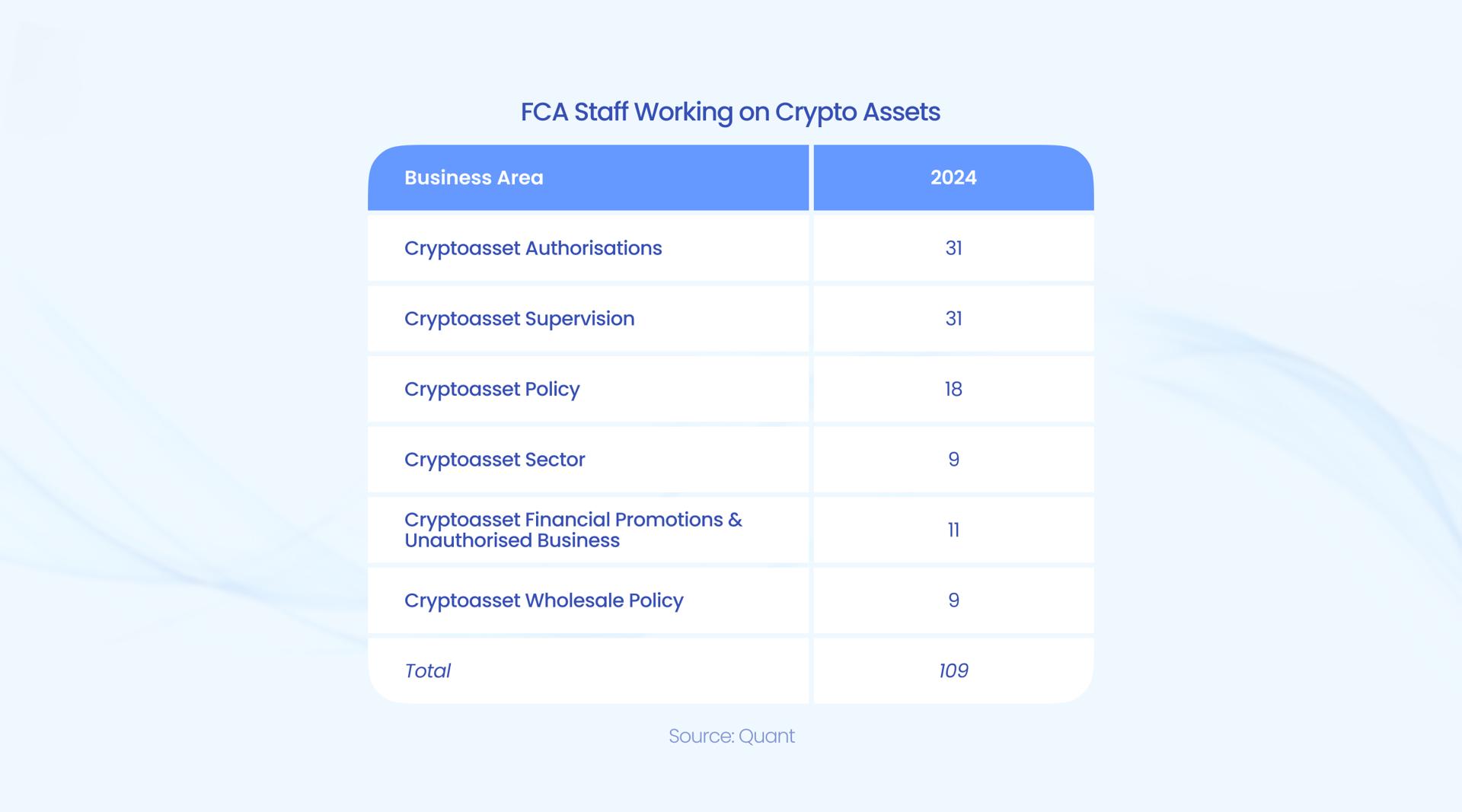
"Properly regulated crypto assets have the potential to transform our economy and the financial services sector," Tulip Siddiq, the new City Minister, previously commented. Quant argues, however, that if only 18 employees are responsible for creating cryptocurrency regulations, the UK could face a "crypto catastrophe."
FCA Needs “Digital Finance Agency”
Notably, the data also highlights a significant resource gap in crypto asset wholesale policy, with only 9 employees in this crucial area. This shortage could pose challenges to Labour's stated goal of "embracing securities tokenization and a central bank digital currency."
Verdian suggests a potential solution: "A separate 'Digital Finance Agency' dedicated entirely to digital assets can help the UK stay ahead of the pack when it comes to the future of finance."
“Digital assets can bring major efficiency benefits to wholesale financial markets and to realise this potential at scale, we need a new regulatory approach,” Quant’s CEO concluded.
The FCA emphasized that beyond its dedicated crypto teams, it employs specialists across the organization who work on crypto assets alongside other sectors.
In February, the UK government announced its intention to implement the much-anticipated cryptocurrency regulations over the coming six months. Subsequently, in April, Economic Secretary Bim Afolami predicted that these regulations would be introduced by June or July. However, the industry is still awaiting their implementation. This development follows the passing of the Financial Services and Markets Act in June 2023, which classified cryptocurrencies as regulated financial activities.

 financemagnates.com