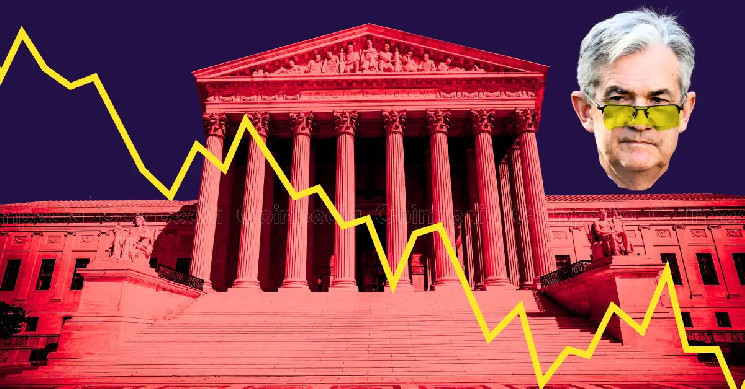
This activity showed investors were cashing out amid economic uncertainty, with demand for Bitcoin and $ETH dropping as traders closed long positions to take profits.
Traders Shifting Focus To Rate Cuts
However, traders are now shifting their focus from oversold markets and U.S. tariffs to new economic data and expected rate cuts. This shift has sparked hopes for a possible bounce in Bitcoin prices soon. With the pressure easing, fresh economic data coming out later today could give markets a much-needed lift.
“Investors are watching closely for signs of weakness in the U.S. job market,” QCP Capital shared in a Friday update. “If the data is weaker than expected, it could lead to more Fed rate cuts this year to support the slowing economy.”
Markets Expect Four Rate Cuts This Year
Markets are already expecting four rate cuts in 2025—0.25 basis points each in June, July, September, and December. Rate cuts help boost the economy by making borrowing cheaper. Short-term interest-rate futures now show a 70% chance of a Fed rate cut in June, up from 60% before the tariffs were announced.
However, Morgan Stanley expects the U.S. Federal Reserve won’t cut rates this year due to potential elevated inflation from Trump’s new tariffs. The Wall Street brokerage had previously predicted a 25 basis point cut in June.
Fed To Keep Rates Steady?
Many Fed officials recently said they want to keep interest rates steady for a while to see how Trump’s policies affect the economy. Some are still worried about inflation and unsure if price changes will last. Fed Vice Chair Philip Jefferson added that there’s “no need to rush” into changing rates.
The Fed official noted that if the economy stays strong and inflation doesn’t drop, the Fed could keep rates at 4.25%-4.5% for a while. But if the job market weakens or inflation falls, the Fed will adjust accordingly.
Bitcoin and the broader market usually respond well to rate cuts since lower rates make traditional investments like bonds less attractive and a weaker dollar strengthens $BTC as an inflation hedge. QCP Capital sees high volatility but suggests a potential short-term bounce due to oversold risk assets.
Recession Concerns
Luke Tilley, chief economist at Wilmington Trust, said the new tariffs raise the chance of a U.S. recession to 50%, warning that the economy could slow down in just three months if the tariffs stay. He pointed out that the real challenge is figuring out how much damage uncertainty is causing for businesses and consumers.
We’ll get more insight into the Fed’s stance on Friday when Fed Chair Jerome Powell speaks after the March jobs report. Last month, Powell said he believes any inflation from Trump’s tariffs will be temporary, aligning with the White House’s view.

 coinpedia.org