
 en.bitcoinsistemi.com
Bitcoin's (BTC) sharp pullback from its recent record high has erased the gains it has made since the beginning of the year, and its aggressive price predictions for 2026 have once again been called into question.
But experts say there's another question that's just as important as the price: What role does Bitcoin really play in portfolios, and when will it start behaving like a stable “store of value”?
“It still has to prove itself as a digital store of value with performance over a longer period,” Nate Geraci, President of NovaDius Wealth Management, said on CNBC’s “ETF Edge” podcast.
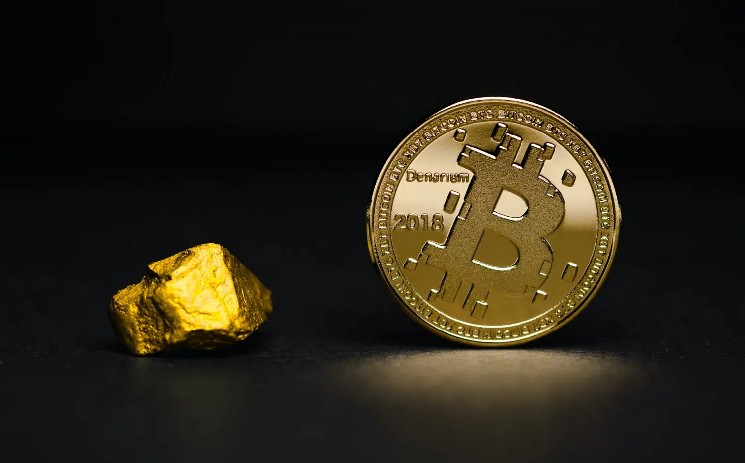
For years, Bitcoin has been frequently described as “digital gold.” This analogy is particularly appealing to institutional and individual investors, as gold is seen as a safe haven that protects portfolios during periods of sharp sell-offs in stocks and other risky assets, trading with low correlation to these assets. However, Bitcoin's behavior as a risk-on asset during stock sell-offs is the most significant factor undermining this “digital gold” narrative.
Following two distinct periods of volatility in 2025, comments suggesting that Bitcoin has failed to provide a clear answer to this question of digital gold are gaining prominence. Geraci stated, “The track record so far is mixed.”
Geraci highlighted Bitcoin's strong performance during the stock sell-off known as the “tariff tantrum,” which followed President Donald Trump's announcement of sweeping global tariffs in April. He said that Bitcoin's strong performance during this period, while decoupling from stocks, caught the attention of many investors.
However, he noted that more recently, with weakness in tech stocks dragging the market down, most cryptocurrencies, including Bitcoin, have sold off sharply along with the stock market. Geraci noted that Bitcoin, in particular, lost much more value than the stock market during the recent wave. “The jury is still out,” Geraci said, adding that a longer dataset is needed to clarify Bitcoin's role.
In the long term, Geraci maintains his view that Bitcoin will increasingly evolve toward a behavior pattern more similar to physical gold. However, he believes its current movements are still “too young and volatile.” “Bitcoin is essentially like a 15-16-year-old asset,” he said. “It needs time to prove itself as a digital store of value.” In contrast, he emphasized that gold has a history stretching back thousands of years and a proven reputation. In a follow-up email to CNBC, he stated, “Bitcoin's story is still in its early stages.”
Emphasizing the importance of maintaining perspective during short-term fluctuations, Geraci noted that Bitcoin has retreated over 25% since its record high in October, with a peak-to-trough loss of approximately 35%. Despite this, he noted that Bitcoin's price has still more than doubled since January 2024, following the SEC-approved launch of spot Bitcoin ETFs.
Spot Bitcoin ETFs have also seen billions of dollars in outflows in the past month, with a total net inflow of approximately $22 billion since the beginning of the year. Geraci says the sell-off in tech stocks and risk aversion in the broader equity market were the primary drivers of the recent crash, but the high leverage levels in the crypto market played a significant role in deepening the move. “I think there was a lot of leverage in that category that needed to be cleared. That's what we're seeing now,” he added.
Beyond Bitcoin, Geraci believes crypto index ETFs could be a promising option for investors, providing them with more diversified exposure to the crypto asset class. These products aim to spread risk by investing in a basket of digital assets rather than relying on a single coin.
Still, Geraci singles out Bitcoin in the crypto market. He believes many other crypto assets will likely continue to behave like tech stocks: “Setting aside Bitcoin, I view most other crypto tokens as risk assets, much closer to high-growth tech stocks than stores of value. Their investment thesis is more closely tied to the future of stablecoins, tokenization, and the development of decentralized finance,” he said.
*This is not investment advice.