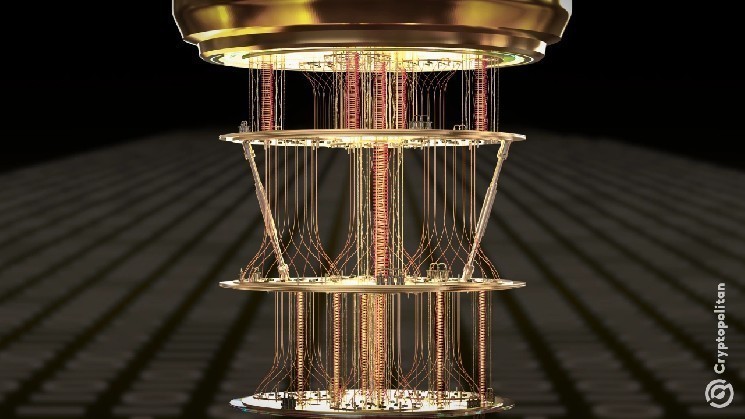
On the other hand, the role of Digital Realty is critical. The facility has to meet specialized requirements for quantum systems, including stable power, advanced cooling for cryogenics, and protection against vibrations and electromagnetic interference. These upgrades underscore how traditional data centers are evolving to accommodate emerging technologies.
OQC has previously placed machines in London and Tokyo, but the deployment of machines in New York is its most high-profile international expansion yet. The company’s roadmap includes larger-scale systems and continued integration with classical high-performance computing hardware, suggesting that more global rollouts could follow.
Meanwhile, the UK remains a leader in quantum technology startups, now branching into other countries. However, Nvidia CEO Jensen Huang said in March that the AI chip leader will also open a quantum computing research lab, having earlier cast doubts on the timeline for practical applications of the technology.
Quantum Motion builds a quantum computer using silicon chip technology
OQC’s move highlights growing competition in the quantum sector, where startups and tech giants alike are racing to commercialize machines that can solve problems beyond the reach of conventional computers.
Meanwhile, Quantum Motion has built the world’s first quantum computer made with the same silicon chip technology used in laptops and phones. Quantum Motion’s machine has been switched on at the UK’s National Quantum Computing Centre (NQCC) in Oxfordshire.
The system will be tested at the NQCC, where researchers will explore how it could be applied to real-world problems, including designing new medicines and optimising energy grids.
It is the first “full-stack” quantum computer made using standard ways to make chips. In real life, this means that it might be able to be mass-produced one day, like the computers that power smartphones. This quantum computer doesn’t need a lot of special equipment like most of them do. Instead, it fits neatly into three normal server racks, which are small enough to run in a data center.
James Palles-Dimmock, chief executive of Quantum Motion, called it “quantum computing’s silicon moment.” He likened it to the breakthrough that made traditional computers cheap and easy to mass-produce. Also, the science minister, Lord Vallance of Balham, said the project brought the technology “another step closer to commercial viability.”

 cryptopolitan.com