decrypt.co

CEO Jensen Huang took the stage at CES in Las Vegas to showcase new hardware and software offerings that span everything from personal AI supercomputers to next-generation gaming cards.
Nvidia's biggest announcement: Project DIGITS, a $3,000 personal AI supercomputer that packs a petaflop of computing power into a desktop-sized box.
Built around the new—and up until now, secret—GB10 Grace Blackwell Superchip, this machine can handle AI models with up to 200 billion parameters while drawing power from a standard outlet.
For heavier workloads, users can link two units to tackle models up to 405 billion parameters.
For context, the largest Llama 3.2 model, the most advanced open-source LLM from Meta, has 405 billion parameters and cannot be run on consumer hardware.
Up until now, it required around 8 Nvidia A100/H100 Superchips, each one costing around $30K, totaling more than $240K just in processing hardware.
Two of Nvidia’s new consumer-grade AI supercomputers would cost $6K and be capable of running the same quantized model.
“AI will be mainstream in every application for every industry. With Project DIGITS, the Grace Blackwell Superchip comes to millions of developers,” Jensen Huang, CEO of Nvidia, said in an official blog post. “Placing an AI supercomputer on the desks of every data scientist, AI researcher, and student empowers them to engage and shape the age of AI.”
For those who love technical details, the GB10 chip represents a significant engineering achievement born from a collaboration with MediaTek.
The system-on-chip combines Nvidia's latest GPU architecture with 20 power-efficient ARM cores connected via NVLink-C2C interconnect.
Each DIGITS unit sports 128GB of unified memory and up to 4TB of NVMe storage. Again, for context, the most powerful GPUs to date pack around 24GB of VRAM (the memory required to run AI models) each, and the H100 Superchip starts at 80GB of VRAM.
Nvidia's plans to dominate AI agents
Companies are rushing to deploy AI agents, and Nvidia knows it, which is probably why it developed Nemotron, a new family of models that comes in three sizes, and announced its expansion today with two new models: Nvidia NIIM for video summarization and understanding and Nvidia Cosmos to give Nemotron vision capabilities—the ability to understand visual instructions.
Until now, the LLMs were only text-based. However, the models excelled at the following instruction: chat, function calls, coding, and math tasks.
They're available through both Hugging Face and Nvidia's website, with enterprise access through the company's AI Enterprise software platform.
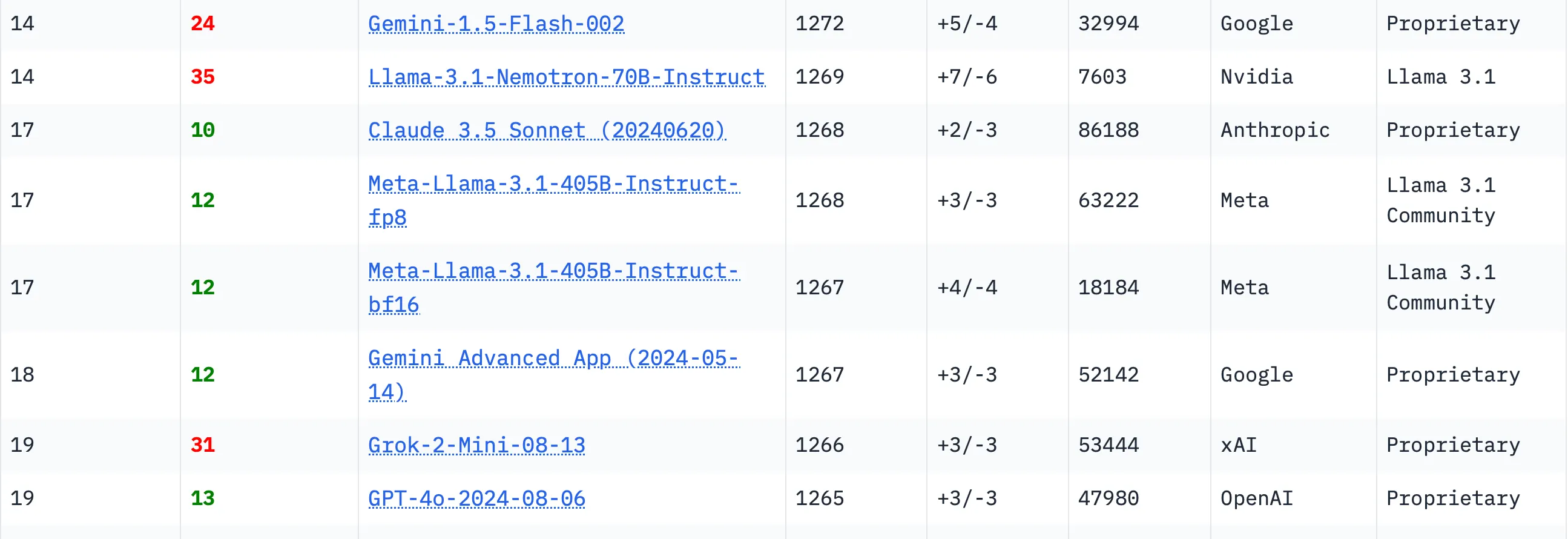
Again, for context, In the LLM Arena, Nvidia’s Llama Nemotron 70b ranks higher than the original Llama 405b developed by Meta. It also beats different versions of Claude, Gemini Advanced, Grok-2 mini and GPT-4o.