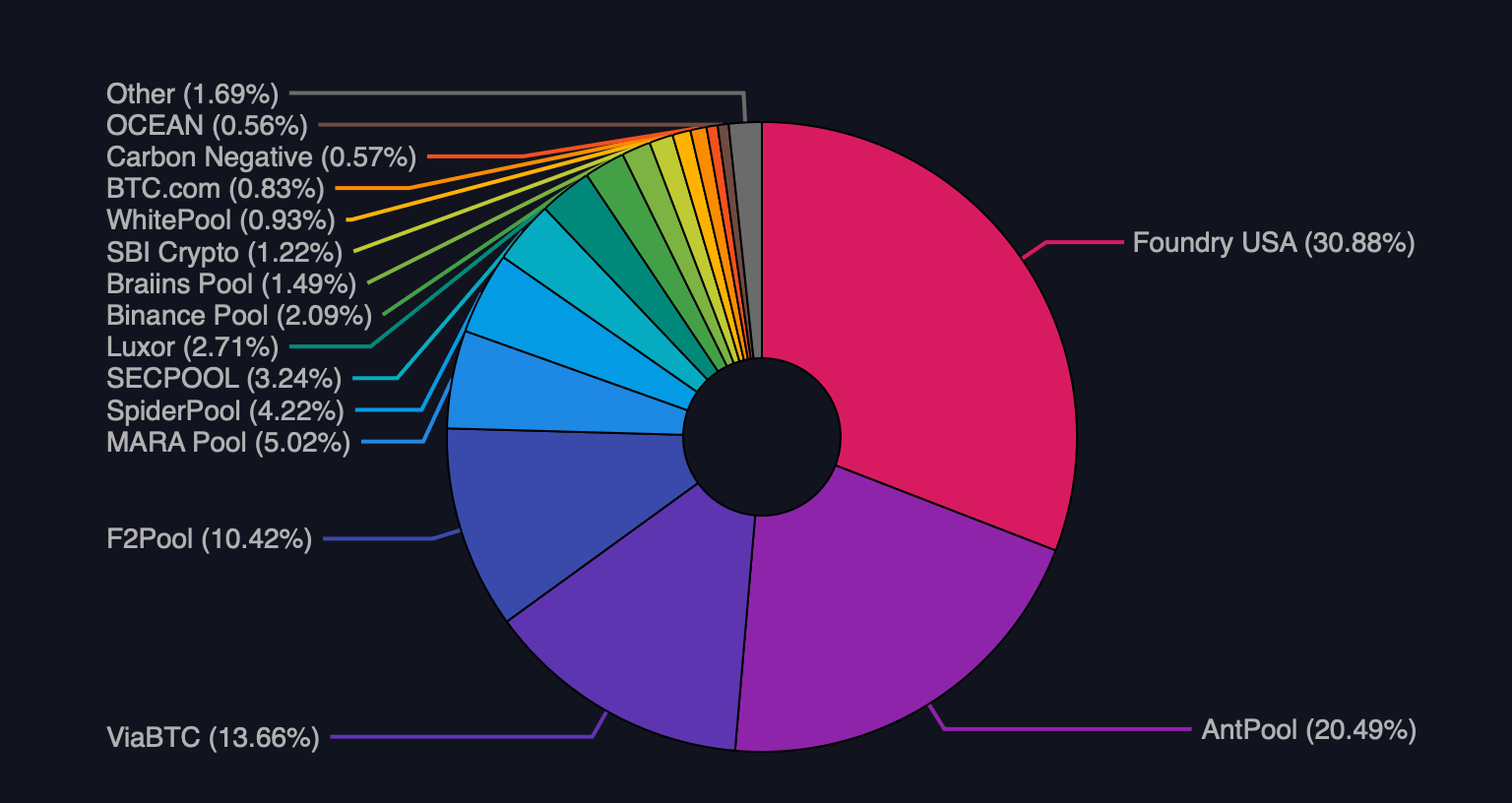
Hashrate distribution on July 30, 2025, according to mempool.space stats.
ViaBTC works closely with Coinex, which it owns and supports — the two are tightly linked through shared infrastructure and services. On Wednesday, F2pool held 10.42% of the total hashrate, and its wallets contained 495.322 $BTC worth $58.46 million. F2pool works with two key counterparties: Coinbase and the custody firm Cobo.
MARA Pool accounts for 5.01% of Bitcoin’s total computing power. The company also functions as a bitcoin treasury, with a sizable 50,000 $BTC on its books. MARA’s mining wallets alone hold 11,034 $BTC valued at $1.3 billion. Most of this stash is likely safeguarded by NYDIG Custody, and onchain patterns suggest MARA also transacts with Foundry regularly. Spider Pool controls 4.22% of Bitcoin’s total hashpower and holds 157.994 $BTC valued at $18.65 million.
Spider pool routinely transacts with Coinbase. Next up is SEC Pool, contributing 3.24% to the network’s hashrate. As of today, SEC Pool’s wallets hold about 28.616 $BTC worth $3.38 million. Onchain activity shows SEC Pool interacts with both Cobo and Coinbase — though Coinbase appears to be the more frequent partner. Ranking eighth by hashrate, Luxor Technology operates 2.71% of the network’s power. Currently, Luxor Tech holds 75.278 $BTC valued at $8.91 million. Like several others, Luxor also has a regular transaction flow with Coinbase.
Ninth on the list is Binance Pool with a relatively small 2.09% slice of global hashpower. Still, the Binance Pool wallets tracked by Arkham show a staggering 41,919 $BTC under management, worth $4.96 billion. Rounding out the top ten is Braiins Pool — the pool formerly known as Slush — with 1.49% of the global hashrate. Braiins’ wallets contain 30.983 $BTC, valued at $3.67 million at today’s rates. The top ten bitcoin mining pools collectively hold 55,117.77 $BTC as of today, with an estimated total value of $6.52 billion.
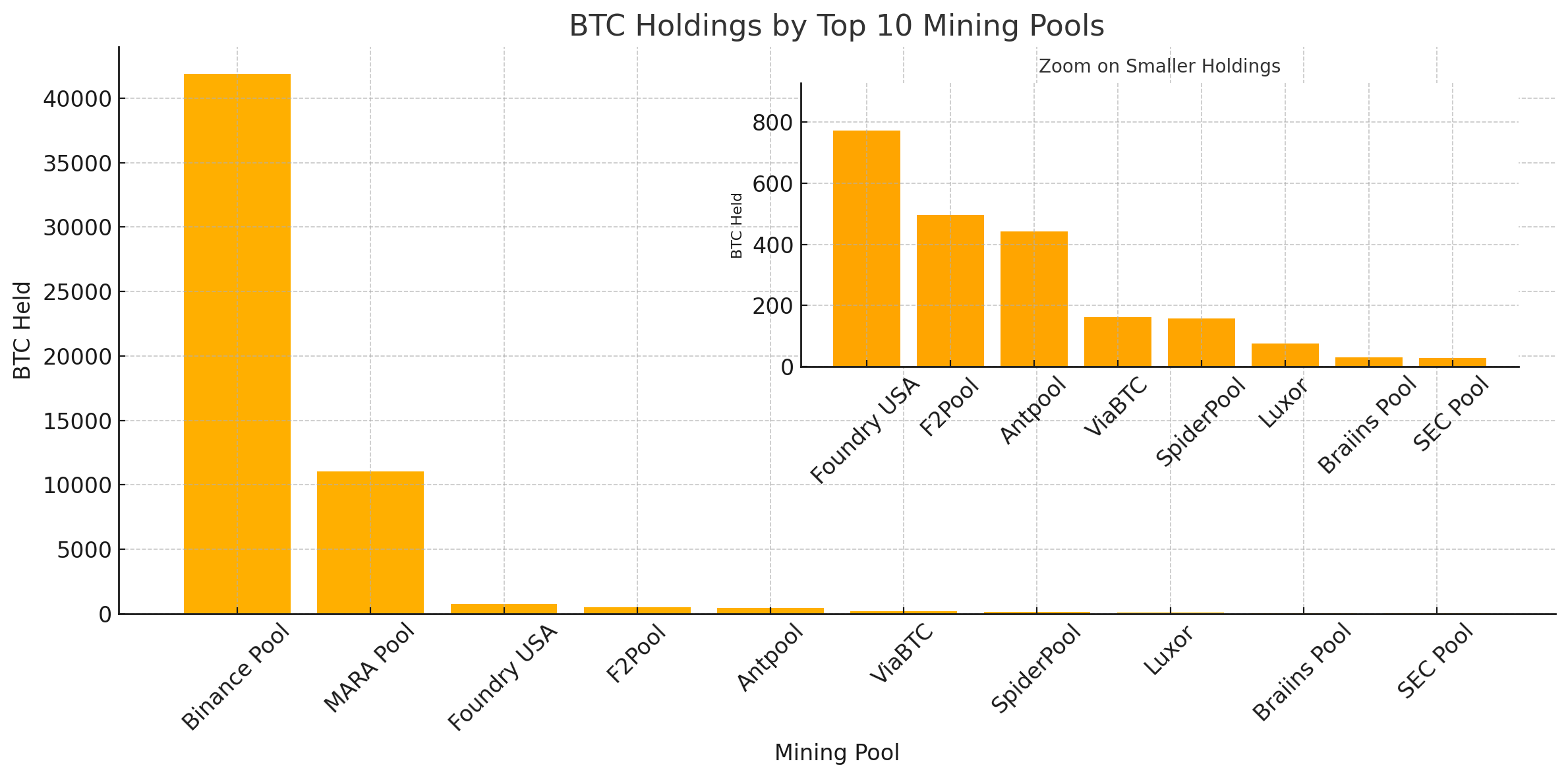
The sheer volume of bitcoin held by these top miners highlights their dual role as both infrastructure providers and long-term stakeholders. Their collective stash, worth billions, places them among the protocol’s most influential economic actors beyond just securing the network.
Such concentrated holdings suggest these pools are not merely selling block rewards but accumulating for strategic purposes. Some overtly and some covertly. Whether as treasury reserves, collateral, or institutional leverage, this growing pile of $BTC positions miners as powerful players in Bitcoin’s evolving financial ecosystem.

 news.bitcoin.com