Qubic, a layer-1 AI-focused blockchain and mining pool, claimed it controlled the majority of Monero’s hashrate on Monday and reorganized six blocks, prompting denials of the attack from the Monero community.
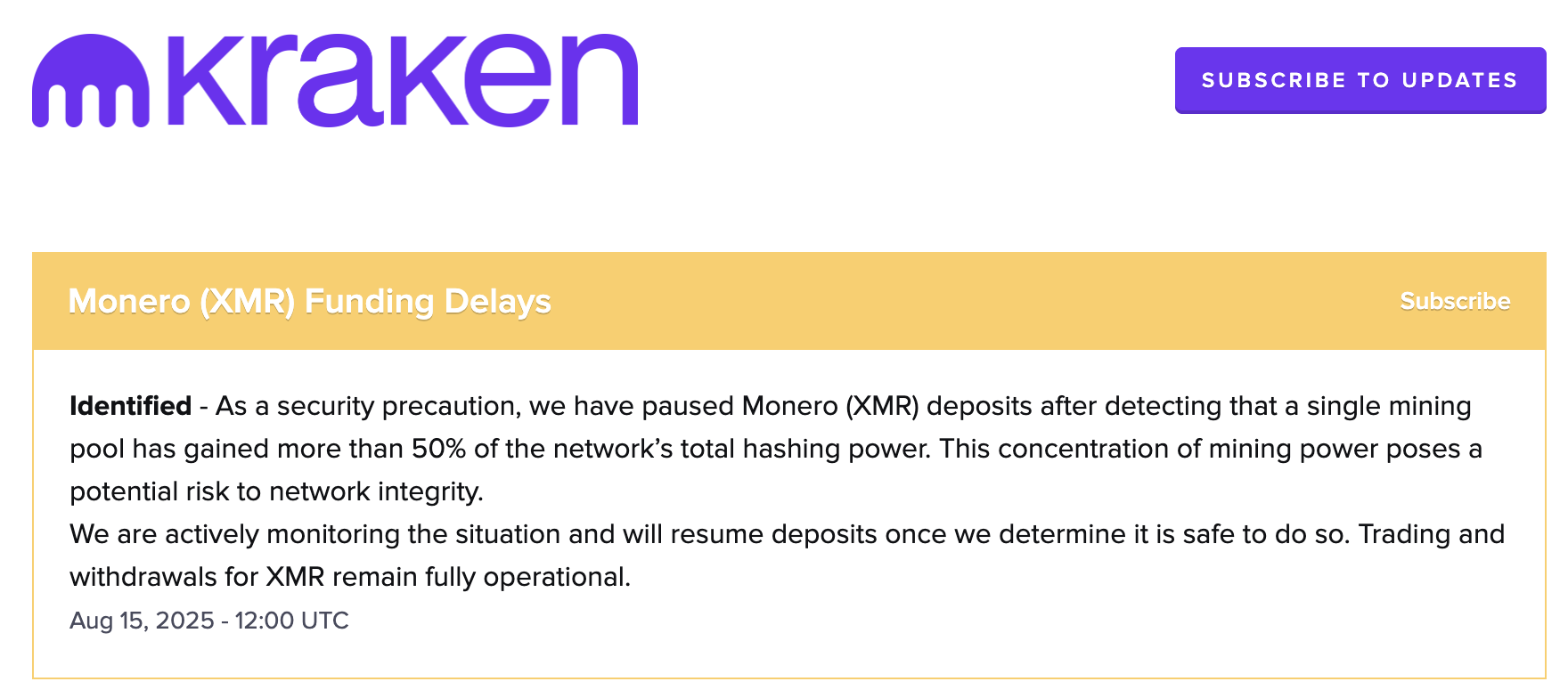
The Kraken exchange temporarily suspends $XMR deposits. Source: Kraken
Monero is a major privacy-preserving protocol, and the 29th largest crypto by market capitalization, according to CoinMarketCap. The ongoing 51% attack on the network has sent shockwaves through the Monero community, triggering a wave of responses.
Single mining pool assumes control of the network
“After a month-long, high-stakes technical confrontation, Qubic reached 51% of Monero's hashrate dominance, successfully reorganizing the blockchain,” spokespeople for Qubic wrote on Tuesday.
The mining pool was initially rebuffed in its attempt at a takeover, falling to the protocol’s seventh-largest miner and was hit with an alleged denial of service attack on August 4.
A denial of service (DDoS) attack floods a computer, network, or server with fake incoming traffic, clogging the system and preventing real traffic from coming through.
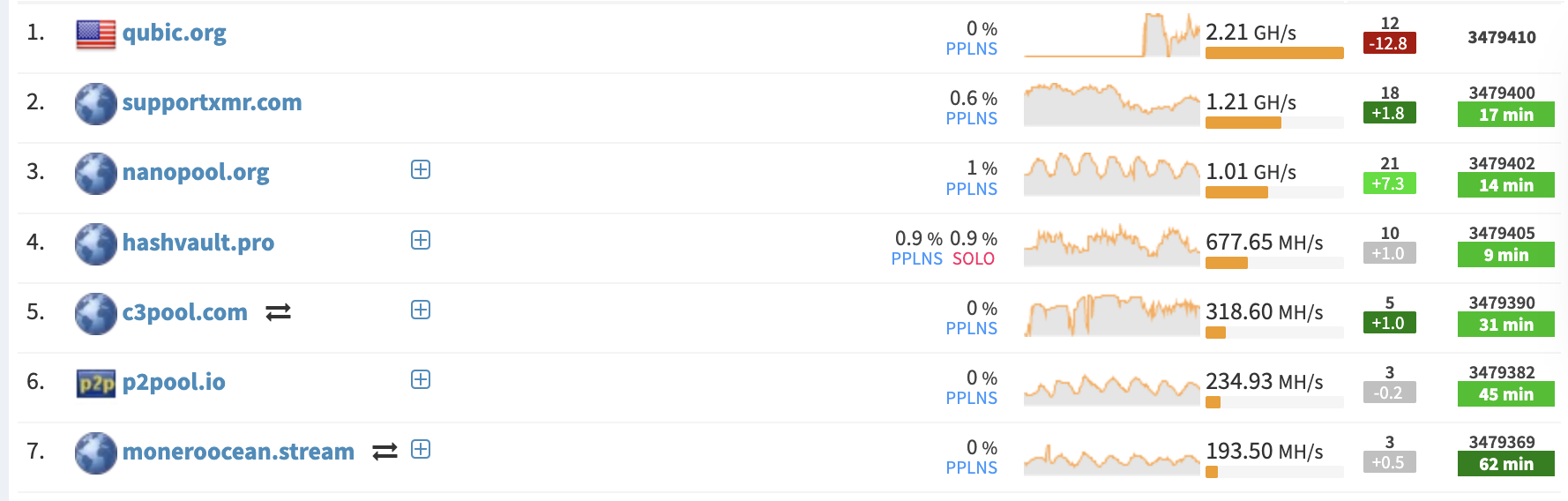
Qubic is now the number one Monero mining pool. Source: MiningPoolStats
The DDoS attack on Qubic sharply reduced the mining pool’s hashrate from 2.6 gigahashes per second (GH/s) to just 0.8 GH/s, according to Sergey Ivancheglo, the individual who claimed responsibility for the 51% attack.
However, the Qubic pool recovered its hashing power, eventually controlling a majority of the computing power on the Monero network.
“This event marks a pivotal moment in the crypto industry,” Qubic spokespeople continued, while highlighting the takeover of a $6 billion privacy protocol by a $300 million AI protocol.

 cointelegraph.com