Breaking it down, 6% of managers have roughly 2% exposure, 2% hold 4%, and only 1% report allocations above 8%. When averaged across the full group, crypto represents just 0.3% of assets under management.
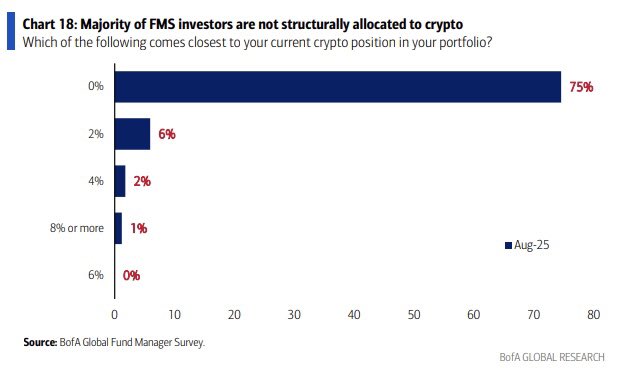
Commenting on these findings, Bloomberg ETF analyst Eric Balchunas suggested that the low exposure may reflect past missteps from these funds. He noted that some managers who had previously made poor calls on broader markets might be exercising extra caution towards the fast-growing industry.
According to him:
“Aren’t these the same ‘global managers’ who said they were selling America in Q1 ? Maybe they should start surveying people with better returns.”
Meanwhile, other industry players noted that the low participation rate could indicate untapped potential in the crypto market.
Frank Chapparo, the head of content at GSR, stated:
“Wall Street has barely gotten off zero and Bitcoin is still $120,000. We are going to absurdly higher.”
Historically, digital assets have offered strong returns but come with significant volatility. This risk factor appears to be why many institutional investors have limited their crypto holdings.
Despite this cautious approach, institutional interest in cryptocurrencies is growing. Over the past year, investors have increasingly gained exposure through shares of crypto companies and crypto-focused exchange-traded funds (ETFs).
Additionally, there has also been the advent of Bitcoin-focused treasury companies that have added a significant amount of the top crypto to their balance sheets.
At the same time, the US regulatory environment is also encouraging broader adoption of the emerging industry.
For context, President Donald Trump recently signed an executive order allowing digital assets to be included in 401(k) retirement plans. Industry players believe this step could prompt fund managers to reconsider their positions and increase crypto allocations.

 cryptoslate.com