In April, Perkins criticized the Bank for International Settlements for its proposals to impose know-your-customer requirements (KYC) and other legacy banking regulations on decentralized finance (DeFi) protocols and stablecoins, saying that they violate the core principles of permissionless networks.
The real systemic risk to the financial system comes from the asymmetry of having online, permissionless, 24/7, peer-to-peer, decentralized networks that can shift liquidity in real time while traditional financial infrastructure closes on nights and weekends and refuses to adapt to changing technology, Perkins said.
Bank for International Settlements remains entrenched against crypto
The Bank for International Settlements (BIS), which acts as a central bank for sovereign central banks and organizes the BCBS conferences, released a report in April claiming that crypto could destabilize the financial system.
The authors of the report also argued that the growth of the crypto market exacerbates the wealth gap and urged stricter government regulation in response.
In June, the BIS released a follow-up report titled “Stablecoin growth: Policy Challenges and Approaches,” which claimed that stablecoins fail as money and could create systemic risks in the financial system.
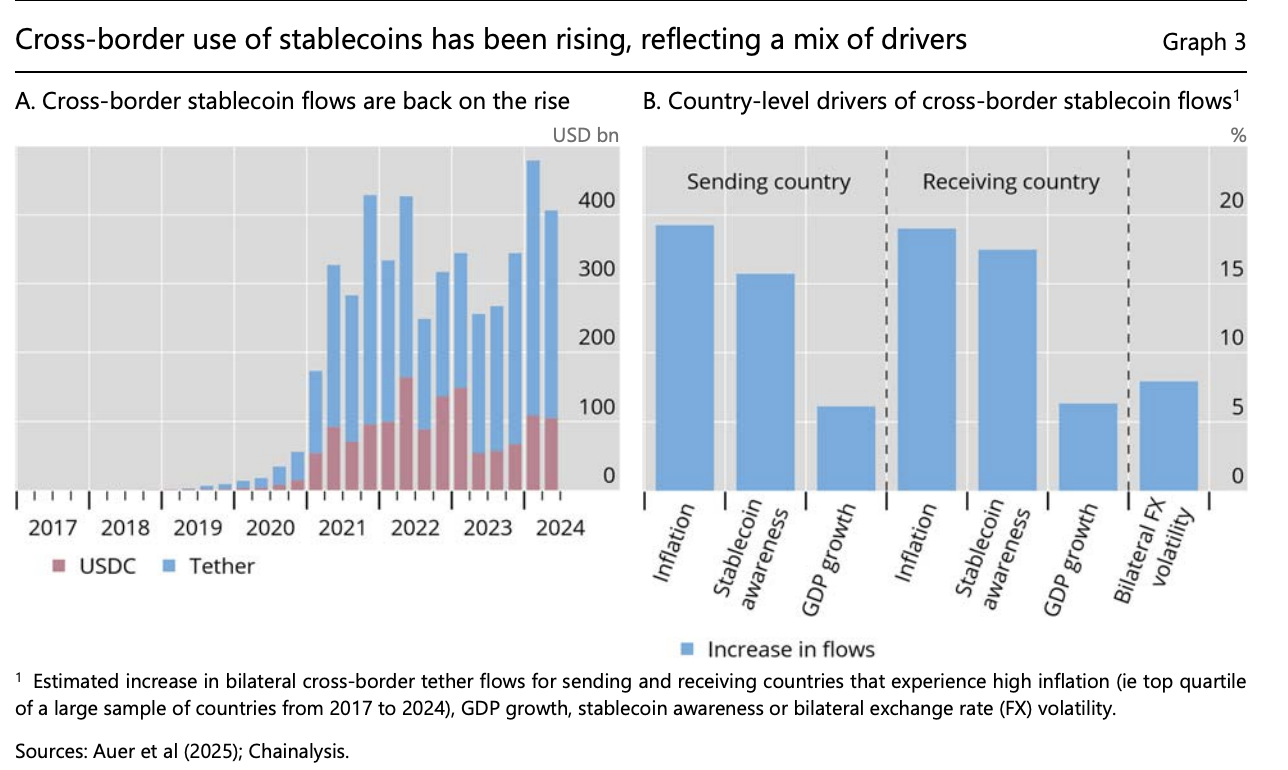
Cross-border use of stablecoins is growing. Source: BIS
“Stablecoins’ rising market capitalization and increasing interconnections with the traditional financial system have reached a stage where potential spillovers to that system can no longer be ruled out,” the authors of the report wrote.
The BIS has repeatedly pushed for the adoption of central bank digital currencies (CBDCs) and other centralized digital technologies as an alternative to privately-issued and decentralized cryptocurrencies.

 cointelegraph.com




