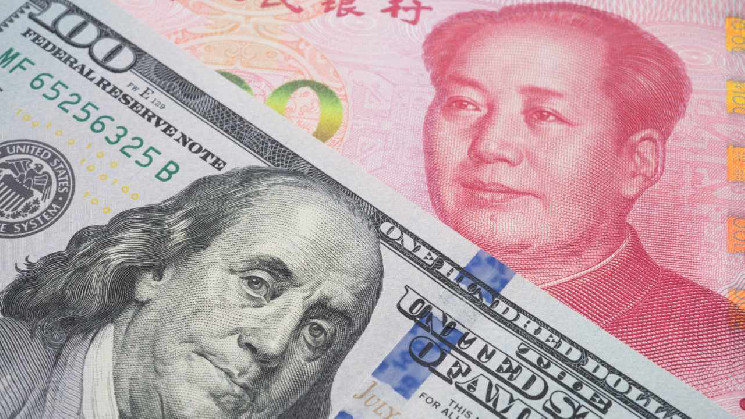
These allies are going to move in the direction of proposing the RMB [renminbi] as an alternative system to the U.S. dollar. We are going to move from a unipolar to a bipolar currency global reserve currency system.
This was not the first time Roubini mentioned a bipolar currency system. In February, he warned that the escalating restrictions imposed by the U.S. government on its adversaries, including financial sanctions, is a catalyst for the rise of a bipolar global reserve currency system in the coming decade.
India and De-Dollarization
Roubini also talked about India in particular. While noting that the country’s fiscal policy “could be better,” he stressed, “It is okay,” recognizing India as a promising emerging market.
The economist believes that India, along with a few other emerging markets, will become a dominant power in the coming years and decades, particularly with the implementation of additional reforms. As a result, he considers these markets to be promising investment destinations for both fixed-income and equity markets.
Dr. Doom does not expect India to participate in the de-dollarization movement despite the potential rise of an alternative currency system. He believes that India’s strategic rivalry with China means it may remain more aligned with the Western currency system rather than the renminbi. He opined:
It is now that India may need oil, energy, food and fertilisers from Russia but the dependency can change over time.
The BRICS nations are reportedly working on developing a new form of currency that will reduce their reliance on the U.S. dollar. The BRICS currently consists of Brazil, Russia, India, China, and South Africa, but several other countries have expressed their interest in joining the bloc, including Argentina, Iran, Indonesia, Turkey, Saudi Arabia, and Egypt. Ten Southeast Asian countries that are members of the Association of Southeast Asian Nations (ASEAN) have also agreed to use local currencies to support cross-border trade and investment in the region.

 news.bitcoin.com