The fears about a broader market downturn were largely unfounded. Bitcoin cracked $28,000 the day after the filing, regaining its losses from the previous day and creating solid support.
However, rising outflows from Binance worried analysts as many saw it as a sign of the exchange losing its footing on the market.
A recent report from Glassnode dove deep into net coin flows through the exchange, finding that Binance saw the largest net outflow of stablecoins in history at the end of March.
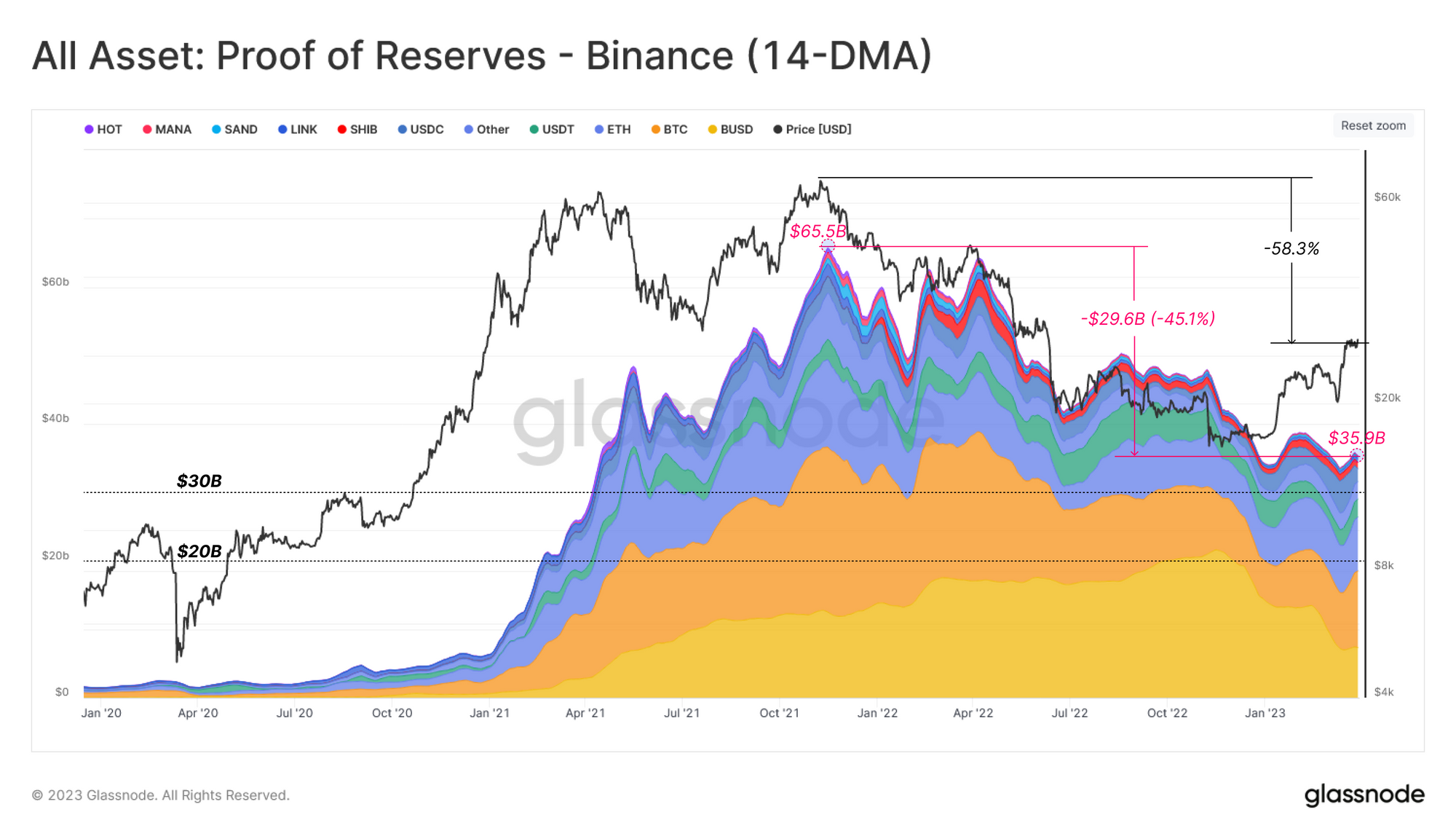
The report also notes there has been a significant outflow of $BUSD from Binance. This is in line with CryptoSlate’s previous analysis, which found that roughly $14 billion worth of $BUSD left exchanges since November 2022.
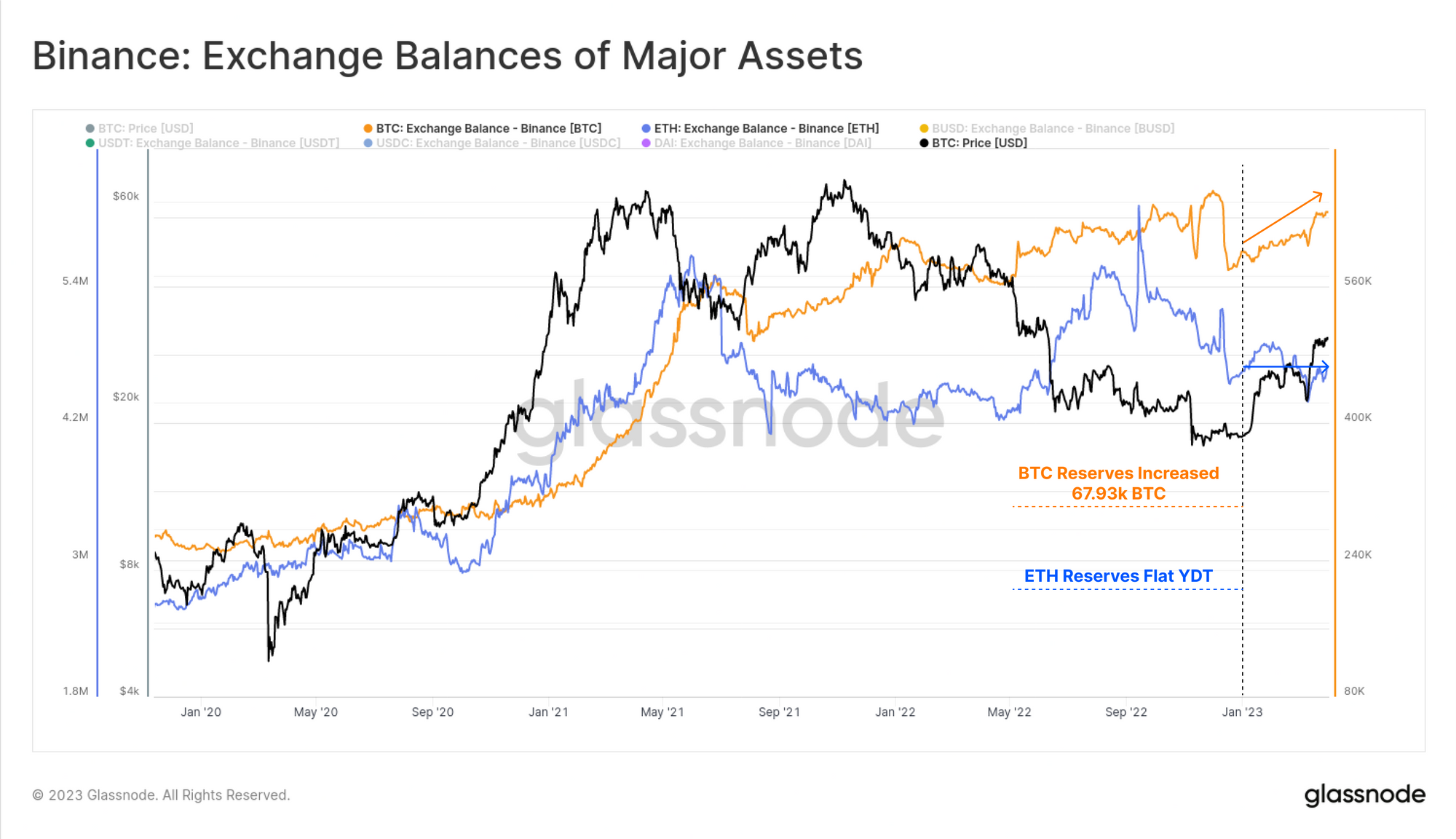
“Despite the developing friction between Binance and regulators, the platform appears to be primarily experiencing a stablecoin shuffle, and remains the largest centralized exchange in the market,” the report concluded.
The massive stablecoin outflows are a direct result of the ongoing banking crisis in the U.S. The domino effect that began with the collapse of Silicon Valley Bank erased a good chunk of investor confidence in stablecoins. At the beginning of March, nine out of the top 10 stablecoins by market cap traded below their peg, revealing the fragility of the asset class that led traders to seek stability in Bitcoin.
Despite its decreasing stablecoin balances, Binance still remains the largest centralized exchange on the market. A rising $BTC balance on the exchange further confirms this trend, showing investors prefer its highly-liquid market for deploying the newly acquired $BTC.

 cryptoslate.com