The bulk of the deposits so far have come in $RLUSD ($26.1M) and $USDC ($8M), with $USDC accounting for nearly all borrowing activity at $6.19 million, according to live market data. Other supported assets like $GHO, tokenized U.S. Treasuries, and collateralized loan obligations have yet to see borrow-side traction.
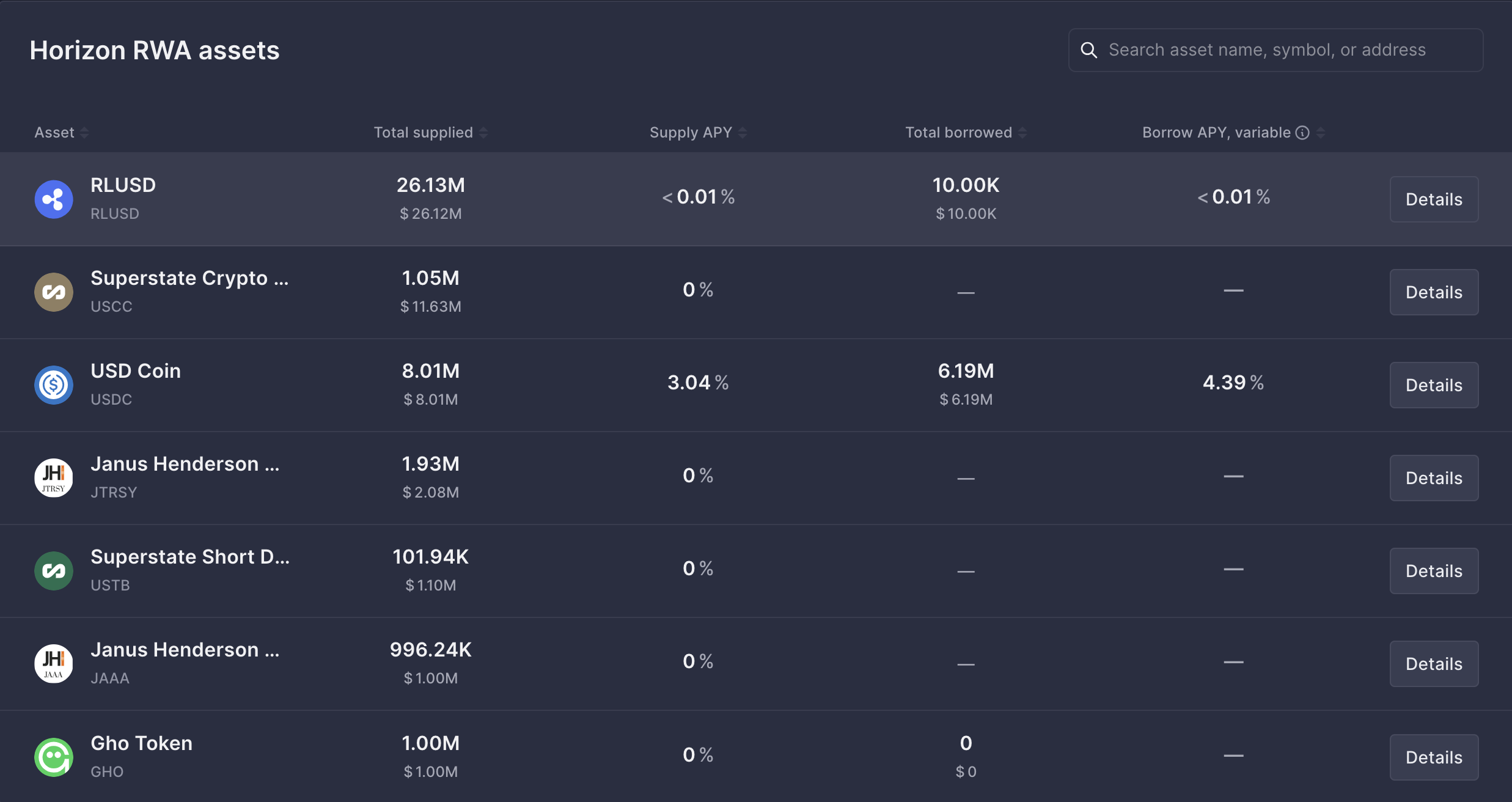
Source: Aave Horizon RWA market | aave.com
You might also like: Aave launches Horizon, an institutional RWA-backed stablecoin market
How Aave Horizon works
Behind the scenes, Horizon operates through a system of segregated pools — one set for tokenized RWAs, and another for stablecoin liquidity. Qualified users, vetted and permissioned by RWA issuers, can supply their tokenized assets (such as USTB/USCC by Superstate and JTRSY/JAAA by Centrifuge) into designated RWA pools. Once deposited, these assets serve as collateral for borrowing stablecoins like $USDC, $RLUSD, or $GHO from the corresponding liquidity pools. USDt-b, Ethena’s synthetic, yield-bearing stablecoin, is also set to be added to the platform.
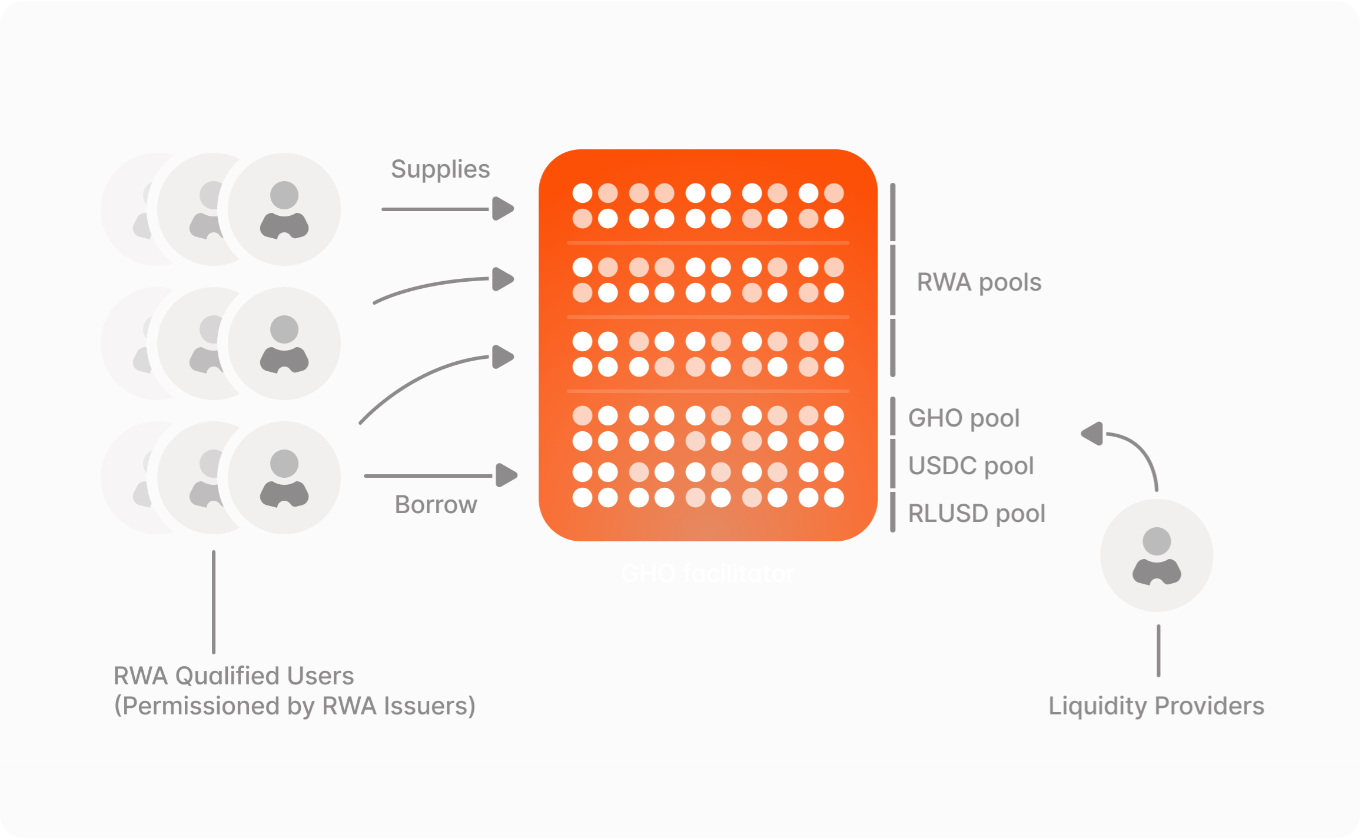
Source: aave.com
On the other side of the market, liquidity providers — who don’t require any permissions — supply stablecoins into these lending pools, earning yield from institutional borrowers. The result is a two-sided market: institutional-grade collateral flows in from regulated entities, while stablecoin liquidity is sourced from the broader DeFi ecosystem.
You might also like: Tokenization meets Islamic Finance: Asia is redefining global financial infrastructure | Opinion

 crypto.news