‘On-chain metrics also show growing demand: high bridge inflows and rapidly increasing stablecoin supply shows strong activity in DeFi and the stablecoin ecosystem,” he said in an interview with Coinpedia.
Stablecoin supply is expanding, DeFi protocols are thriving, and bridge inflows remain strong. Snyder estimates that roughly 60 to 70 percent of Ethereum’s price movement can be attributed to ETF inflows, while 30 to 40 percent comes from organic usage like staking and DeFi participation.
Institutional Appetite for Ethereum
The latest market behavior reveals a growing institutional preference for Ethereum. Snyder opened up about Ethereum’s unique advantage: multiple revenue streams. Beyond being an asset to hold, $ETH offers smart contract functionality, staking rewards, and access to a vast DeFi ecosystem. These features appeal to funds seeking returns beyond the store of value narrative.
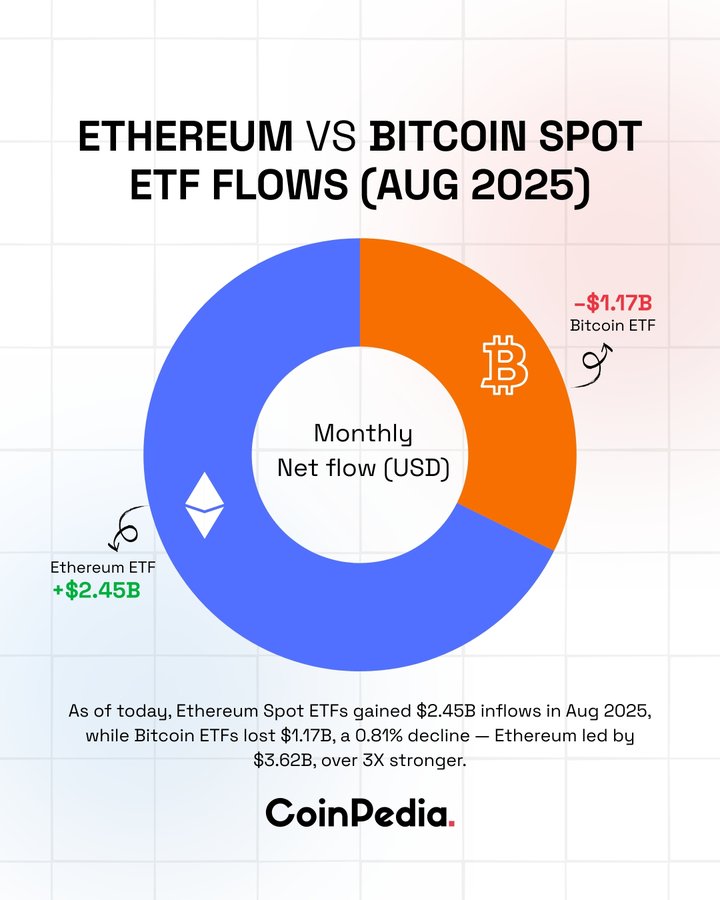
This institutional turn is evident in the data. $ETH ETFs are currently outperforming their Bitcoin counterparts, and Ethereum-focused treasuries such as Bitmine are actively accumulating $ETH.
However, he also said, “That said, I think Bitcoin still remains the default choice for more conservative institutions looking for “digital gold” with slightly lower volatility.”
Bitcoin will continue to serve as the anchor, while Ethereum offers a more dynamic growth story. Institutions may begin with BTC for stability but increasingly diversify into $ETH for yield and innovation.

 coinpedia.org