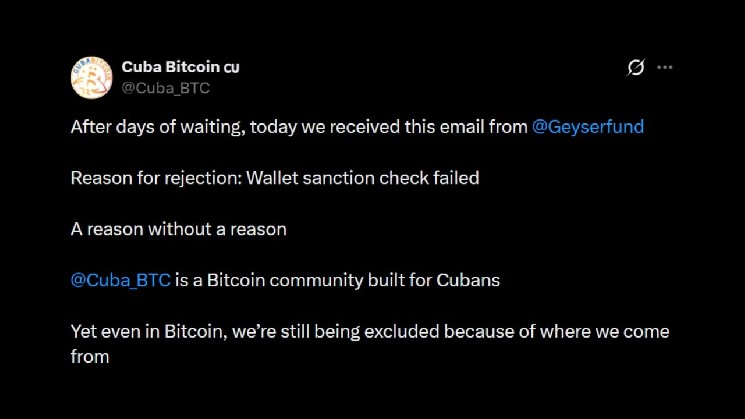
Cuba Bitcoin lamented this development, declaring that a new crowdfunding platform that reflects Bitcoin values was needed. “If we’re serious about building infrastructure for Bitcoin communities, it must be permissionless, censorship-resistant and resilient,” it posted on X.
Michele Morucci, CEO and co-founder of U.S.-based Geyser, acknowledged that while the company was “founded on the Bitcoin ethos and the principle of bringing access to capital worldwide, “ it could not escape regulatory compliance, even as the Cuban government executes reforms to open the Cuban economy.
While Geyser works as a crowdfunding platform, it does not hold bitcoin in custody and allows beneficiaries and donors to control their funds at all times. Even so, the project does list Cuba, Syria, North Korea, Iran, Russia, and East Ukraine as sanctioned countries, and Palestine, Israel, and Yemen as high-risk countries where the service is not available.
Nonetheless, Forte11, part of the Bitcoin Cuba collective, highlighted that these sanctions would not apply to their initiative, as the infrastructure, wallet, and project were registered outside Cuba, accusing Geyser of taking the easy route.
“If the real reason is that the project serves Cubans, just say so. Don’t hide it behind a vague wallet-sanctions explanation. Bitcoin is supposed to make financial access more resilient, not reproduce every financial gatekeeper of the traditional system,” he concluded.

 news.bitcoin.com