
 coindesk.com

Bitcoin's volatility spiked hard during Thursday's massive sell-off as traders rushed for downside protection.
Deribit’s bitcoin volatility index, known as DVOL, jumped sharply, rising from around 37 to above 44. DVOL is crypto’s closest equivalent to Wall Street’s VIX, a fear gauge, tracking how much price movement traders expect over the next 30 days based on options pricing.
When DVOL rises, it means traders are paying up for protection, options are become more expensive and fear is increasing.
Options are derivative contracts that give the purchaser the right to buy or sell the underlying asset at a predetermined price at a later date. A call option gives the right to buy and represents a bullish bet on the market. A put option offers protection against price slides.
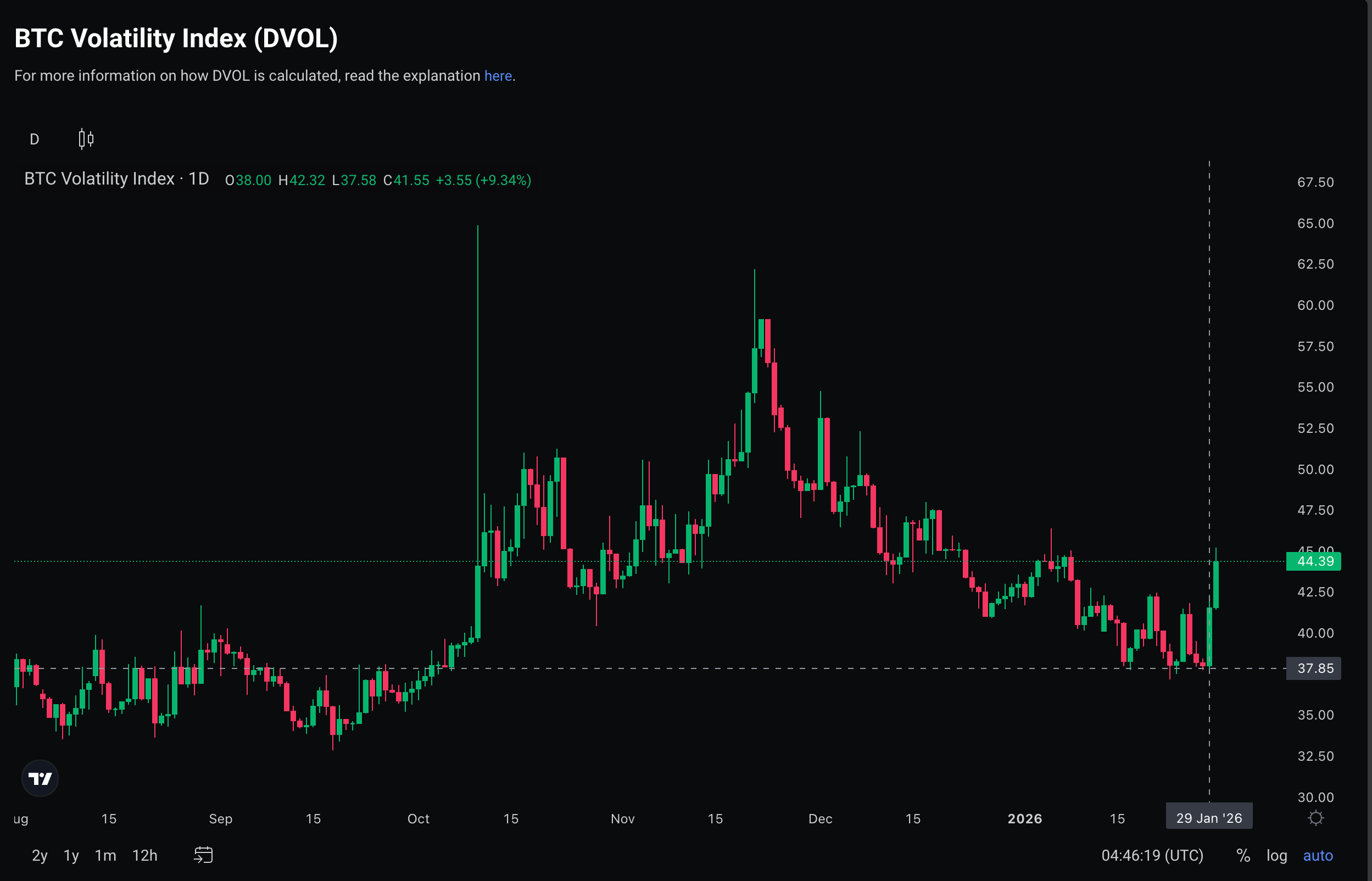
The spike in volatility came as markets digested renewed macro uncertainty, including rising government shutdown risks and fresh political noise around the future leadership of the Federal Reserve. Volatility also climbed in traditional markets, with the VIX rising in parallel, reinforcing the sense of a broader risk-off move rather than a crypto-only event.
Despite the spike, bitcoin’s implied volatility remains far from extreme when viewed in historical context.
Deribit data shows bitcoin’s IV Rank at 36, meaning current implied volatility (a market-driven metric representing the expected future volatility of an asset's price) sits only modestly above its lowest levels from the past year. IV Percentile stands near 50, suggesting bitcoin’s volatility has been lower than current levels about half the time over the last 12 months.
In plain terms, volatility jumped fast, but it is not stretched yet.
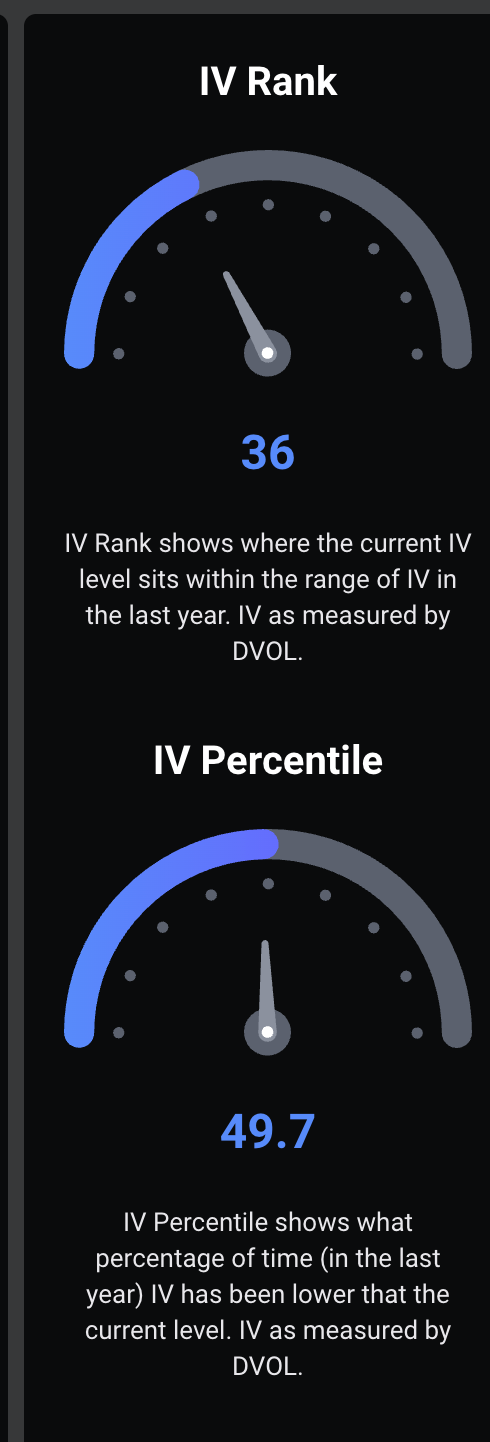
That matters for traders. A rising DVOL tells options markets expect larger price swings ahead, even if spot prices appear to stabilize. IV Rank and IV Percentile help traders judge whether options are cheap or expensive relative to recent history, which can shape decisions around hedging, leverage, and risk exposure.
For now, options markets are signaling caution rather than panic.
Still, paired with more than $1.7 billion in liquidations and heavy long positioning flushed out across exchanges, the volatility spike shows how fragile positioning had become. When prices broke lower, forced selling did the rest.
The message from derivatives markets is simple. Bitcoin is no longer calm. And traders are bracing for more turbulence ahead, with some targeting the $70,000 mark in the coming weeks.