
 finbold.com
Fear, uncertainty, and doubt (FUD) dominated the cryptocurrency market this week as volatility took over and most cryptocurrencies crashed. Bitcoin ($BTC) has also suffered from this bearish sentiment, creating a scenario favoring an imminent short squeeze for the asset.
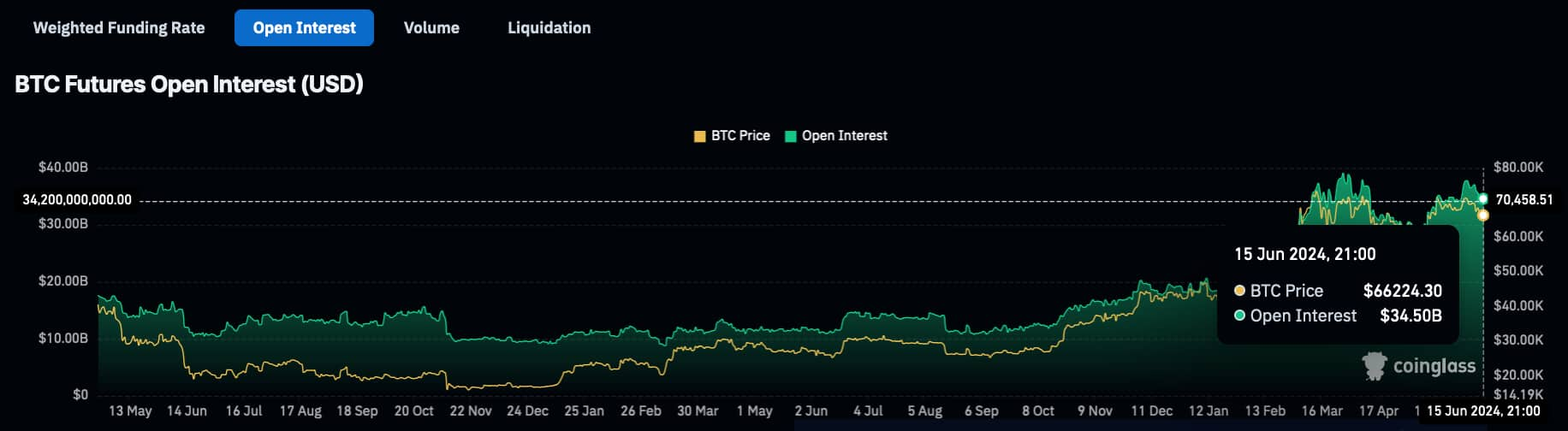
In particular, the derivatives market open interest (OI) in Bitcoin remains at all-time high levels, as previously reported. On June 15, Finbold retrieved updated data from CoinGlass showing a $34.5 billion OI with $BTC at $66,224.
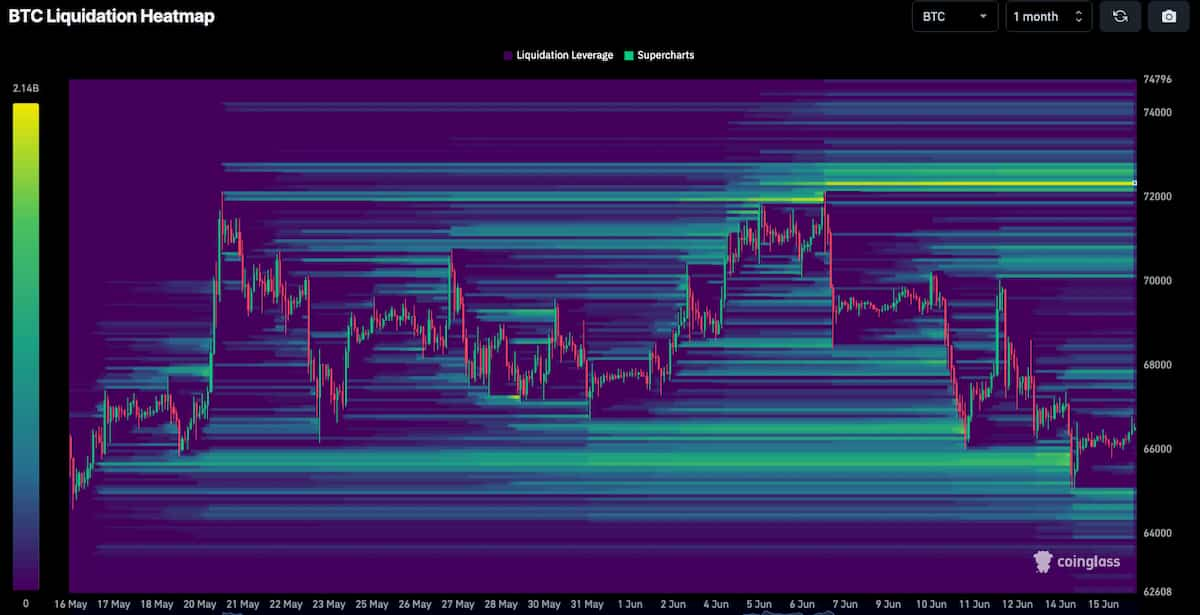
The high speculative demand for opened long and short positions has crafted notable imbalances, which could favor short squeezes. This is because short-sellers leveraged trades created upward liquidity pools, especially at the $72,000 level, a key price resistance.
Looking closely, there are over $2 billion worth of Bitcoin short liquidations, with smaller—but still relevant—pools going as high as $73,000. Therefore, the $72,000 to $73,000 zone becomes a likely target in the case of a short squeeze.
Short squeeze incoming? Bitcoin bullish divergence
Notably, the professional trader and analyst who goes by Credible Crypto has spotted other indicators suggesting a short squeeze. In a recent post on X, the analyst pointed to a bullish divergence with the cumulative volume delta (CVD).
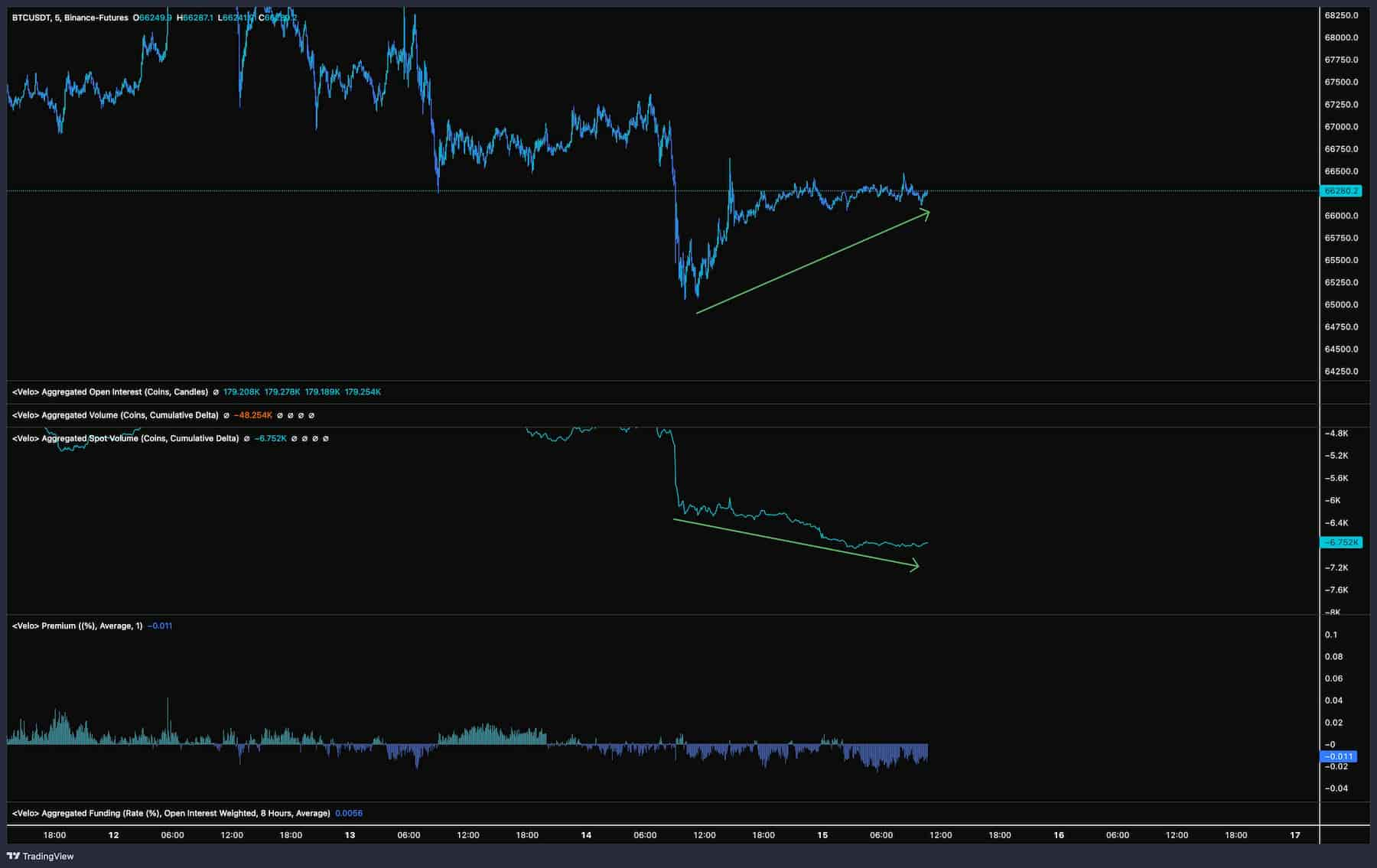
In a comment, Credible Crypto explained that a down-trending CVD means there are more market sell orders than buys. Thus, the $BTC price was expected to go down following the increased selling pressure, which is not happening. The trader believes this is a bullish indicator that buy orders are being consumed and a supply shock is imminent.
“CVD is not the same as volume- CVD measures the net difference between market buy and sell orders- so when it’s trending down it means there are more market sells than market buys. Typically this would cause price to drop, but when price isn’t dropping despite there being a lot of market selling…what does that tell us?”
— Credible Crypto
Nevertheless, technical analyses and awaiting liquidations are not conclusive evidence that a short squeeze will happen. The market’s state changes every second as cryptocurrency traders reevaluate their positions and change their exposures, market orders, and open interest—changing the likelihood of high-volatility events and shifting trends.
Disclaimer: The content on this site should not be considered investment advice. Investing is speculative. When investing, your capital is at risk.