In the current scenario, the software has been backed by a number of large mainstream banks and financial institutions. To simplify the project, we can consider that the system is something similar to the SWIFT payments system.
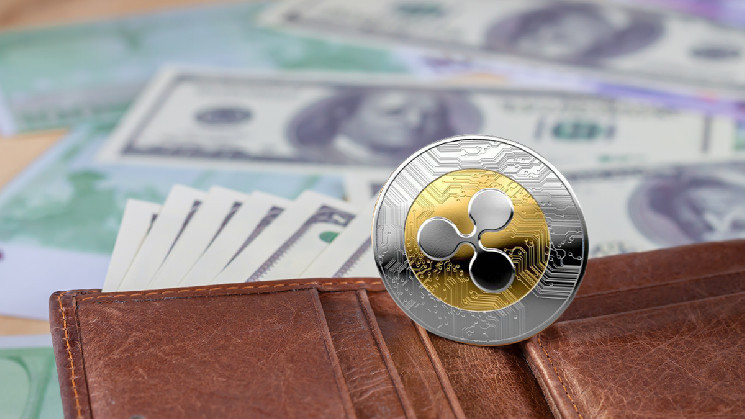
Meanwhile, $XRP, is the native cryptocurrency of the firm that was created to settle transactions through Ripple Connect. The digital currency is introduced with fast pace and efficiency in mind.
To make cross-border transactions more handy, Ripple converts the assets to $XRP first and after sending the tokens it converts back the token to whatever they need to be. Hence, we can conclude the fundamentals of $XRP as a measure of value for transfers within the system.
$XRP is not mined as Bitcoin
If we explore the technicalities and specification of $XRP, it is observed that the cryptocurrency does not work like most of the assets in the market.
Currently, to validate each transaction and keep the network secure most of the digital assets use consensus mechanisms like Proof-of-Work, Proof-of-Stake, Proof-of-Time, or Proof-of-Knowledge. However, $XRP is one crypto asset that is not mined or uses any of the aforementioned mechanisms.
Rather than using any consensus mechanism, the project allows some trusted agents to validate each transaction. In reality $XRP transactions can be processed every second, unlike other assets that require validations before processing a transaction.
The concept of Ripple is unique in certain ways. According to the firm, $XRP has been introduced with a clear goal in mind, that is to offer some advantages and disadvantages.
Is there any comparison between $XRP and $BTC?
$XRP vs Bitcoin is one of the most popular debatable topics in the ecosystem. To understand the fight for the future of payments we need to dive a little more deeper. Both the projects have different methods to validate transactions, the supply of Ripple’s native token is more than of $BTC’s total supply cap, and also both the assets have different circulation mechanisms.
Instead of the common blockchain mining concept, Ripple uses a unique distributed consensus mechanism to validate transactions. In this method all participating nodes verify the authenticity of a transaction by conducting a poll. Notably, the process makes $XRP faster and more reliable.
On the other hand, as Bitcoin uses the PoW based mechanism to validate transactions, the network is slow and uses heavy power supply. Indeed, $BTC is considered as an energy hog, and $XRP has the potential to solve the concerns.
At the launch of Ripple, the brains behind the project had pre-mined about a billion $XRP tokens. Since the inception of the project, the mined tokens are being released gradually into the market by its main investors. Meanwhile, the total supply cap of Bitcoin is set to 21 million coins only. Notably, the artificial scarcity has only helped the digital currency to attract investors in its potential as a store of value.
Furthermore, looking at the circulation mechanisms, we have noted that $BTC is released and added to the network as and when the miners find them. Bitcoin does not adhere to the release schedule and their supply demands mostly on the network pace and difficulty algorithm.
As governed by an in-built smart contract, Ripple has plans to release a maximum of a billion tokens. However, the circulation is more than 50 billion. Still, there is no possibility of misuse because of oversupply, as any unused portion of the asset is shifted to an escrow account every month.
$XRP or $BTC?
Where Bitcoin is a store of value, with decentralization, freedom, and trust at its core, $XRP is much more centralized. The supply cap of $XRP would be expected to boom in the future but Bitcoin’s supply will remain fixed.
In the digital ecosystem, $BTC is deemed as a digital gold, but $XRP is seen as a common means of exchange. Although $XRP works in a bit more complicated way, it scores better than the $BTC network for its lowering processing times and minimal transaction fees.
Following all aforementioned fundamentals of $XRP and noting the concept of the coin designed by Satoshi Nakamoto, we can conclude that both the projects can co-exist in the current world. The coexistence of both the projects is only possible until the world is deeply dependent on banks and centralized financial institutions.

 thecoinrepublic.com