
 decrypt.co
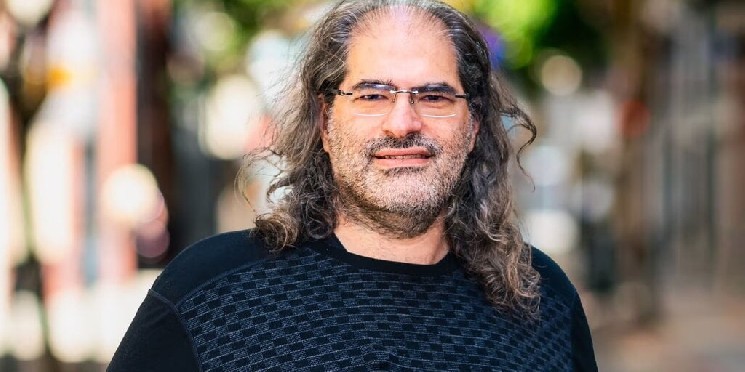
$XRP Ledger’s codebase does not possess some secret back door that would allow Ripple to single-handedly control the network, according to the digital payment company's Chief Technology Officer David Schwartz.
Despite $XRP Ledger’s continued adoption among financial institutions, the misconception that “Ripple somehow controls the ledger” has lingered, he told Decrypt in a recent interview.
“We are a major contributor to the ecosystem. It is obviously very important to us,” he said. “But we have no interest or desire in running the network.”
https://www.youtube.com/watch?v=cdxN-6_gZEc
Corners of the crypto industry have questioned $XRP Ledger’s decentralization for years, flagging a low number of validators compared to other networks as a potential weak point. $XRP itself has also drawn scrutiny because Ripple owns billions of $XRP tokens.
Around 23,000 Bitcoin nodes could be reached worldwide on Wednesday, according to Bitnodes. Meanwhile, $XRP Ledger had 186 validators online, according to XRPScan. Anyone can run a validator, and Ripple is responsible for only one, according to $XRP Ledger’s website
Schwartz acknowledged that Ripple may be the most interested participant in $XRP Ledger’s ecosystem—as a provider of infrastructure updates and grants—but he said Ripple cannot dictate what activity takes place on $XRP Ledger, nor would it want to. Changes that would impact transaction processing on $XRP Ledger need approval from 80% of the network.
“We wouldn't want to be able to censor transactions, because then people could pressure us,” he said. “Nobody has ever had a transaction stopped by Ripple. If they did, they’d say so.”
Schwartz co-founded $XRP Ledger before joining Ripple, and his foundational role may invite comparisons to Ethereum and its relationship to co-founder Vitalik Buterin. However, Ripple’s control over $XRP’s supply is relatively distinct, with it being among the asset’s largest holders.
As of October, Ripple said it held 38 billion $XRP in escrow, a significant chunk of the 100 billion $XRP that was gifted to it by XRPL’s co-founders in 2012. As a result, some critics believe that Ripple has the ability to influence $XRP’s scarcity by periodically selling tokens.
Ripple’s decentralization strategy has been ongoing since $XRP Ledger debuted in 2012, and that has included paring back the number of key validators that the company controls.
$XRP Ledger’s security relies on Unique Node Lists. Each validator maintains a list of network participants that it trusts not to conspire. The $XRP Foundation maintains a default Unique Node List, which is widely popular, and used to include several Ripple-owned validators.
Ripple has run one of 35 validators on the $XRP Foundation’s default Unique Node List since July 2023, according to the company’s website. And that represents a small sliver of the overall network, Schwartz said.
“We run something like 1% of the network,” he said. “We don’t have any say over transactions.”